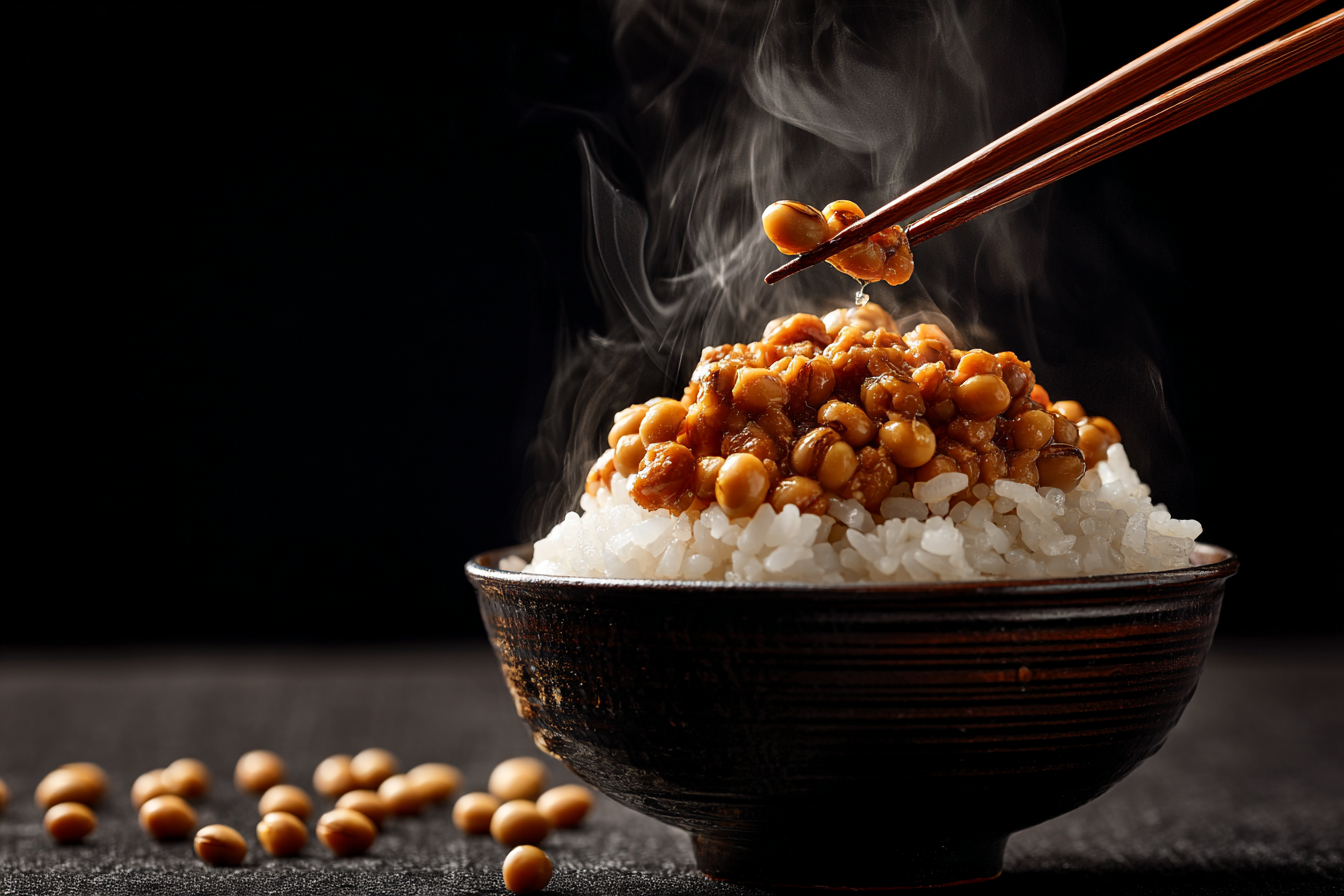
In Japan, there is a humble food that has quietly fueled health and longevity for centuries. It doesn’t look glamorous. Its texture is sticky, its smell is strong, and many first-time visitors hesitate before tasting it.
Yet this traditional food—natto—is widely considered one of the healthiest foods in the world.
Made from fermented soybeans, natto is packed with probiotics, powerful enzymes, vitamins, and plant-based protein. Scientists have linked it to benefits ranging from improved heart health to stronger bones and better digestion.
Often called Japan’s “secret superfood,” natto has been part of Japanese cuisine for more than a thousand years. Today, it’s gaining global attention as people discover its remarkable health benefits.
What Is Natto?


Natto is a traditional Japanese food made by fermenting soybeans with a bacterium called Bacillus subtilis.
During fermentation, the bacteria break down proteins in the soybeans, producing amino acids such as glutamic acid, which gives natto its rich umami flavor.
The result is a unique food with:
- Sticky, stringy texture
- Strong aroma
- Deep savory taste
While it might surprise first-time eaters, natto is a breakfast staple in many parts of Japan, especially in regions like Tokyo and northern Japan (Tohoku).
It’s typically served over rice and mixed with soy sauce, mustard, or chopped green onions.
A Thousand-Year History


Natto’s origins date back more than 1,000 years.
According to one famous legend, the samurai Minamoto no Yoshiie accidentally discovered natto during a military campaign in 1083. Cooked soybeans stored in rice straw bags began fermenting naturally, producing the sticky beans we know today.
Another story credits Prince Shotoku, who reportedly discovered fermented soybeans while feeding horses.
Historically, rice straw contained the natural bacteria needed for fermentation. When warm soybeans were wrapped in straw, fermentation would begin automatically.
By the early 20th century, scientists isolated the bacteria responsible, allowing natto to be produced commercially with controlled fermentation cultures.
Today, natto remains a beloved traditional food across Japan.
How Natto Is Made


Despite its complex flavor, natto is surprisingly simple to make.
The traditional process involves just a few steps.
1. Soaking the Soybeans
Dry soybeans are washed and soaked in water for 12–20 hours.
2. Cooking
The beans are steamed or pressure-cooked until soft.
3. Adding Bacteria
The beans are mixed with Bacillus subtilis natto spores to begin fermentation.
4. Fermentation
The mixture is kept warm at about 40°C (104°F) for around 20–24 hours.
During this time, the bacteria produce the sticky threads that natto is famous for.
5. Aging
The fermented beans are stored in the refrigerator for several days to develop flavor.
Why Natto Is a Nutritional Powerhouse


Natto is one of the most nutrient-dense foods you can eat.
A 100g serving contains approximately:
- 211 calories
- 19g protein
- 5g fiber
- 0 cholesterol
It also provides impressive levels of essential nutrients.
| Nutrient | Amount | Daily Value |
|---|---|---|
| Protein | 19.4g | 39% |
| Fiber | 5.4g | 19% |
| Vitamin K | 23.1mcg | 19% |
| Iron | 8.6mg | 48% |
| Manganese | 1.53mg | 66% |
But what truly sets natto apart are its unique compounds.
Vitamin K2
Supports bone strength and heart health.
Nattokinase
An enzyme that helps break down blood clots.
Probiotics
Improve gut health and digestion.
Isoflavones
Plant compounds with antioxidant effects.
Health Benefits Backed by Science


Modern research suggests that natto may contribute to Japan’s well-known longevity.
Heart Health
The enzyme nattokinase helps dissolve blood clots and may reduce blood pressure. Studies suggest that regular natto consumption may lower the risk of cardiovascular disease.
Stronger Bones
Natto is the richest natural source of vitamin K2, which helps maintain bone density and prevent osteoporosis.
Better Gut Health
Fermentation creates beneficial bacteria that support digestion and balance gut microbiota.
Anti-Inflammatory Effects
Isoflavones and antioxidants may help reduce inflammation and support immune function.
Longevity
Some studies suggest fermented soy products are associated with lower mortality from stroke and heart disease.
How to Eat Natto (Even If You’re a Beginner)



Because of its texture and aroma, natto can be an acquired taste.
Fortunately, there are many delicious ways to enjoy it.
Classic Japanese Style
- Natto over steamed rice
- Soy sauce and mustard
- Chopped green onions
- Raw egg (optional)
Modern Recipes
- Natto toast with cheese
- Natto fried rice
- Natto sushi rolls
- Natto pasta
- Natto kimchi bowl
Pairing natto with other ingredients can help balance its strong flavor.
Are There Any Downsides?
Natto is safe and healthy for most people.
However, there are a few exceptions.
People taking blood-thinning medications should consult a doctor because natto contains high levels of vitamin K.
Those with soy allergies should also avoid it.
For beginners, it’s best to start with small portions to allow the digestive system to adjust.
Final Thoughts
Natto may look unusual, but its health benefits are extraordinary.
For more than a thousand years, Japanese people have enjoyed this fermented soybean dish as a daily source of nutrition. Today, science is confirming what tradition has long suggested: natto is truly a superfood.
Whether you enjoy it the traditional way over rice or experiment with modern recipes, adding natto to your diet may bring powerful benefits to your heart, bones, and gut.
Sometimes, the most powerful foods are the simplest.
And in Japan, few foods embody that truth better than natto.