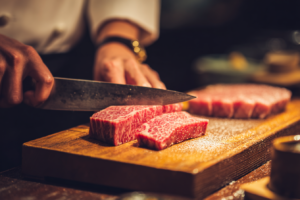
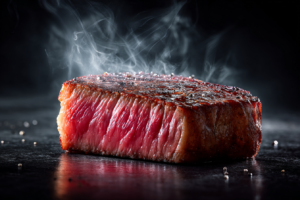
Japan’s Wagyu beef is famous worldwide for its rich marbling and buttery texture. But within the Wagyu world, one name stands above the rest: Kobe Beef.
Many people assume Kobe is simply another type of Wagyu. In reality, Kobe Beef is an extremely rare, highly regulated premium brand within Wagyu, produced under some of the strictest standards in the world.
Understanding the difference helps explain why Kobe Beef is considered one of the most luxurious foods on Earth.
Wagyu vs Kobe: The Basic Rule
A simple rule explains the relationship:
All Kobe Beef is Wagyu, but not all Wagyu is Kobe.
Wagyu refers to Japanese cattle breeds, primarily:
- Japanese Black (Kuroge Washu)
- Japanese Brown
- Japanese Shorthorn
- Japanese Polled
Most high-end beef labeled “Wagyu” comes from the Japanese Black breed, which is famous for producing meat with intense marbling.
However, Kobe Beef is a specific type of Wagyu that comes only from Tajima cattle raised in Hyogo Prefecture, Japan.
Because of this strict origin requirement, Kobe Beef represents only a tiny fraction of Wagyu production.
In fact, only about 3,000–7,000 cattle per year are certified as Kobe Beef — less than 0.2% of Japan’s beef consumption.
What Exactly Is Kobe Beef?


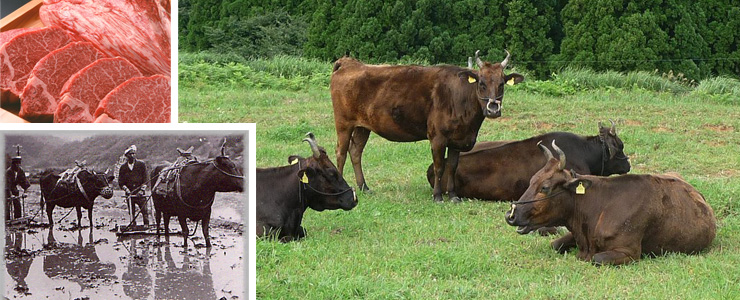
Kobe Beef is produced from pure Tajima-gyu cattle, a bloodline of Japanese Black cattle that has been carefully preserved for centuries in Hyogo Prefecture.
To be officially recognized as Kobe Beef, the cattle must meet strict conditions set by the Kobe Beef Marketing & Distribution Promotion Association.
Mandatory Requirements
The cattle must:
- Be pure Tajima lineage
- Be born, raised, and processed in Hyogo Prefecture
- Be raised by registered farmers
- Be female (never having given birth) or castrated male
- Be 28–60 months old
- Be processed at approved slaughterhouses in Hyogo
If any condition is not met, the beef cannot be labeled Kobe Beef.
The Strict Quality Standards
Kobe Beef is famous not just because of its origin, but because of its extraordinarily strict quality grading.
Marbling Requirement
Japan grades beef marbling using a scale called BMS (Beef Marbling Score) from 1 to 12.
Kobe Beef must score:
BMS 6 or higher
Premium Kobe often reaches BMS 10–12, which produces the iconic snowflake-like marbling.
Yield and Quality Grade
The meat must receive:
- A or B yield grade
- Quality grade of 4 or higher
This essentially means A4 or A5 quality beef, the highest category in the Japanese grading system.
Weight Restrictions
Unlike other Wagyu brands, Kobe Beef even regulates the size of the animal.
- Female carcass: 270–499.9 kg
- Castrated male: 300–499.9 kg
Animals that grow too large are excluded because excessive size can reduce the delicate marbling Kobe is known for.
Kobe Beef Certification and Traceability
One of the most unique aspects of Kobe Beef is traceability.
Each certified carcass receives:
- A chrysanthemum seal stamp (symbol of Hyogo Prefecture)
- A 10-digit identification number
This number allows buyers to track:
- Birth farm
- Breeding history
- Feeding history
- Slaughterhouse information
Because of this system, authentic Kobe Beef can always be verified.
Kobe vs Other Wagyu: Key Differences
| Category | Kobe Beef | Other Japanese Wagyu | Overseas Wagyu |
|---|---|---|---|
| Origin | Hyogo Prefecture only | Various regions in Japan | US, Australia, etc. |
| Bloodline | Pure Tajima strain | Various Wagyu lines | Often crossbred |
| Marbling Standard | BMS 6+ required | No strict minimum | Usually lower |
| Weight Limits | Strict upper limit | Usually none | None |
| Rarity | Extremely rare | Limited | Widely available |
| Flavor | Delicate, sweet, buttery | Rich and beefy | Balanced but firmer |
Flavor Differences: Why Kobe Tastes Unique
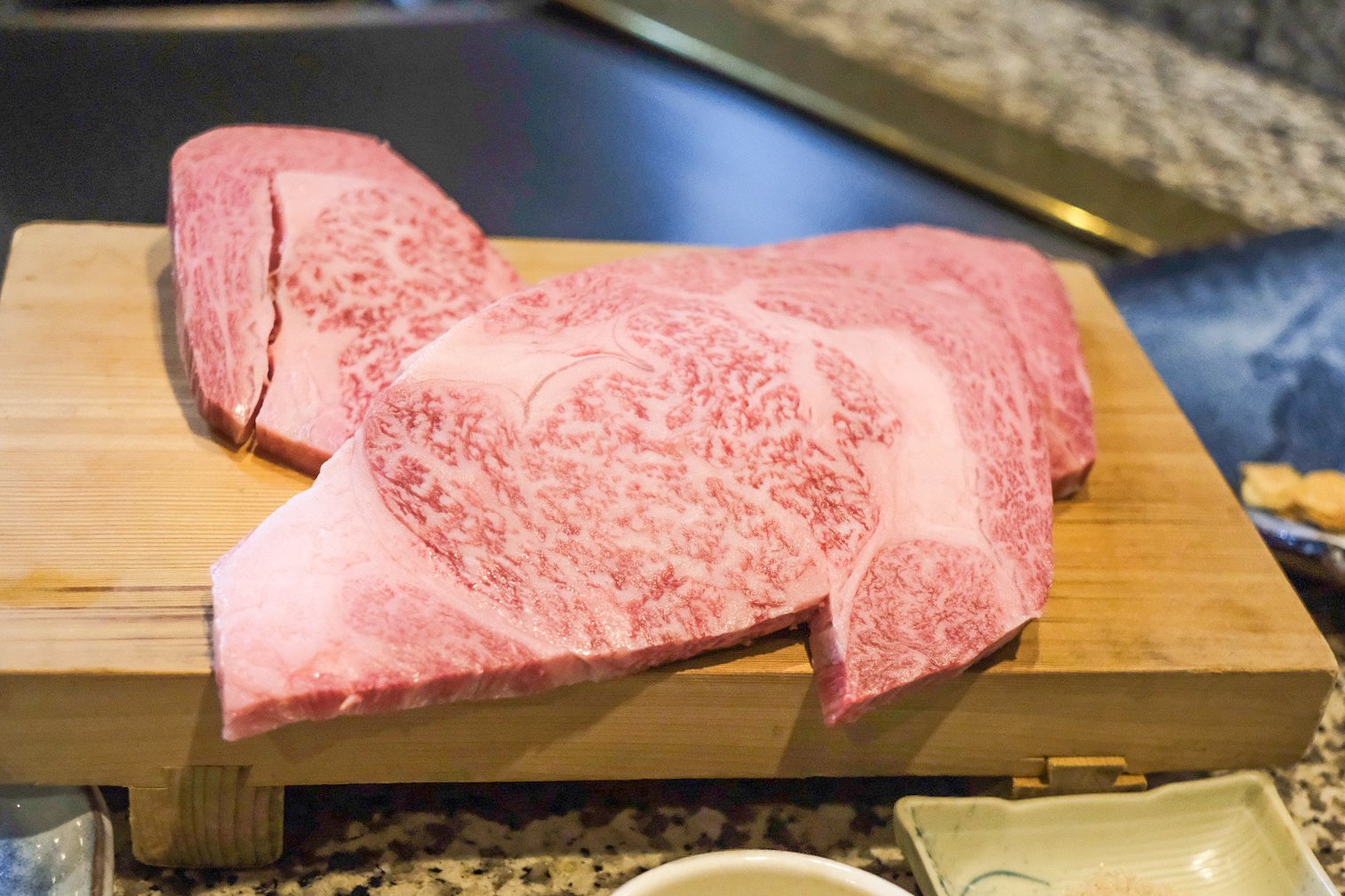


People who taste authentic Kobe Beef often describe it as completely different from ordinary beef.
Typical flavor characteristics include:
- Extremely fine marbling
- Sweet, creamy fat
- Buttery mouthfeel
- Meat that melts at body temperature
Some chefs even compare the texture to foie gras.
Other Wagyu varieties may have stronger “beefy” flavors, while Kobe Beef is prized for its delicate sweetness and silk-like texture.
Why Kobe Beef Is So Expensive
Several factors drive the high price of Kobe Beef.
1. Extremely Limited Supply
Only a few thousand cattle qualify each year.
2. Long Raising Period
Cattle are raised 28–60 months, much longer than typical beef cattle.
3. Intensive Care
Farmers closely monitor diet, health, and stress levels.
4. Strict Certification
Only certified processors and restaurants can sell real Kobe Beef.
As a result, Kobe Beef often costs hundreds of dollars per kilogram and can reach luxury prices in international restaurants.
Common Myths About Kobe Beef
Myth: Cows drink beer and receive massages
This is often repeated but misunderstood.
Some farmers occasionally give beer to stimulate appetite during hot summers, and brushing the cattle may help improve circulation.
However, these practices are not official requirements for Kobe Beef certification.
The real secret is genetics, careful breeding, and strict selection standards.
How to Identify Real Kobe Beef
When purchasing Kobe Beef, look for:
- Hyogo chrysanthemum certification stamp
- 10-digit cattle identification number
- Authorized Kobe Beef retailer or restaurant
Many products labeled “Kobe-style” or “American Kobe” are not authentic Kobe Beef.
True Kobe Beef comes only from Hyogo Prefecture in Japan.
Final Thoughts
Kobe Beef is more than just Wagyu — it represents the pinnacle of Japanese cattle breeding, regional tradition, and strict quality control.
While many Wagyu varieties are exceptional, Kobe Beef stands apart because of:
- Pure Tajima bloodlines
- Strict regional origin
- High marbling standards
- Limited annual production
- Full traceability
These factors combine to create one of the most luxurious and rare culinary experiences in the world.
For food lovers visiting Japan, tasting authentic Kobe Beef is not just a meal — it’s a once-in-a-lifetime experience.