Top 5 Izakaya Foods You Must Order in Japan (2026 Guide)
great-tirp
great-trip


In today’s fast-paced, hyperconnected world, stress has become almost unavoidable. Long work hours, constant notifications, and urban living can overload our minds and bodies. But in Japan, a simple practice offers a powerful remedy: Shinrin-yoku, often translated as “forest bathing.”
Despite the name, forest bathing doesn’t involve water. Instead, it means immersing yourself in the atmosphere of a forest, engaging all your senses while slowly walking among trees.
Since the 1980s, scientists have studied this practice extensively—and the results are remarkable. Research shows that spending time in forests can boost immunity, reduce stress hormones, improve mood, and even enhance cognitive performance.
Let’s explore where shinrin-yoku came from, what science says about it, and how you can try it yourself.


The term Shinrin-yoku was introduced in 1982 by Japan’s Ministry of Agriculture, Forestry, and Fisheries.
At the time, Japan was experiencing rapid economic growth and urbanization. While this created prosperity, it also led to widespread stress and burnout among workers.
Government officials recognized that forests could play a role in improving public health. The idea was simple:
Encourage people to spend time in forests to reduce stress and reconnect with nature.
The concept quickly resonated with Japan’s long cultural relationship with nature.
Traditional Japanese beliefs rooted in Shinto and Buddhism often view forests as sacred places inhabited by spiritual presences. For centuries, temples and shrines have been built deep within wooded mountains, reinforcing the idea that forests are places of healing and reflection.
Because around two-thirds of Japan is covered in forests, the country provides an ideal environment for this practice.
Today, shinrin-yoku has spread worldwide, influencing wellness programs in Europe, North America, and Asia.


Much of the scientific research on shinrin-yoku was pioneered by Dr. Qing Li, a physician at Nippon Medical School and one of the world’s leading experts on forest medicine.
His studies revealed that forests influence the human body in several measurable ways.
Trees release natural aromatic compounds called phytoncides. These antimicrobial chemicals help plants protect themselves from insects and disease.
When humans inhale phytoncides while walking in forests, they appear to trigger beneficial biological responses.
Research shows phytoncides can:
This is one reason forest air often feels refreshing and calming.
One of the most striking findings involves the immune system.
In a well-known study, participants spent several days walking in forest environments. Researchers found that their natural killer (NK) cell activity increased by up to 50%.
NK cells are critical immune cells that help the body fight:
Even more impressive, this immune boost lasted for up to a month after the forest visit.
Forest environments also have a powerful calming effect on the nervous system.
Studies show that spending just 20 minutes in a forest can significantly reduce cortisol, the body’s primary stress hormone.
Participants typically experience:
These physiological changes help the body shift from a stress response to a relaxed, restorative state.

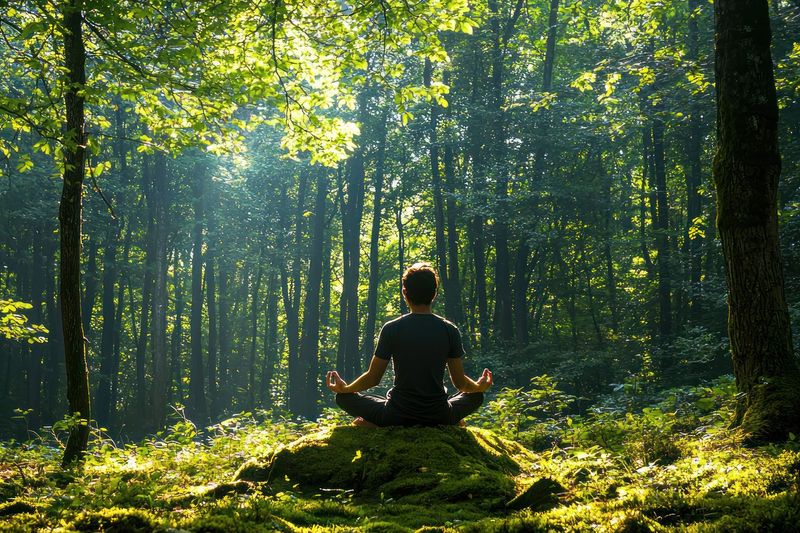
In addition to physical benefits, forest bathing significantly improves mental well-being.
Research across more than 100 studies has linked time in nature with:
Psychologists believe natural environments restore the brain’s directed attention capacity, which becomes fatigued in busy urban settings.
Simply viewing greenery—even from a window—can improve mental recovery from stress.
One of the best things about forest bathing is its simplicity. You don’t need expensive equipment or special training.
All you need is a quiet natural environment and the willingness to slow down.
Here are some beginner-friendly tips.
Unlike hiking, shinrin-yoku isn’t about distance or exercise. Walk slowly and comfortably, allowing your body to relax.
Pay attention to your surroundings:
This sensory awareness deepens the experience.
Avoid phones, music, or social media. Forest bathing works best when you are fully present.
Take slow, deep breaths to absorb the forest air and phytoncides.
Research suggests that 120–200 minutes per week in nature provides the greatest health benefits.
Even short visits of 20 minutes can significantly reduce stress.
In modern life, people spend most of their time indoors—often in front of screens.
Shinrin-yoku reminds us that nature itself can be a form of medicine.
With evidence from over a hundred scientific studies showing improvements in immunity, mental health, and cardiovascular function, forest bathing offers a powerful yet simple solution to modern stress.
The next time you feel overwhelmed, consider stepping outside and finding a quiet trail.
Slow down, breathe deeply, and let the forest do what it has done for humans for thousands of years—restore balance to body and mind.