Okinawa: Japan’s Hawaii – A Tropical Escape for International Travelers (2026 Guide)
great-tirp
great-trip



Japan consistently ranks among the countries with the highest life expectancy in the world, averaging around 84 years. Even more impressive, many Japanese people remain active and independent well into old age.
Scientists increasingly believe that one of the key reasons is the traditional Japanese diet, often referred to as “washoku.” This style of eating emphasizes balance, fresh ingredients, and moderation rather than excess.
Unlike many modern diets filled with processed foods and added sugars, the Japanese diet is built around simple, nutrient-dense ingredients that support long-term health.
In this article, we’ll explore the science behind the Japanese diet and why it is strongly associated with longevity.
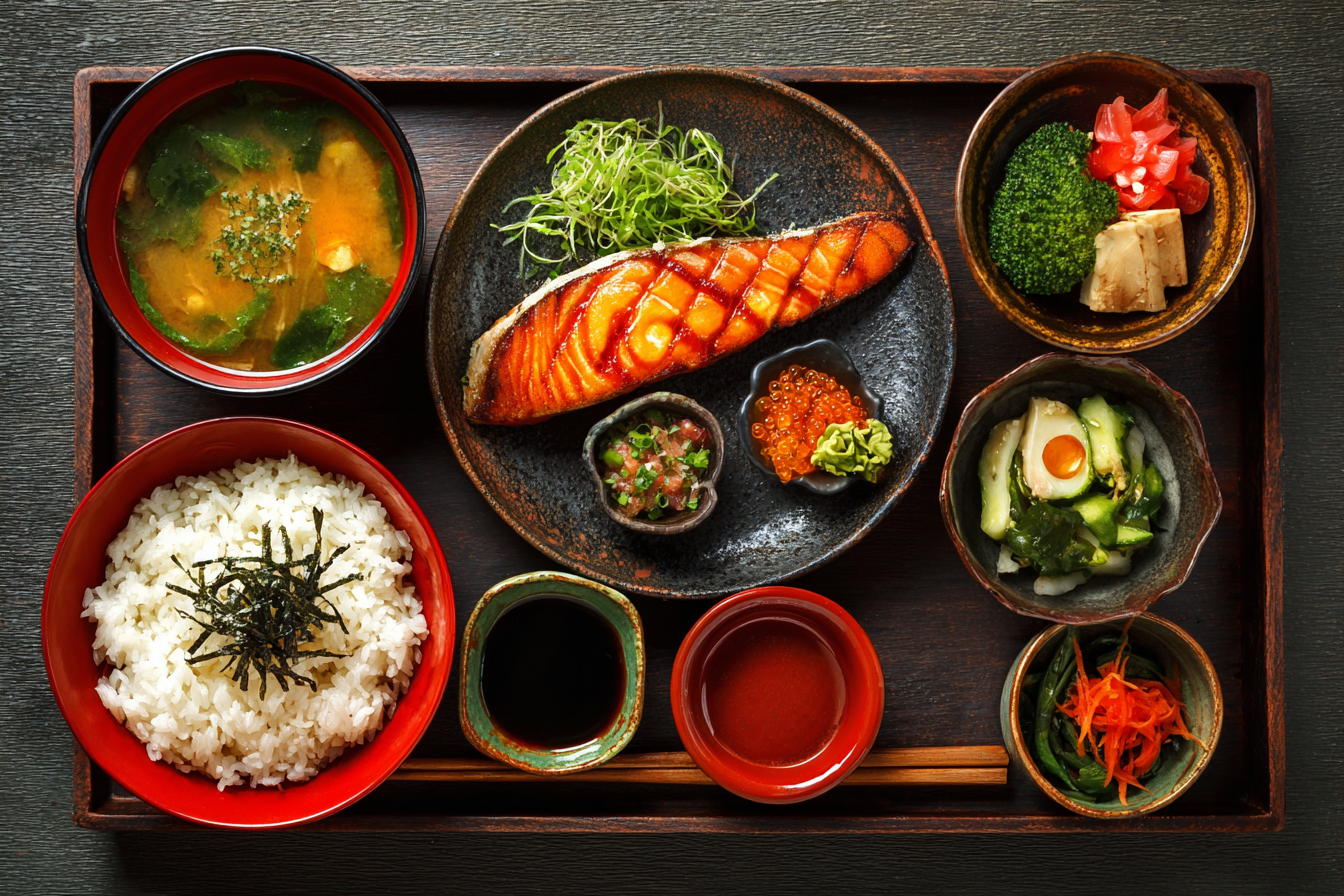
At the heart of Japanese eating culture is a meal structure known as “ichiju-sansai.”
This traditional format includes:
This structure naturally encourages variety and portion control.
A typical meal might include:
Compared with Western diets, this approach is generally:
The result is a dietary pattern strongly associated with lower obesity rates.
For example:
This difference alone significantly impacts long-term health outcomes.



Several staple foods in the Japanese diet provide powerful health benefits supported by scientific research.
Japanese people consume far more fish than most Western populations.
Fish such as:
are rich in omega-3 fatty acids, which help:
These fats are strongly associated with lower cardiovascular disease rates.
Fermented foods are a cornerstone of Japanese cuisine.
Examples include:
Fermentation promotes gut microbiome diversity, which modern science increasingly links to:
Natto, in particular, contains vitamin K2 and nattokinase, compounds associated with cardiovascular protection.
Seaweed is rarely consumed in Western diets but is common in Japan.
Types include:
Seaweed contains minerals such as:
Taurine is linked to muscle function and metabolic health, both important factors in healthy aging.
Green tea is consumed daily by many Japanese people.
It contains powerful antioxidants called polyphenols, particularly catechins.
Research suggests green tea may:
Some studies even link green tea consumption to longer telomeres, markers associated with biological youth.
Large epidemiological studies have examined the connection between diet and lifespan in Japan.
Researchers developed something called the Japanese Dietary Index (JDI). This index measures how closely someone follows the traditional Japanese diet.
Foods included in the index:
Studies show that people with higher JDI scores experience:
These findings suggest that consistent adherence to traditional Japanese dietary patterns can significantly improve long-term health outcomes.
One reason the Japanese diet promotes longevity is its anti-inflammatory profile.
Chronic inflammation is strongly linked to many age-related diseases, including:
Many Japanese foods help combat inflammation.
Examples include:
Together, these foods reduce oxidative stress, one of the main drivers of biological aging.


One of the most famous examples of diet-driven longevity comes from Okinawa, an island region of Japan often called a Blue Zone.
Blue Zones are regions of the world where people live significantly longer than average.
Traditional Okinawan diets historically featured:
Contrary to popular myths, Okinawans did eat pork—often using every part of the animal.
The traditional diet also maintained a roughly 10:1 carbohydrate-to-protein ratio, which some studies suggest may help protect against age-related diseases such as cancer and Alzheimer’s.
Okinawans also follow an important cultural habit:
“Hara hachi bu.”
This phrase means “eat until you are 80% full.”
Calorie moderation is widely believed to contribute to longevity.
Diet alone does not fully explain Japan’s long lifespan.
Other supporting factors include:
Urban environments in Japan also encourage physical activity, with public transportation and walkable cities.
Together, these factors reinforce the benefits of a healthy diet.
Although cultural and environmental factors differ globally, many principles of the Japanese diet can be adopted anywhere.
Practical changes include:
These simple adjustments can significantly improve long-term health.
The science behind the Japanese diet and longevity is increasingly clear.
The traditional Japanese approach to food emphasizes:
Together, these factors contribute not only to longer life expectancy, but also to a longer healthspan—the number of years lived without disease or disability.
By adopting even a few elements of the Japanese diet, people around the world may move closer to the same goal: living not just longer, but healthier lives.