Most first-time visitors picture a capsule hotel as a coffin with a lightbulb — cramped, clinical, a last resort for a missed train.
The reality, in 2026, is closer to a boutique hostel with a sci-fi bed. The one thing that actually trips people up isn’t the pod. It’s everything around it.
⭐ Bottom Line
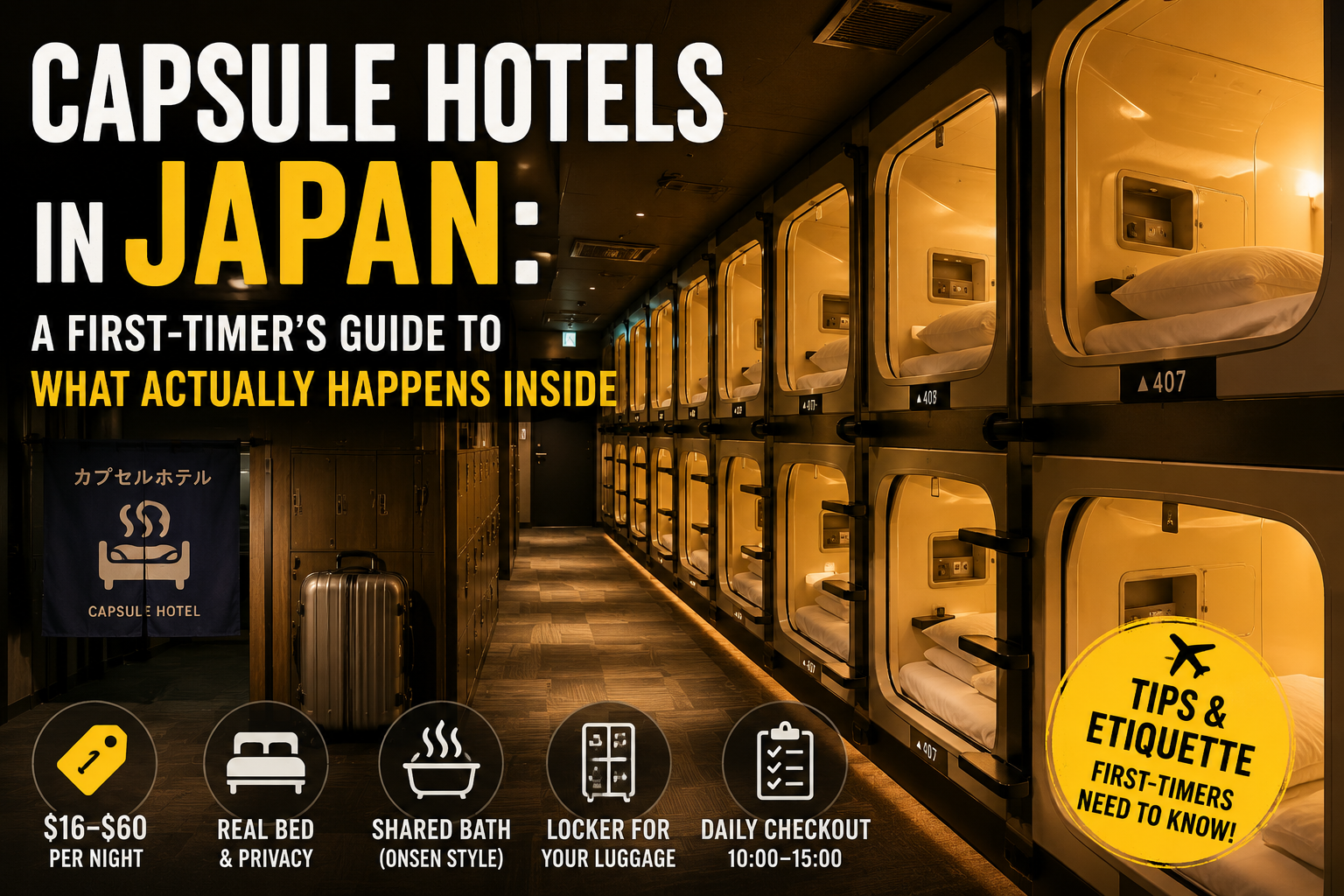
A night in a Japanese capsule hotel costs $16–$60, comes with a real bed, a personal locker, and often a shared bath — and the pod itself is rarely what surprises first-timers. The etiquette around it is.
- Best for: solo travelers, budget-conscious visitors, and anyone curious about a genuinely Japanese way to sleep
- Budget: $16–$25 for an older, no-frills location; $35–$60 for a modern design-forward property with a proper bath and lounge
- Book ahead: not essential at older locations, but modern chains in central Tokyo and Osaka fill up on weekends — book one to two weeks out if you can
The capsule hotel was invented in Osaka in 1979 by architect Kisho Kurokawa, built to give salarymen who missed the last train somewhere cheap and dignified to sleep before work the next morning. In 2026, that same format houses backpackers, solo female travelers, and couples splitting a trip’s budget, in properties ranging from Kurokawa’s original — still bookable in Osaka’s Umeda district — to design-forward properties with private baths and app-based sleep tracking.
Nightly rates run roughly ¥2,500 to ¥9,000 (about $16–$60) depending on the era and design level of the property. 9h nine hours, Japan’s original wellness-focused capsule brand, lists rooms across its Tokyo locations mostly in the $22–$50 range on its official booking site, with men-only, women-only, and mixed-gender-floor properties.
The direct answer to the question most first-timers are actually asking: yes, it’s worth trying, and no, it isn’t as strange as it looks online. But there are real, unwritten rules that catch first-timers off guard — and almost none of them have to do with the size of the pod.
Five things specifically trip up first-timers, and only one of them is actually about the pod:
- The pod itself is rarely the problem.
- You may be expected to bathe completely nude.
- You have to leave the pod every single day, even on a multi-night stay.
- Your suitcase probably won’t fit in the room with you.
- The privacy blind on your pod doesn’t lock.
Here’s what each of those actually means once you’re standing in the lobby.
Is It Actually as Small as It Looks?
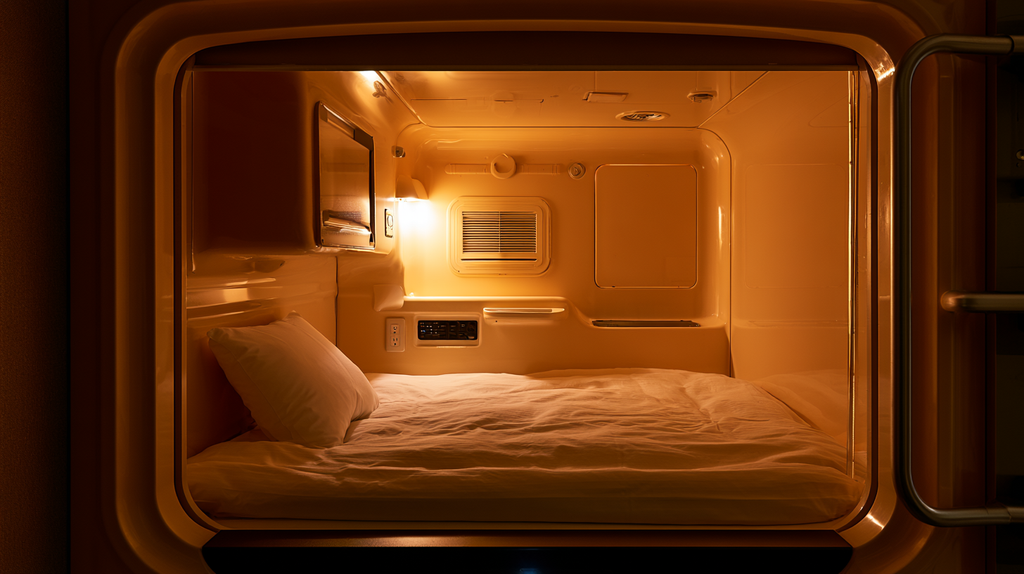
You can sit up fully inside a standard capsule, and most include a reading light, a power outlet, a small shelf, and sometimes a personal TV screen built into the wall. Ventilation is active, not passive — it isn’t a sealed box. A roll-down blind or curtain gives privacy at the entrance, not a locking door.
You don’t need to worry about the pod itself being the hard part. The privacy screen has no lock, though, which is exactly why nothing valuable should stay inside it while you sleep — more on that shortly.
The Shared Bath Question Everyone’s Too Embarrassed to Ask
Many capsule hotels include a communal bath in the sento or onsen style, and yes, that means bathing fully nude — swimsuits aren’t part of the etiquette here. You wash and rinse completely at a seated shower stall before ever stepping into the soaking tub, and the small hand towel you’re given never touches the water; guests fold it and set it on top of their head or beside the tub instead.
Tattoo policy varies property by property, tracing back to a traditional onsen rule rather than any law. Roughly half of bath-equipped capsule hotels still restrict visible tattoos in the shared bath; some chains, including Anshin Oyado, are explicitly tattoo-friendly. If you have visible ink and want bath access, checking the property’s policy before booking saves an awkward moment at the door.
The Rule That Surprises Everyone: You Have to Check Out — Every Day
Even on a multi-night stay, most capsule hotels require you to fully vacate your pod during a daily cleaning window, commonly between 10:00 and 15:00. You leave your locker key with reception and collect it again at re-entry; your locker itself usually stays untouched, but the pod gets reset.
Quiet hours typically start around 22:00: phones on silent, no calls inside the pod, no rustling plastic bags. Most properties don’t allow guests to bring visitors into the capsule area, since each reservation is for one person only. Alcohol is usually fine in the lounge, but arriving visibly drunk can get you turned away at the door.
Where Does My Luggage Actually Go?
Your suitcase never comes up to the sleeping floor. Most capsule hotels provide coin lockers, typically ¥500–¥1,000 ($3–$6), sized for a medium carry-on and a day bag. A full-size 28-inch checked suitcase often won’t fit.
Plan this before you arrive, not at the front desk with a rolling suitcase in your hand — it’s a five-minute problem if you’ve looked it up in advance, and a frustrating one if you haven’t.
Is It Safe to Leave My Stuff in an Open Pod?
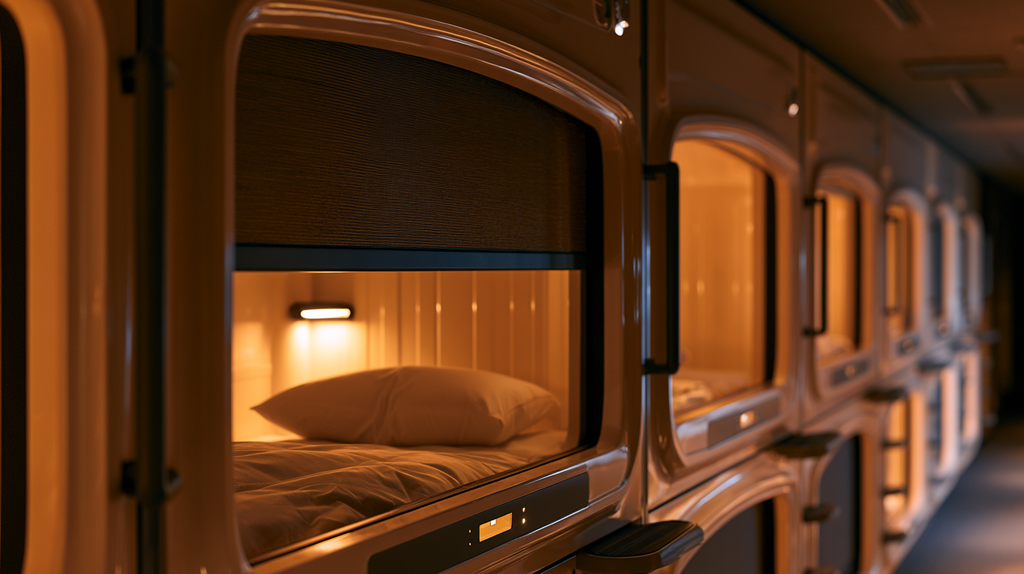
Japan’s low rate of petty theft is real, and capsule hotels have operated this way since 1979 without it becoming a common complaint. That said, the roll-down blind on your pod offers privacy, not security — it has no lock. Passport, cash, cards, and electronics belong in your assigned locker overnight, not tucked into the pod with you.
Do I Need to Speak Japanese to Check In?
No. Most capsule hotels that regularly host foreign guests, including major chains, check you in through an English-capable self-service kiosk or a staff member used to non-Japanese speakers. You’ll typically get a wristband or key fob for your locker and pod, plus a bag of sleepwear, a towel, and toiletries at check-in.
You don’t need to memorize any Japanese phrases for this. Pointing at your phone screen and your passport covers nearly every interaction at check-in.
Your First Night, Hour by Hour
On arrival: remove your shoes at the entrance and place them in a shoe locker — this step is non-negotiable at nearly every property.
At check-in: get your wristband or key fob, plus your sleepwear and towel bag.
In the changing room: swap into the provided pajamas and store your clothes and valuables in your assigned locker.
At the bath, if the property has one: wash and rinse fully before soaking — the towel never touches the water.
In the lounge, optional: many properties have a common area for a drink or a snack before bed.
In the pod: climb in, roll down the blind, plug in your phone, and set an alarm — walls are thin enough that you’ll want headphones if you’re not an early sleeper.
The genuinely surprising part isn’t the size of the space. It’s how quiet it is — a soft hum of ventilation, dimmed lighting timed to the hour, and a bed that, for the price, is more comfortable than most travelers expect walking in.
It won’t replace a proper hotel room for everyone, and that’s fine — it’s not trying to.
The next morning: check the posted checkout time (often 10:00), collect your bag from the locker, and drop your sleepwear bag in the marked return bin on your way out. That’s the entire routine, start to finish.
| Type | Price/Night | Best For | Watch Out For |
|---|---|---|---|
| Original 1970s-80s style (e.g. Capsule Inn Osaka) | ¥2,500–¥3,500 ($16–$23) | Budget travelers and architecture fans | Older facilities, fewer amenities |
| Modern chain (e.g. 9h nine hours) | ¥3,500–¥6,000 ($22–$38) | First-timers who want consistency | Books out on weekends — reserve ahead |
| Design-forward “poshtel” | ¥6,000–¥9,000 ($38–$60) | Travelers who want a private bath and style | Priciest tier, still no lockable pod door |
| Women-only chain or floor | ¥3,000–¥5,500 ($19–$35) | Solo female travelers wanting extra comfort | Fewer locations than mixed-gender chains |
✅ Go if you are:
- traveling solo or on a tight budget and want a clean, safe place to sleep for a fraction of a hotel room’s price
- curious about a genuinely Japanese way of traveling, not just looking for the cheapest bed
- comfortable with a shared bath and communal spaces in exchange for the price and the experience
- flexible enough to be out of your room during the midday cleaning window
❌ Skip if you are:
- traveling as a family or group that wants to stay together in one room
- genuinely claustrophobic in enclosed sleeping spaces, even with ventilation and an open blind
- not willing to store valuables in a locker instead of keeping them within arm’s reach overnight
- planning to bring a large checked suitcase with no backup luggage plan
- Do I need to speak Japanese to stay in a capsule hotel?
- No. Chains that regularly host foreign guests check in through English-capable kiosks or English-speaking staff, and pointing at a phone screen or passport covers nearly every interaction.
- Is it actually safe?
- Yes, by most travelers’ experience — Japan’s low rate of petty theft and the format’s history since 1979 both support that. Still, keep your passport, cash, and electronics in your assigned locker overnight rather than in the open pod, since the privacy blind isn’t a lock.
- What if I have visible tattoos?
- Roughly half of bath-equipped capsule hotels restrict visible tattoos in the shared bath, following a traditional onsen-era rule. Some chains, like Anshin Oyado, are explicitly tattoo-friendly — check the specific property’s policy before booking if this applies to you.
- Can couples or friends stay in adjacent pods?
- Yes, most properties will seat you near each other on request, though you’ll typically still be on gender-segregated floors unless the property offers mixed or private-room options.
- What should I pack?
- Very little — sleepwear, a towel, and basic toiletries are usually provided. Bring earplugs if you’re a light sleeper, and anything you’ll need overnight, since your main luggage stays in a locker downstairs.
- Is there a size or weight limit for the pod?
- Standard capsules comfortably fit adults well over six feet lying down, though very tall or broad-shouldered travelers may find some older, smaller pod models tight. Modern chains tend to have more generous interior dimensions than 1980s-era properties.