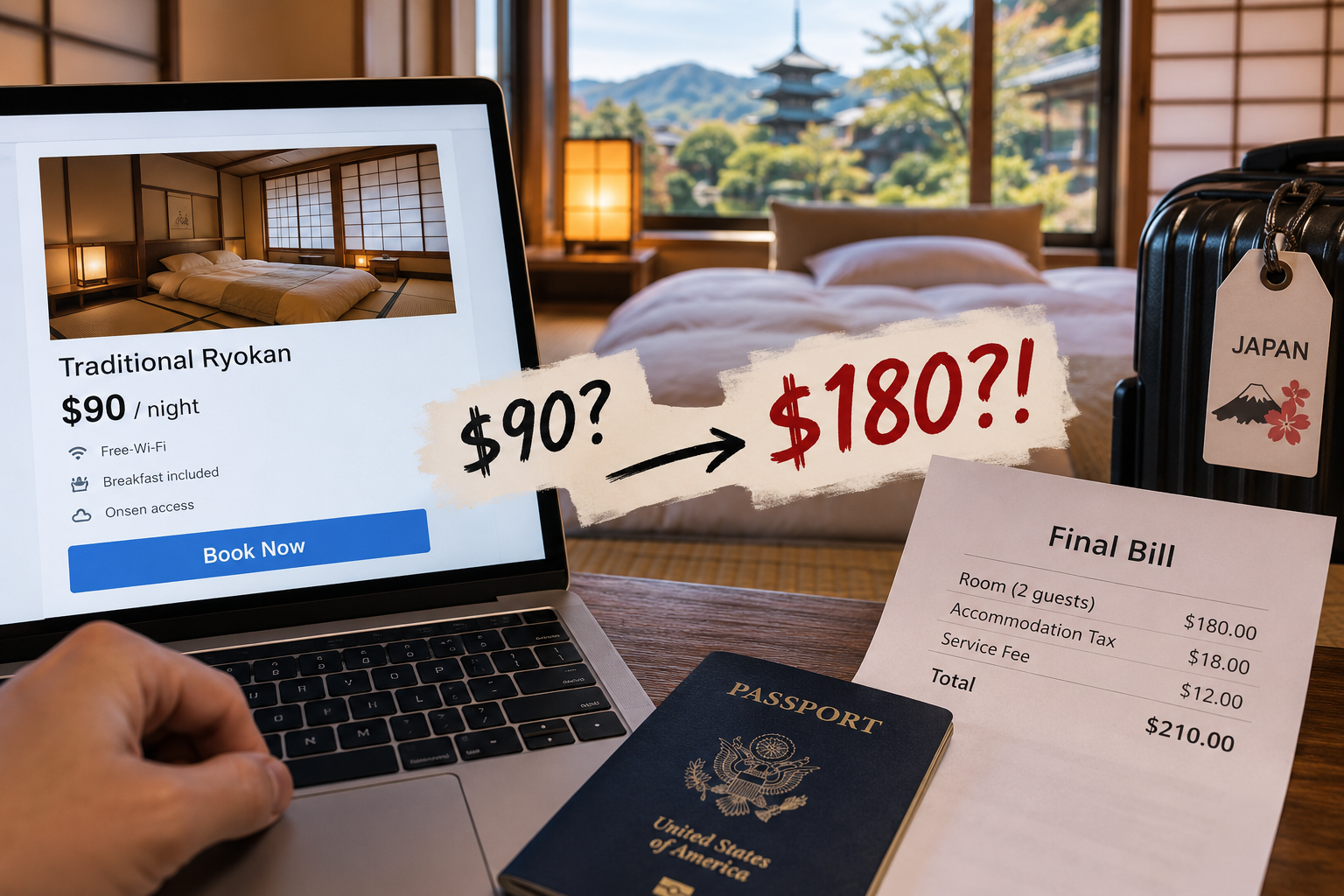
A ryokan listing priced at $90 a night can look like $180 for two guests. Then a traveler reaches checkout — or worse, check-in — and realizes that $90 was the price for each guest, not the room.
That’s only the first of seven ways a Japan hotel or ryokan booking can end up costing more than the screen ever showed.
⭐ Bottom Line
Most of the money lost on Japan accommodation traces back to seven repeatable mistakes, not bad luck — and every one of them is avoidable in the few minutes before you hit confirm.
- Best for: First-time visitors booking hotels, ryokan, or Airbnb-style stays directly online
- Budget: $16–$400+ per night depending on property type and how carefully it’s booked
- Book ahead: Check the cancellation window and tax exposure before paying, not after
Booking a place to sleep in Japan feels like the easy part of trip planning — right up until the total on a bank statement doesn’t match the total that was confirmed. It happens to a meaningful share of first-time visitors, and it’s almost never a scam. So what’s actually going wrong between the confirmation screen and the final bill?
Three things shifted in Japan lodging heading into 2026: Kyoto rolled out a steeper accommodation tax, Japan’s Tourism Agency gave city wards new power to restrict Airbnb-style rentals, and the gap between what a smaller property’s own website can process and what a foreign-issued card can actually pay hasn’t gotten any less confusing. None of it is flagged clearly at checkout on most booking sites.
The short version: the price shown when booking in Japan is very often not the full price paid, because per-person math, local taxes, and short-term rental rules all work differently here than in the US, Australia, Canada, Singapore, or Malaysia. The seven mistakes below cover nearly every way that gap opens up, and each one takes only a few minutes to check before paying.
Mistake #1: Assuming Every Stay Is Priced Per Room
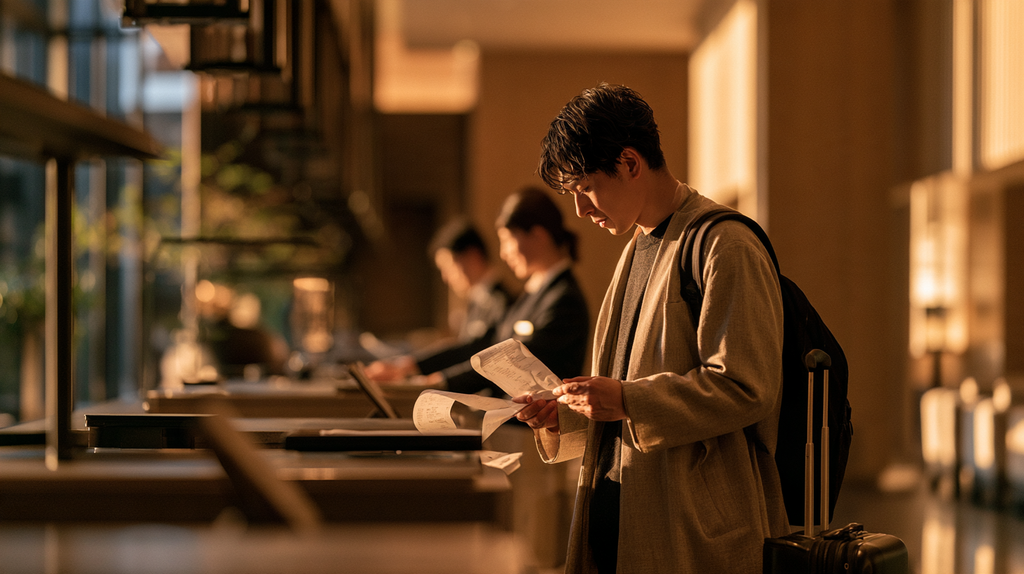
A hotel room in Tokyo or Osaka works close to what most travelers already expect: one price for the room, occupancy limits stated clearly. A ryokan is often priced differently by design.
The rate typically bundles a kaiseki dinner, breakfast, and onsen access for every guest, which is why a ryokan operates on its own rhythm rather than a 24-hour hotel schedule — dinner served in a set window, check-in sometimes earlier than expected when a meal is included, breakfast at a scheduled time rather than whenever a guest wakes up. That’s part of what makes the stay memorable, and also why it isn’t automatically the best fit for a traveler arriving late, leaving before breakfast, or wanting a fully flexible schedule.
Done well, it’s a real experience: a tatami room that still smells faintly of fresh reed mats, steam rising off a private bath in the evening cold, a kaiseki dinner arriving in small seasonal courses timed to the minute.
It’s a trade — ritual and atmosphere in exchange for less flexibility than a standard hotel — which is exactly why it’s worth choosing on purpose rather than by accident.
| Stay type | How the price is usually shown | Typical range (per guest, per night) | What first-timers miss | Best for |
|---|---|---|---|---|
| Hotel | Per room | $45–$150 | Occupancy limits, local tax add-ons | Flexibility, late arrivals, short stays |
| Ryokan | Often per person | $80–$300+ | Meals and onsen access bundled in for each guest | A one- or two-night cultural stay |
| Minpaku (Airbnb-style) | Per unit, per night | $60–$180 | Cleaning fees, registration status, local rules | Groups, longer stays, self-catering |
| Capsule / budget hostel | Per person, per pod or bed | $16–$60 | Gender-segregated floors, shared facilities | Solo travelers, one-night stopovers |

Mistake #2: Treating the Booking Total as the Final Total
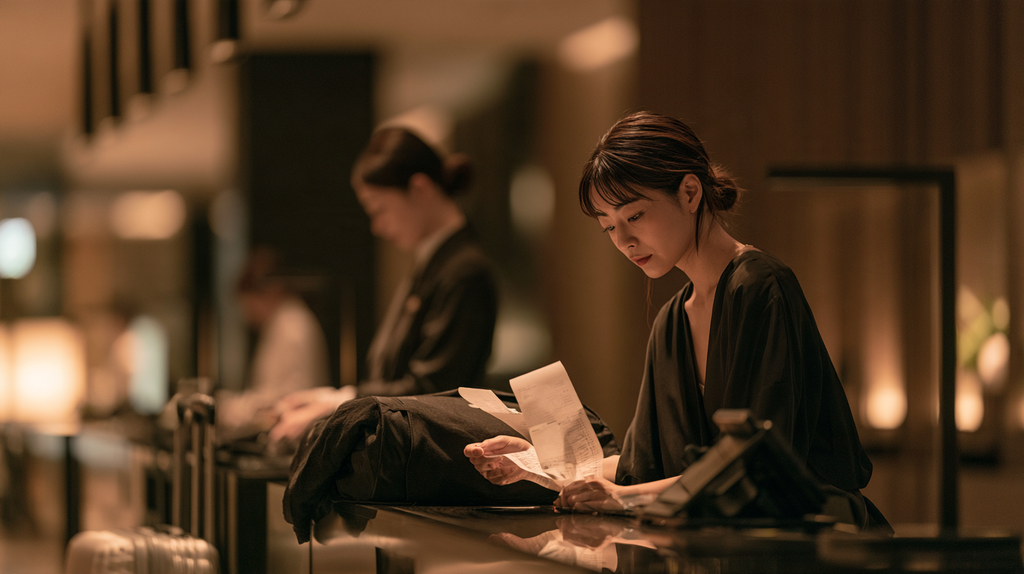
Depending on the property and booking platform, Japan’s local accommodation tax (shukuhaku-zei) may be collected separately from the online total — often in cash or by card at check-in or check-out, rather than folded into the rate shown when booking.
Tokyo, Kyoto, and Osaka each run their own schedule rather than one national rate. Tokyo exempts rooms under ¥10,000 per person, then charges ¥100 or ¥200. Osaka exempts stays under ¥5,000, rising to a ¥500 ceiling. Kyoto’s system is the steepest of the three, which matters most for a splurge night in a higher-end Kyoto room.
This tax is charged per person, per night, on top of Japan’s 10% consumption tax. Since it’s usually collected on-site rather than at booking, it’s worth checking the property’s own tax notice — many list it on their site — rather than assuming two similarly priced hotels cost the same once you’re actually standing at the front desk.
Mistake #3: Booking a Ryokan Like a Regular Hotel
Ryokan cancellation terms are generally stricter than hotel terms, and the penalty window can be shorter than travelers assume when they book months ahead.
It’s not unusual for a ryokan to charge a significant cancellation fee — in some cases the full amount — inside the final few days before a stay, since a kaiseki dinner is often prepared to order and can’t easily be resold. A hotel canceling on the same timeline would typically charge nothing or a single night’s penalty. The exact policy varies by property, which is exactly why it’s worth reading the specific date on the confirmation email rather than assuming “a few days” is automatically safe.

Mistake #4: Locking In a Non-Refundable Rate Before Plans Are Final
Non-refundable “early bird” rates are usually 10–15% cheaper than the flexible rate on the same room — a real saving, but only if the trip is genuinely locked in.
Plans shift more often than travelers expect this far out, and the flexible rate’s small premium is frequently cheaper than the non-refundable rate’s full loss when a date changes. It’s worth checking how far out the trip actually is before choosing the discount — a non-refundable rate booked eight months ahead of an itinerary that still has moving pieces carries more risk than the 10–15% saving is usually worth.
Mistake #5: Booking an Airbnb-Style Stay Without Checking the Listing Details
Airbnb-style rentals in Japan operate under the Residential Lodging Business Act, which caps a listing at 180 operating nights per year and requires a prefectural registration number — rules in place since 2018 that tightened further in 2026.
In June 2026, Japan’s Tourism Agency notified municipalities that it will allow them to set a minpaku listing’s annual operating-day allowance down to zero via local ordinance — turning what had been a soft discouragement into a legal path to an outright local ban, first reported by Nikkei. Tokyo’s Shibuya ward moved quickly: an ordinance revision took effect July 1, 2026, expanding the residential zones where minpaku operation is restricted well beyond what was covered before.
None of this means minpaku bookings are unsafe — most operate normally, and they remain a strong option for groups wanting a kitchen and laundry. It does mean giving a minpaku booking slightly more scrutiny than a hotel reservation, especially in central Tokyo.
Mistake #6: Assuming a Rejected Card Means the Trip Is Off
Some smaller, independent ryokan and hotel websites in Japan process payments in ways that don’t always play well with foreign-issued cards — the reasons range from card-issuer settings and 3D Secure authentication to billing-address checks and the payment processor a small property happens to use.
It’s still worth checking a property’s own site first, since some ryokan do offer a lower direct rate — but if a valid card gets rejected more than once, that’s a reasonable point to try a different platform rather than assuming the room is unavailable.
Mistake #7: Misreading “X Minutes From the Station” and Check-In Times
“5 minutes from Shinjuku Station” can describe two very different hotels — one near the station’s central exits, and one 5 minutes from a smaller, outlying exit of the same enormous station complex that’s a 20-minute walk from where a traveler actually wants to be.
Checking the specific station exit number and which line it connects to — not just the station name — against a map before booking solves most of this. It matters even more with luggage, since a route that’s a pleasant 5-minute walk empty-handed can be a genuinely difficult one with two suitcases.
Check-in times are also stricter than many first-timers expect — commonly 3 PM or 4 PM for hotels and ryokan alike, with early check-in available only on request and sometimes at an extra cost. Landing on an early morning flight and heading straight to a hotel that isn’t ready for hours is a common, avoidable first-day mistake. Many hotels, and most major train stations, offer paid luggage storage or coin lockers that solve this cleanly.
Before You Click “Book”: A 7-Point Check
Running through these before paying takes about the same amount of time as reading this sentence twice:
- Is the price shown per room or per person?
- Are meals included, and does that explain part of the rate?
- Is the local accommodation tax included, or charged separately on-site?
- When exactly does free cancellation end?
- Can you actually arrive after the stated check-in time without a fee?
- Is the property near the specific station exit you’ll be using, not just the station?
- If it’s an Airbnb-style listing, does it show a valid registration number?
Seven questions, and every one of them is answerable from the listing page in under a minute.
At a Glance: All 7 Mistakes
| Mistake | What It Actually Costs | The Fix | Effort |
|---|---|---|---|
| Assuming per-room pricing | Up to 2x the expected total | Check if the rate is per person | Low |
| Ignoring accommodation tax | Up to ¥10,000/person/night | Check the property’s tax notice | Low |
| Booking a ryokan like a hotel | Full-stay cancellation charge | Read the specific cancellation date | Low |
| Non-refundable rate too early | Full booking value if plans shift | Weigh flexible rate’s small premium | Low |
| Unchecked minpaku listing | A cancelled stay with short notice | Verify the registration number | Low |
| Assuming a card rejection is final | A booking given up unnecessarily | Try a different platform or ask the property | Low |
| Misreading station distance | 20+ minutes with luggage | Check the exit number on a map | Low |
- Do Japanese hotels charge per person or per room?
- Standard hotels almost always charge per room. Ryokan are the common exception — pricing is often per person, since the rate typically includes dinner, breakfast, and onsen access for each guest.
- Is Airbnb still legal in Japan in 2026?
- Yes, under the Residential Lodging Business Act, but listings are capped at 180 operating nights per year and must carry a prefectural registration number. As of June 2026, Japan’s Tourism Agency allows municipalities to restrict that further, down to zero days in specific wards.
- Why did my hotel’s official website reject my credit card?
- It can happen for several reasons — card-issuer settings, authentication checks, or the payment processor a smaller property uses. Booking the same property through Rakuten Travel, Booking.com, or Agoda, or contacting the property directly, often resolves it.
- What is the Japan accommodation tax, and is it included in my booking price?
- It’s a local tax charged per person, per night, on top of the room rate. Depending on the property and platform, it may be collected separately at check-in or check-out rather than included in the total shown when booking. Rates vary by city; Kyoto’s 2026 schedule is the steepest, up to ¥10,000 per person on rooms priced ¥100,000 and above.
- Can I cancel a Japan hotel or ryokan booking for free?
- It depends entirely on the rate type and property. Flexible hotel rates are often free to cancel up to 24–48 hours out. Ryokan bookings can carry a stricter, shorter cancellation window — sometimes charging the full amount close to the stay.
- What does “5 minutes from [station]” actually mean on a listing?
- It usually refers to walking time from the nearest station exit — which, at large stations with multiple exits spread across several blocks, may not be near the specific part of the station a traveler has in mind. Check the exit number, not just the station name.
Related Guides
- Capsule Hotels in Japan: A First-Timer’s Guide to What Actually Happens Inside
- Anime + Onsen 2026: Japan’s Best Ryokan Near Pilgrimage Sites
- Japan’s Most Expensive-Looking Hotels Under $200/Night (2026)
- Japan’s Most Isolated Villages You Can Actually Stay In 2026
- The Hidden “Visitor Price”: Where Japan Now Charges Tourists More Than Locals