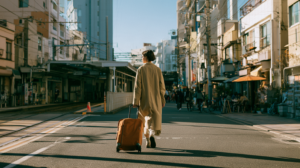
The bus stopped at a wooden shelter with no walls and a rusted tin roof. The driver said something in dialect I couldn’t follow. The three other passengers got off. I stayed on. He turned around and said it again. This was the last stop.
I was trying to reach a thatched-roof farmhouse in the Gokayama valley in Toyama Prefecture — a village so isolated that its residents maintained a separate dialect, a separate musical tradition, and a contraband gunpowder-making operation for three hundred years simply because no reliable road connected them to the outside world. When I finally walked down into the valley, the first thing I heard was the river. The second was my own footsteps on the stone path. There was nobody else.
Japan’s truly isolated villages are not well-served by travel content. Most coverage describes a day trip to Shirakawa-go from Nagoya or Kanazawa, which misses the point entirely. The villages listed here can all be reached, all offer overnight accommodation, and all reward staying rather than passing through. This is a guide to actually getting in — and sleeping there.
Gokayama, Toyama — The Village More Isolated Than Shirakawa-go


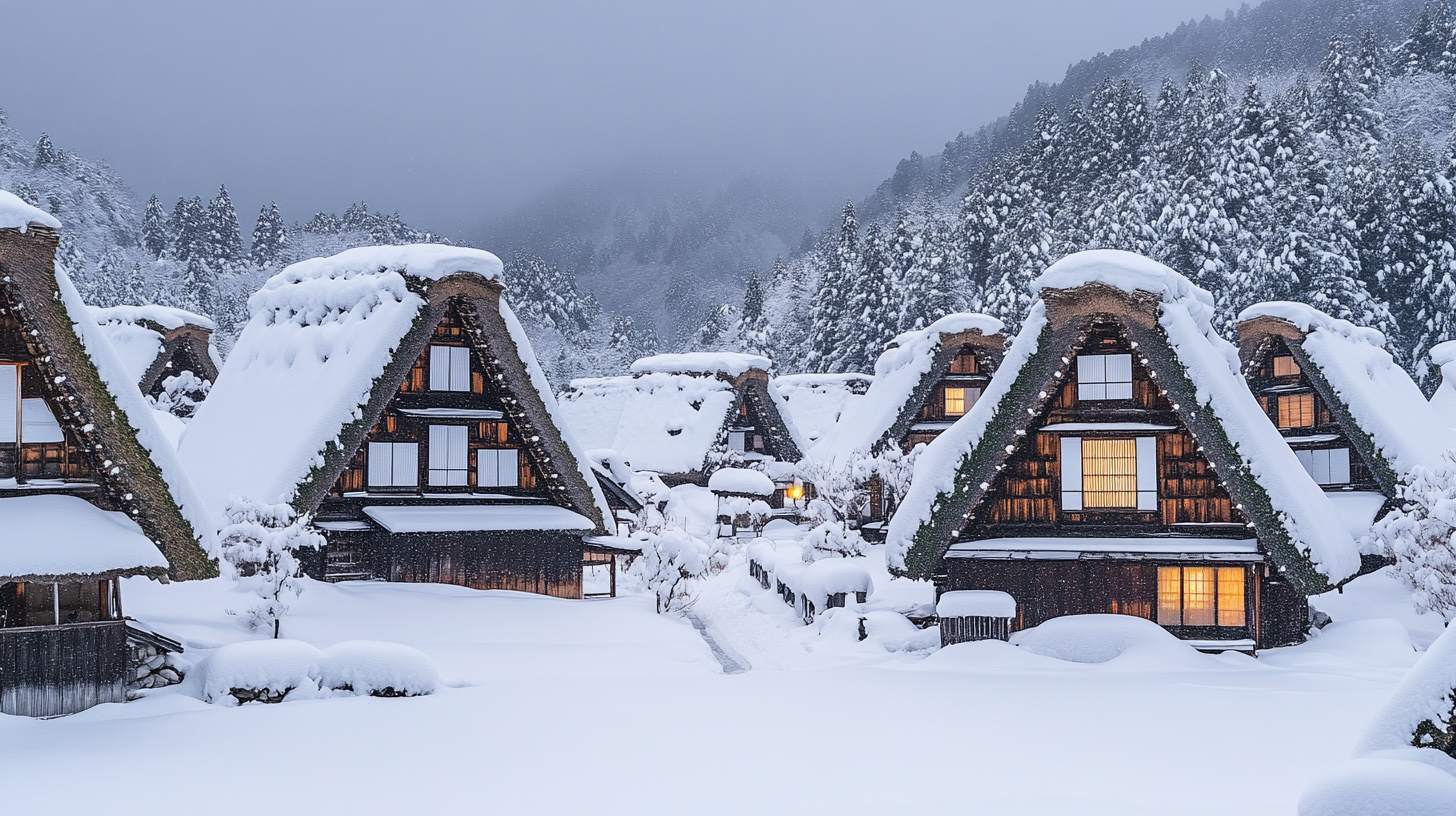
Gokayama (五箇山) and its neighbor Shirakawa-go share a UNESCO World Heritage designation for their gassho-zukuri (合掌造り) farmhouses — the distinctive steep thatched-roof structures designed to shed the enormous snowfall of the Shogawa River valley. But where Shirakawa-go draws over a million visitors a year and has paved its central lane into something close to a theme park, Gokayama receives a fraction of that traffic and has stayed closer to what both areas actually looked like a generation ago.
The two main hamlets are Ainokura (相倉) and Suganuma (菅沼). Ainokura is larger — 23 gassho-zukuri buildings clustered on a hillside — and has three working minshuku (民宿) offering overnight stays, dinner included, for around ¥10,000–¥14,000 per person. Suganuma has nine buildings in a tighter cluster and feels more compressed, like the valley is holding its breath around it. In winter, the snow accumulates on the rooftops to depths that make the buildings look submerged. The valley is accessible by car year-round, but the narrow prefectural road is sometimes closed after heavy snowfall. Access: from Takaoka Station (高岡駅), take the Kaetsuno Bus to Ainokura (相倉口) — approximately 75 minutes, ¥1,640. The last bus back leaves the valley in mid-afternoon, making an overnight stay not just appealing but logistically sensible.
Iya Valley, Tokushima — Vine Bridges and Cliff Villages


Iya Valley (祖谷渓) is a deep river gorge in the mountains of central Shikoku, carved by the Iya River into limestone walls that reach 200 meters in places. The valley’s reputation for isolation is not metaphorical: during the Heian period, surviving members of the defeated Heike clan are said to have retreated here precisely because the cliffs made pursuit impossible. Villages cling to the walls of the gorge at gradients that require rethinking your relationship to gravity.
The kazurabashi vine bridges (かずら橋) — handwoven from mountain vines and rebuilt every three years — are the valley’s best-known feature. Two remain in the west; a third, more remote crossing called Oku-Iya Niju Kazurabashi (奥祖谷二重かずら橋) sits further up the valley and is accessible by car only via a road that takes two hours from the nearest town. Overnight accommodation in the valley ranges from the large Iya Onsen Hotel (祖谷温泉ホテル) — perched above the gorge with a cable car to the riverside hot spring — to the extraordinary Chiiori house (チーイオリ), a 300-year-old thatched farmhouse that writer Alex Kerr restored and now rents for private stays. Chiiori costs around ¥70,000 per night for the whole house (up to five guests). Access: from Oboke Station (大歩危駅) on the JR Dosan Line, take the Yonko Bus to Kazurabashi — approximately 30 minutes. Car is strongly recommended for exploring beyond the main vine bridge.

Tsurunoyu Onsen, Akita — The Inn at the End of the Mountain Road


Tsurunoyu Onsen (鶴の湯温泉) sits at the end of a narrow forestry road in the Nyuto Onsen cluster of Akita Prefecture. The inn has been receiving guests since the 17th century. You must make a reservation. The final approach road is unpaved for several kilometers. In winter, the road closes entirely and access is by snowcat or snowshoe. This is not presented as an inconvenience — it is the point.
The accommodation consists of renovated wooden farm buildings with paper screen doors, communal dining around an irori (囲炉裏) sunken hearth, and four outdoor baths (露天風呂) fed by four different natural spring sources. The milky white water — caused by sulfur compounds — is the visual signature of Tsurunoyu and has appeared in more than one photograph used to represent rural Japan internationally. Rates run from approximately ¥16,000 per person per night, full board. Reservations open three months in advance and fill quickly for weekends and winter. Access: from Tazawako Station (田沢湖駅) on the Akita Shinkansen, take a taxi (about 40 minutes, ¥7,000–¥9,000) or the seasonal Nyuto Onsen bus (乳頭温泉郷シャトルバス) — about 50 minutes, ¥730.
Tsumago, Nagano — The Edo Post Town That Banned Cars


Tsumago (妻籠宿) was a postal relay town on the Nakasendo highway (中山道) — one of the two main routes between Edo and Kyoto during the Tokugawa period. In 1968, faced with post-war development pressure, the town’s residents took an unusual collective decision: they banned the demolition of historic buildings, banned new construction that disrupted the historical streetscape, and banned cars entirely from the central lane during visiting hours. The result is the most intact Edo-period townscape in Japan.
The main street is about 800 meters long and lined with honjin (本陣, the official post-station lodging for samurai), merchant houses, and waki-honjin (脇本陣) unchanged in their external structure since the 18th century. Overnight guests in the handful of operating minshuku experience the town after the day visitors have left — the evening is entirely quiet, lit by paper lanterns, occasionally sound-tracked by the Kiso River one valley below. The 8-kilometer walking path to the neighboring post town of Magome (馬籠宿) is one of the best-preserved sections of the Nakasendo and takes about three hours. Access: from Nagoya, take the JR Chuo Line to Nagiso Station (中央線南木曽駅) — about 90 minutes — then a local bus to Tsumago (妻籠), 10 minutes, ¥270.

Ouchi-juku, Fukushima — The Mountain Post Town Above the Clouds


Ouchi-juku (大内宿) is a mountain post town in the Aizu region of Fukushima Prefecture, set in a narrow valley at 650 meters elevation on a route that once connected Aizu domain to Nikko. The town’s thatched-roof buildings — forty-two along a single central road — have been preserved under a conservation agreement since 1981. Unlike Tsumago, Ouchi-juku is still primarily a farming community, and the farmhouses are occupied year-round. Residents sell their own vegetables, make their own soba, and maintain the buildings through a collective annual thatching effort.
Winter is the best season. Snow covers the rooftops to depths of a meter or more, the central road is quiet, and the valley fills with a silence that has a texture to it — compressed and white. The Yuki Matsuri snow festival (雪まつり) in mid-February illuminates the street with snow lanterns after dark, a sight that draws visitors from across Japan. Overnight accommodation in the town’s minshuku includes dinner and breakfast prepared from local Aizu produce. Access: from Aizu-Wakamatsu Station (会津若松駅) on the Aizu Tetsudo Line, take a local bus to Yunokami Onsen (湯野上温泉駅) and then a taxi to Ouchi-juku — total about 50 minutes. Direct highway buses also run from Aizu-Wakamatsu on weekends and holidays.
Practical Notes for Isolated Village Travel in Japan 2026
Most of these villages have limited public transport, and for Gokayama, Iya Valley, and Ouchi-juku, a rental car is the most practical option for travelers who want to arrive and leave on their own schedule. Car rental from major regional cities — Takaoka, Oboke, Aizu-Wakamatsu — is straightforward. International driving permits accepted; left-hand drive adjustment takes about 30 minutes on quiet mountain roads.
For minshuku stays: nearly all require advance reservation, and most require booking through Japanese-language phone or fax systems rather than international booking platforms. English-speaking reservation services are available through JTB and local tourism offices for most villages listed here. Confirmation usually comes by phone — have your accommodation address in Japanese characters ready for your arrival documents.
Winter travel — December through February — is consistently recommended for Gokayama, Tsurunoyu, and Ouchi-juku specifically. The snow depths transform these places into environments that are genuinely difficult to reach and genuinely worth the effort of reaching. Check prefectural road condition websites before travel: Toyama Prefecture (Gokayama) and Akita Prefecture (Tsurunoyu) both publish daily road closure reports during snowfall periods.