One Day. Two World-Class Parks. Which Do You Choose?
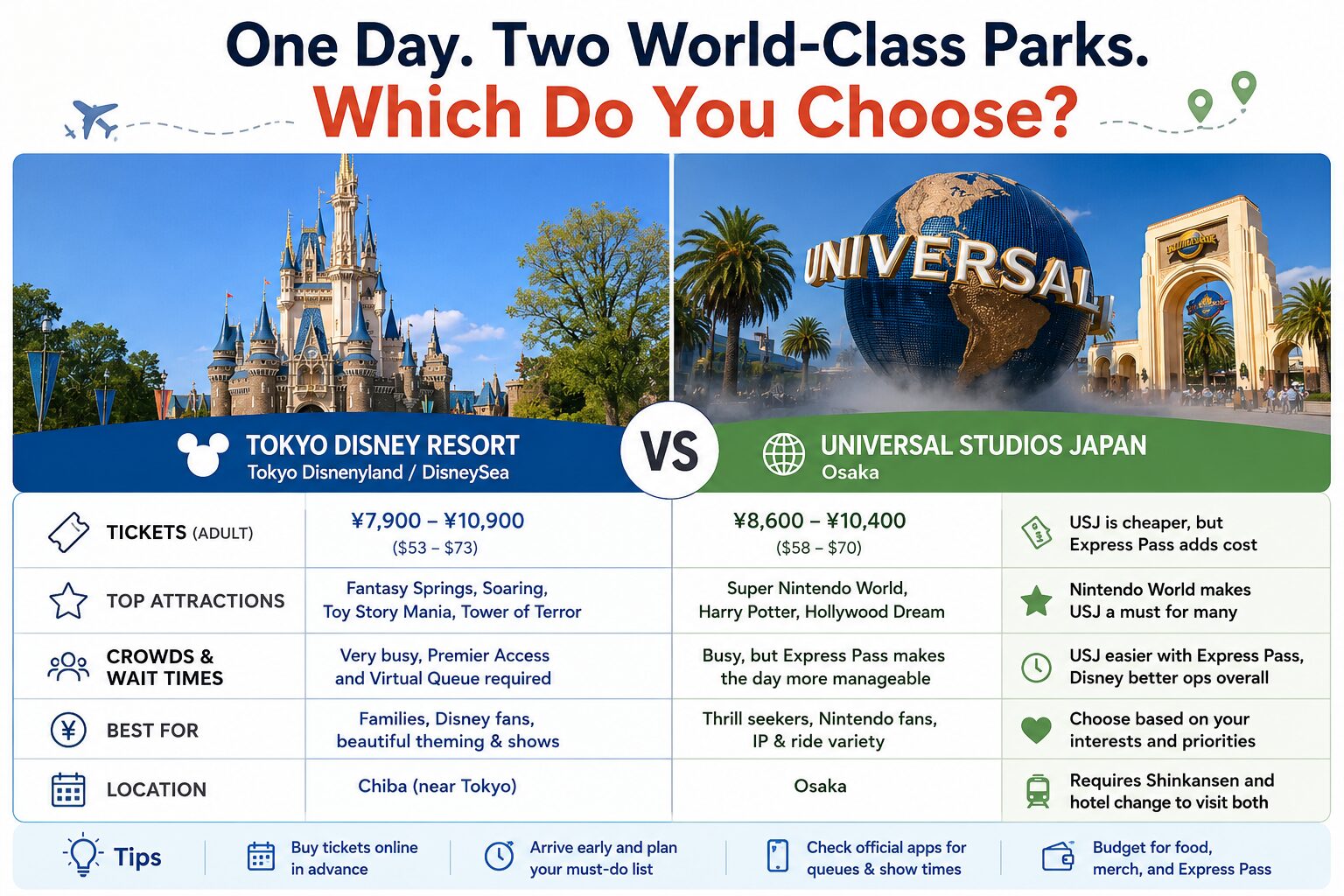
Most visitors to Japan don’t have time for both Tokyo Disney Resort and Universal Studios Japan. One is in Chiba, east of Tokyo. The other is in Osaka. Getting between them means a Shinkansen ride and a hotel change. For the majority of itineraries, you pick one.
Both parks are legitimately extraordinary. Tokyo Disneyland and Tokyo DisneySea consistently rank among the best-operated theme parks in the world. Universal Studios Japan — particularly since the opening of Super Nintendo World — has become a destination in its own right, drawing visitors specifically for the Nintendo experience that doesn’t exist anywhere else at the same scale. But they are fundamentally different parks designed for different priorities. Here is the honest comparison.
Ticket Prices: USJ Is Cheaper, But Tokyo Disney Has More Flexibility
As of 2026, Tokyo Disneyland and Tokyo DisneySea use dynamic pricing with tickets ranging from ¥7,900 to ¥10,900 per adult depending on date (approximately $53–$73). Peak dates — weekends, school holidays, and the DisneySea 25th Anniversary celebration period — hit the top of the range. Purchasing in advance online through the official Tokyo Disney Resort app is mandatory for most popular dates; walk-up availability is limited and often sold out for premium attractions.
Universal Studios Japan adult tickets run ¥8,600–¥10,400 ($58–$70) for standard 1-day entry, with Express Pass add-ons ranging from ¥2,800 to ¥10,800 depending on which attractions are included and the date. USJ’s Express Pass system is more developed than Tokyo Disney’s Premier Access and is effectively a necessity on busy days for Nintendo World, Hogwarts, and the top rollercoasters. Factor in the likely Express Pass cost when comparing true prices: a USJ day with necessary Express Pass can run ¥15,000–¥20,000 per person ($100–$135) on peak dates.
Tokyo Disney’s system is different: the Premier Access in-app purchase (¥1,500–¥2,000 per attraction) and Virtual Queue (free) replace the old FastPass. For most visitors, 2–3 Premier Access purchases at Tokyo Disney produce a comparable day to a mid-tier USJ Express Pass at lower total cost.
The Attractions: Nintendo World Changes Everything for USJ
Super Nintendo World at USJ is the park’s defining argument. The area — covering Mario Kart, Yoshi’s Adventure, Bowser’s Castle, and the power-up band interactive experience — is a fully realized version of the Mushroom Kingdom at a scale and quality level that Osaka’s Universal creative team executed with unusual precision. Mario Kart: Koopa’s Challenge uses AR headsets and physical set design in a way that produces a genuinely novel ride experience. For anyone with Nintendo nostalgia, the area alone justifies the trip to Osaka.
USJ also houses The Wizarding World of Harry Potter (consistently well-reviewed), Hollywood Dream rollercoaster, and Minion Park. The park skews toward thrill rides and IP-specific experiences. If your travel group prioritizes marquee brand experiences and rollercoasters, USJ’s lineup is stronger.
Tokyo Disney’s argument is operational excellence and atmosphere. Tokyo Disneyland is widely considered the most precisely operated Disney park in the world — cleaner, better-staffed, with faster queue management and more consistent food quality than any US Disney property. Tokyo DisneySea, the adjacent park, is architecturally extraordinary, built around a Mediterranean harbor theme with a physical scale and detail level that no US park matches. The Fantasy Springs expansion (opened 2024), adding Frozen, Rapunzel, and Peter Pan lands with full-size indoor areas, makes DisneySea a significantly longer and more varied day than it was previously. DisneySea’s new Rapunzel’s Forest and Frozen Kingdom areas in particular have received exceptional reviews from Disney fans worldwide.
Crowds and Wait Times: Both Are Busy. USJ Is More Manageable With Express Pass.
Both parks experience significant crowds year-round. Tokyo Disney Resort — particularly DisneySea after the Fantasy Springs expansion — operates at near-capacity on most weekends and school holidays. Popular attractions like Soaring: Fantastic Flight and Toy Story Mania regularly hit 120–150 minute standby waits on busy days. The Premier Access system helps but requires strategic purchasing from the moment the gates open.
USJ crowd patterns are similar, with the notable difference that the Express Pass system is more comprehensive and well-understood. A USJ Express Pass covering Nintendo World, Harry Potter, and Hollywood Dream effectively converts a frustrating busy-day experience into a comfortable one. The tradeoff is cost — ¥6,000–¥8,000 extra per person on peak dates.
The lowest-crowd option at either park: weekday visits in late June (rainy season), late September, or February outside of school holiday periods. Both parks see 30–50% shorter average waits on quiet weekdays versus weekend peaks.
Food: Tokyo Disney Is Better. It Isn’t Close.
Tokyo Disney Resort’s food quality is one of its consistent differentiators from US Disney parks. The selection ranges from quick-service options at ¥700–¥1,200 to table-service restaurants with reservations, and the standard across most venues is meaningfully higher than equivalent theme park food in the US or Europe. DisneySea in particular has restaurants with legitimate culinary ambition — Magellan’s and Oceano are genuine restaurants, not theme park concessions dressed up.
USJ’s food is theme park food: functional, IP-branded, and adequate. Butterbeer in the Wizarding World is the iconic exception and worth trying. The Mario-themed food in Nintendo World (mushroom-shaped items, question block tiramisu) is fun and better than expected. But if food quality is a priority, Tokyo Disney Resort has a meaningful advantage.
The Verdict: Who Should Go Where
Choose Tokyo Disney Resort (specifically DisneySea) if: you are a Disney fan, you travel with young children, atmosphere and food quality matter to you, you are based in Tokyo and don’t want to travel to Osaka, or you want the single most polished theme park experience available anywhere in the world.
Choose Universal Studios Japan if: Nintendo is a meaningful part of your travel motivation, your group prioritizes thrill rides, you are already visiting Osaka or Kyoto and USJ is geographically convenient, or you want to experience something that doesn’t exist at this scale anywhere else.
If you can do both — DisneySea one day in Tokyo, USJ one day in Osaka — that is genuinely the best answer. The two parks don’t overlap in experience, and visiting both within a two-week Japan itinerary is logistically straightforward. But if the choice is one or the other, the honest answer for most adult first-time visitors is DisneySea. For Nintendo fans of any age, USJ wins.
| Category | Tokyo DisneySea | Universal Studios Japan | Winner |
|---|---|---|---|
| Signature experience | Fantasy Springs (Frozen, Rapunzel, Peter Pan) | Super Nintendo World (Mario Kart, Bowser’s Castle) | Tie — depends on your fandom |
| Ticket price (peak) | ¥10,900 ($73) — no separate Express Pass typically needed | ¥10,400 + Express Pass ¥6,000–¥10,800 ($70–$143 total) | Tokyo Disney — better value on busy days |
| Food quality | Exceptional — multiple genuine restaurants including Magellan’s | Adequate — IP-themed, functional | Tokyo Disney by a clear margin |
| Best for young children | Outstanding — gentle rides, stroller-friendly, Disney magic | Good — Minion Park, some Nintendo World areas | Tokyo Disney |
| Best for thrill seekers | Limited — few high-intensity coasters | Strong — Hollywood Dream, The Flying Dinosaur | USJ |
| Location from Tokyo | 45 min (Maihama Station on Keiyō Line) | 2.5–3 hours (Shinkansen to Osaka) | Tokyo Disney for Tokyo-based trips |
✅ How to Choose in One Minute
- Choose Tokyo DisneySea if: you are a Disney fan, traveling with young children, food quality matters, or you want the world’s most precisely operated theme park experience
- Choose USJ if: Nintendo is meaningful to your trip, you want intense roller coasters, you are already visiting Osaka/Kyoto, or you want an IP experience that doesn’t exist at this scale anywhere else
- Best answer if you can do both: DisneySea from Tokyo, USJ from Osaka — the parks don’t overlap in experience and visiting both in a 10-day itinerary is logistically straightforward
Frequently Asked Questions
- Do I need to book tickets in advance, and how far ahead?
- For Tokyo Disney Resort, advance booking is effectively mandatory on weekends, school holidays, and the DisneySea 25th Anniversary period. Tickets sell out 1–4 weeks ahead on peak dates through the official Tokyo Disney Resort app, which also manages Premier Access purchases. Walk-up availability exists on quiet weekdays but cannot be relied on for popular dates. For USJ, tickets are more widely available at the gate, but Express Passes for peak dates sell out weeks in advance — book those online as soon as your travel dates are confirmed. For both parks, use the official app or official booking site for best availability and cancellation flexibility.
- Is Tokyo DisneySea worth visiting if you’ve already been to Tokyo Disneyland?
- Yes, unambiguously — the two parks share almost no attractions and have completely different atmospheres. Disneyland is the classic Disney formula executed to Japanese standards of perfection. DisneySea is architecturally unique, with a Mediterranean harbor theme and a storytelling ambition that no other Disney property in the world matches. With Fantasy Springs now open, adding Frozen Kingdom, Rapunzel’s Forest, and Peter Pan’s Never Land as fully enclosed theme areas, DisneySea requires even more time and offers even more variety than before. Many Disney fans who have visited both parks multiple times consider DisneySea the best single theme park in the world, independent of franchise preference.
- How long does each park need for a satisfying visit?
- Both parks reward a full day minimum. Tokyo DisneySea now requires a full day to cover Fantasy Springs, Journey to the Center of the Earth, Soaring, Tower of Terror, and a sit-down meal — on busy days even a full day won’t cover everything without Premier Access. USJ’s most important areas (Nintendo World, Wizarding World, Hollywood Dream) can be covered in a single day with a well-chosen Express Pass. A second day at either park unlocks slower-paced experiences: DisneySea’s restaurants and quieter themed areas, USJ’s Jurassic Park and secondary attractions. If you have exactly two days to dedicate to theme parks in Japan, one per park is the optimal split.