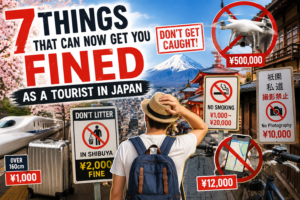
The most common Japan trip budget question gets the most useless answer online: “It depends.” Here is an actual number: $4,960–$5,360 for one person, 14 days, mid-range, flying from the US in 2026.
That number has six parts — and two of them are almost certainly larger than you think, and one of them has changed dramatically since 2023.
Japan’s reputation as an expensive destination is mostly a relic of the 2010s. The yen has lost roughly 30% of its value against the dollar since 2022, making every yen-priced cost — hotels, food, trains, temples, souvenirs — proportionally cheaper for Americans in real dollar terms. A hotel room that cost $200 in 2019 costs approximately $140 in 2026 at current exchange rates. That’s not a rounding error. It’s the difference between Japan feeling like a luxury splurge and Japan costing roughly the same as a European vacation with dramatically better food.
This guide builds the 14-day budget from the ground up, at three realistic spending tiers, with real 2026 numbers at every line item. It also addresses the questions most Japan cost guides either bury or ignore: Does the JR Pass actually save money in 2026? What are the new fees this year? What does the classic Tokyo–Kyoto–Osaka route actually cost, Shinkansen included?
Quick Answer: 2-Week Japan Trip Cost at a Glance

| Travel Style | Ground Costs (excl. flights) | Flights (from US, solo) | Total Estimate | Per Day (ground only) |
|---|---|---|---|---|
| Budget | $1,500–$2,200 | $800–$1,200 | $2,300–$3,400 | $107–$157/day |
| Mid-Range | $2,800–$4,200 | $900–$1,400 | $3,700–$5,600 | $200–$300/day |
| Comfortable/Luxury | $5,500–$10,000+ | $1,200–$2,000+ | $6,700–$12,000+ | $393–$714+/day |
All figures are per solo traveler. Couples traveling together generally save 15–25% per person on accommodation since rooms are priced per room. A couple at mid-range sharing a ¥18,000 room each pays $60 per person per night versus $120 for two solo travelers. Over 14 nights, that’s a $840 difference per person.
Flights: The One Cost the Yen Doesn’t Help
The yen’s weakness helps with everything you spend in Japan. It does nothing for the flight — which is priced in dollars and is the single largest fixed cost on most 2-week Japan trips.
Round-trip flights from the United States to Japan in 2026 typically cost between $800 and $1,500 per person in economy, depending on departure city, season, and booking lead time.
By departure city:
— West Coast (LAX, SFO, SEA): $700–$1,100. The shortest transpacific routing; best deals are consistently found on this corridor. Sub-$700 fares appear with 4–6 months’ advance booking on Japan Airlines and ANA.
— Midwest (ORD, DFW, DTW): $900–$1,300. One connection is typical; a few nonstop options exist from Chicago.
— East Coast (JFK, BOS, MIA): $1,100–$1,500. The longest routing; prices are consistently higher than West Coast.
Accommodation: 14 Nights Across Japan
Japan’s accommodation market spans a wider range than almost any other major destination — from $20 capsule hotel pods to $1,000+ per-person ryokan suites — and every tier is clean, safe, and efficiently managed. The decision you make here determines your budget more than any other single factor.
| Style | Nightly Rate (per room) | 14-Night Total | What You Get |
|---|---|---|---|
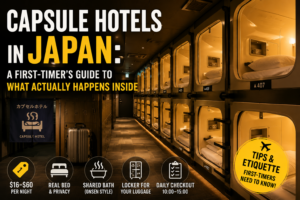
| Capsule hotel / hostel dorm | $20–$45/night | $280–$630 | Private pod or dorm bunk; shared bathroom; excellent for solo travelers |
| Budget business hotel | $55–$80/night | $770–$1,120 | Private room and bathroom; compact but functional; strong Wi-Fi |
| Mid-range 3-star hotel | $90–$150/night | $1,260–$2,100 | Comfortable room (18–28 m²); often excellent design at this price tier in Japan |
| Boutique / 4-star hotel | $150–$250/night | $2,100–$3,500 | Spacious, often Japanese design elements; meaningful amenities; Kyoto options here are exceptional value |
| Ryokan (with meals, per person) | $120–$267/person/night | $1,680–$3,738 pp | Tatami, futon, yukata, communal onsen, kaiseki dinner and Japanese breakfast |
What most travelers actually spend: $90–$140 per night for a mix of business hotels and one or two ryokan nights in an onsen town. The sweet spot for most first-time visitors is a 3-star business hotel in Tokyo and Osaka, with a single ryokan night in Hakone or a smaller Kansai city.
👉 If your itinerary includes Tokyo Disney Resort, see our complete ranking of closest hotels:

Food: Japan Is Cheaper Than You Think

Japan’s reputation for expensive food is mostly wrong below the Michelin level. The combination of a 7-Eleven onigiri ($1.50), a neighborhood ramen bowl ($7–$9), and a supermarket bento ($4–$6) produces a genuinely excellent day of eating for under $20 per person. Japanese convenience store food is not a budget compromise — it is a legitimate cuisine.
| Meal Type | Cost Per Person | Examples |
|---|---|---|
| Convenience store (konbini) | $4–$7 | Onigiri ¥128–¥198, hot bento ¥450–¥650, sandwich ¥200–¥350 |
| Ramen / udon / soba lunch | $8–$14 | Bowl ¥900–¥1,300, add egg ¥100, gyoza side ¥300–¥400 |
| Casual izakaya dinner | $18–$35 | Multiple small plates + 2–3 drinks; otoshi (cover) ¥300–¥500 included |
| Mid-range restaurant dinner | $30–$60 | Tonkatsu set, wagyu yakiniku, tempura counter lunch |
| High-end kaiseki / wagyu / omakase | $100–$300+ | Michelin-starred kaiseki, Ginza omakase, Kobe wagyu teppanyaki |
Daily food budget by travel style:
— Budget: $25–$40/day (konbini meals + one casual restaurant per day)
— Mid-range: $50–$80/day (proper lunches, good izakaya dinners, occasional splurge snack)
— Splurge: $100–$200+/day (one high-quality restaurant meal per day)
14-day food total: Budget $350–$560 | Mid-range $700–$1,120 | Splurge $1,400–$2,800
👉 For the full breakdown of ramen by city:
Sapporo vs Tokyo vs Fukuoka Ramen: Which City’s Style Is Best?
👉 For wagyu at every price point:

Wagyu Beef Experience Japan 2026: Where to Eat on Every Budget
Transportation: Getting Around Japan in 2026

The JR Pass Question — Answered Honestly for 2026
The JR Pass became genuinely complicated after October 2023, when prices increased by 50–70%. At current pricing, the pass only pays off with a multi-city Shinkansen itinerary.
JR Pass prices (2026):
— 7-day pass: ¥50,000 (~$330)
— 14-day pass: ¥80,000 (~$530)
— 21-day pass: ¥100,000 (~$665)
It pays off if your itinerary includes: Tokyo → Kyoto → Hiroshima → Osaka → Tokyo (or similar routes adding Fukuoka, Kanazawa, or Hokkaido legs). The cumulative Shinkansen cost for that route per person exceeds the 14-day pass price.
It does NOT pay off if you’re: staying mostly in Tokyo and Kyoto with only one or two Shinkansen rides. Tokyo → Kyoto one-way (Hikari): ~$93. Tokyo → Osaka round-trip: ~$185. The 7-day pass costs $330 — the math doesn’t work for a simple out-and-back.
Shinkansen Reference Prices (One-Way, 2026, Non-Reserved Hikari)
| Route | Approximate Cost | JR Pass Covers? | Travel Time |
|---|---|---|---|
| Tokyo → Kyoto | $93–$115 | ✅ Yes (Hikari/Kodama) | 2h 15m–2h 45m |
| Kyoto → Osaka | $4–$7 (local JR) | ✅ Yes | 15–20 min |
| Tokyo → Hiroshima | $160–$180 | ✅ Yes (Hikari) | 4h |
| Osaka → Fukuoka (Hakata) | $80–$100 | ✅ Yes (Hikari) | 2h 15m |
| Tokyo → Kanazawa | $120–$140 | ✅ Yes (Kagayaki/Hakutaka) | 2h 30m |
City Transportation
Within major cities, IC cards (Suica in Tokyo, ICOCA in Osaka/Kyoto) are the most efficient payment method — load cash onto the card at any station machine, tap in and out, and never buy individual tickets.
— Subway / city rail single trip: ¥170–¥280 (~$1.10–$1.87)
— Full day of Tokyo subway travel: rarely exceeds ¥1,000 (~$6.70) per person
— Tokyo 24-hour metro pass: ¥600 (~$4) — worth buying on heavy sightseeing days
— Taxi: ¥730 base fare (~$4.90), typical urban ride $20–$40 — useful late at night, expensive as a habit
— Avoid taxis for standard city travel; the subway goes everywhere and costs 1/10th as much
14-day transport total (city transit only, no Shinkansen): Budget $100–$180 | Mid-range (including some Shinkansen) $400–$650 | Heavy traveler $750–$1,100+
👉 Tokyo to Kyoto route tips most travelers miss:

Tokyo to Kyoto in 2026: What No One Tells You About the Route
Activities and Entrance Fees
Japan’s biggest cultural sites are among the world’s most affordable. Most Buddhist temples charge ¥500–¥1,000 ($3–$7). Shinto shrines are typically free to enter and walk through. The famous photo spots — Fushimi Inari’s torii gates, Arashiyama’s bamboo grove, Harajuku’s Takeshita Street — cost nothing.
What costs more:
— TeamLab digital art museums: ¥3,200–¥4,800 ($21–$32)
— Tokyo DisneySea or Disneyland: ¥7,900–¥10,900 ($52–$72) per day
— Sumo tournament tickets: ¥4,000–¥15,000 ($26–$100) depending on seat category
— Cooking classes and cultural workshops: ¥4,000–¥15,000 ($26–$100)
— Ghibli Museum (requires advance lottery): ¥1,000 ($6.70) — inexpensive but hard to book
— Mt. Fuji Yoshida Trail entry fee (new 2024–2026): ¥2,000 ($13) plus gate closes at 4 PM during climbing season
Daily activity budget: Budget $10–$20 | Mid-range $30–$60 | Experience-focused $80–$150
👉 The Tokyo Disney decision — Disneyland versus DisneySea:
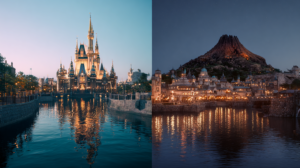
Tokyo Disneyland vs DisneySea 2026: Which One Should You Choose?
👉 Cultural workshop options in Tokyo and Kyoto:

Kintsugi Workshop in Tokyo & Kyoto 2026 – Learn the Art of Gold Repair
New 2026 Fees: What’s Changed This Year
Several Japan travel costs have changed or been introduced in 2025–2026 that did not exist on previous trips. Budget for all of them.
1. Departure Tax Increase (July 1, 2026)
Japan’s international departure tax triples from ¥1,000 to ¥3,000 (~$20) per person starting July 1, 2026. If you’re departing Japan after this date, budget an additional $20 per person. For a couple, that’s $40. Collected at the airport departure gate.
2. Accommodation Taxes — New and Expanded in 2026
Multiple prefectures have introduced or increased per-night accommodation taxes:
— Nagano (Matsumoto, Karuizawa, Hakuba): ¥200/person/night from June 2026
— Kyoto: ¥200–¥1,000/night depending on hotel rate (existing, expanded tiers)
— Tokyo: ¥100–¥200/night depending on hotel rate
— Onsen towns: separate bathing tax of ¥150–¥300 at most facilities
Budget a flat ¥500/person/night (~$3.30) as a buffer for all accommodation taxes combined. Over 14 nights for two people, that’s approximately $93.
3. Overtourism Surcharges at Popular Sites
— Mt. Fuji Yoshida Trail: ¥2,000 entry fee + gate closes at 4 PM during climbing season
— Miyajima Island: ¥300 visitor tax per person
— Certain Kyoto neighborhoods: crowd-control entry restrictions during peak hours (no additional fee, but affects planning)
Complete Sample Budget: Classic 14-Day Tokyo–Kyoto–Osaka Route
This is the most common first-time Japan itinerary: 5 nights Tokyo → 1 night Hakone (ryokan) → 4 nights Kyoto → 3 nights Osaka, with day trips. All figures are for a solo mid-range traveler, excluding flights.
| Category | Budget Estimate | Notes |
|---|---|---|
| Accommodation (14 nights avg. $110/night) | $1,540 | Mix of business hotels ($90–$120) + 1 Hakone ryokan (~$150pp) |
| Food ($60/day × 14 days) | $840 | Konbini breakfast, casual lunch, izakaya dinner; 1–2 splurges included |
| Transportation (JR 14-day pass + city IC cards) | $700 | 14-day JR Pass $530 + IC card top-ups ~$100 + Hakone pass ~$70 |
| Activities and entrance fees | $400 | Temples ($5–$7 each), TeamLab ($28), 1 Disney park ($65), sumo ($35) |
| Shopping and souvenirs | $250 | Conservative estimate; most travelers exceed this |
| SIM card / eSIM (14 days) | $30 | Airalo or IIJmio Japan eSIM; avoid hotel Wi-Fi reliance |
| New 2026 taxes and fees | $80 | Departure tax $20 + accommodation taxes ~$46 + site surcharges ~$14 |
| Miscellaneous / buffer | $200 | Unplanned meals, vending machines, taxis late at night, forgotten sundries |
| Total (excluding flights) | $4,040 | |
| Add flights from US (economy) | $900–$1,400 | West Coast lower end; East Coast higher end |
| GRAND TOTAL (solo, mid-range) | $4,940–$5,440 | Couples: subtract ~$600–$800 per person (shared accommodation savings) |
Day 8: You check into a Hakone ryokan at 4 PM, change into your yukata, and walk directly to an outdoor hot spring bath with a view of cedar trees disappearing into the evening mist. Dinner is 10 courses of kaiseki. Breakfast arrives at 8 AM on lacquer trays.
The entire night — dinner, breakfast, the onsen, the futon on tatami — cost $150. This is what the exchange rate looks like in practice.
Cash vs. Card: How to Handle Money in Japan
Japan remains primarily a cash economy in 2026, despite incremental progress toward card acceptance. The practical rule: carry enough cash for a day’s spending and replenish at 7-Eleven or Japan Post ATMs, which reliably accept international cards with English interfaces. Other ATMs (including most bank branches and convenience store competitors) frequently decline foreign cards.
Recommended starting cash on arrival: ¥20,000–¥30,000 (~$130–$200). Do not exchange at the airport — rates are consistently poor. Withdraw from the first 7-Eleven you pass after leaving the airport.
Over a 14-day trip, a mid-range solo traveler typically handles approximately ¥50,000–¥80,000 ($330–$530) in cash, with the remainder on a no-foreign-transaction-fee credit card (Chase Sapphire, Capital One Venture, and similar).
- Is Japan still affordable in 2026 after tourism prices rose?
- Yes. The price increases in Tokyo and Kyoto accommodation (15–20% above 2022 levels) are real but have been partially offset by the continued weakness of the yen. For Americans, the net effect is that Japan is still 25–30% cheaper in dollar terms than it was in 2019, even after the price increases. The category that has genuinely become more expensive in local terms is Kyoto accommodation, where demand has structurally outpaced supply. Budget for $120–$150/night in Kyoto rather than $90–$110.
- Should I get travel insurance for a Japan trip?
- Yes, primarily for trip cancellation and medical coverage. Japan has excellent medical facilities, and an unplanned doctor visit is affordable by US standards — but a serious hospitalization could be expensive. Standard comprehensive travel insurance for a 14-day Japan trip runs $80–$150 per person. Consider it a fixed planning line item, not an optional add-on.
- Is the JR Pass worth buying for a Tokyo–Kyoto–Osaka trip only?
- Almost certainly not. Tokyo → Kyoto (Hikari) one-way is approximately $93. Round-trip for that segment alone is $186. Adding Osaka to Kyoto by local JR line adds approximately $5 each way. The 7-day JR Pass costs $330 — you would need to take additional covered legs (day trips to Hiroshima, Nara by JR, Nagoya) to approach breakeven. Calculate your specific route on Hyperdia before purchasing.
- How much spending money should I bring beyond accommodation and transport?
- For a mid-range 14-day trip, budget $60–$80/day for food plus $20–$40/day for activities and incidentals — roughly $1,120–$1,680 in spending money beyond your pre-booked accommodation and transport. Add a shopping buffer of at least $200 that you accept you will spend. The total that most mid-range travelers report spending beyond pre-booked costs is $1,500–$2,000 over 14 days.
- Is Japan safe for solo female travelers?
- Japan is consistently ranked among the safest countries in the world for solo travelers of any gender. Violent crime rates are extremely low. The primary safety considerations are practical rather than personal: keep a copy of your accommodation address in Japanese characters for taxis, stay aware of your surroundings in very dense bar districts late at night, and carry cash as backup since some areas are still cash-only. The infrastructure, signage, and general culture make Japan one of the most comfortable solo travel destinations globally.