Japan moves fast. One month it’s a new ramen style. The next, it’s a sticker that’s harder to find than a concert ticket. And somewhere in between, Japanese Twitter discovers American barbecue and collectively loses its mind.
If you’ve been wondering what people in Japan are actually talking about in 2026 — not what travel blogs think they’re talking about, but what’s genuinely dominating group chats, TikTok feeds, and lunchtime conversations — this is it. Five real trends, explained for the American eye. And yes, most of them involve food.
#1: American BBQ Goes Viral on Japanese X
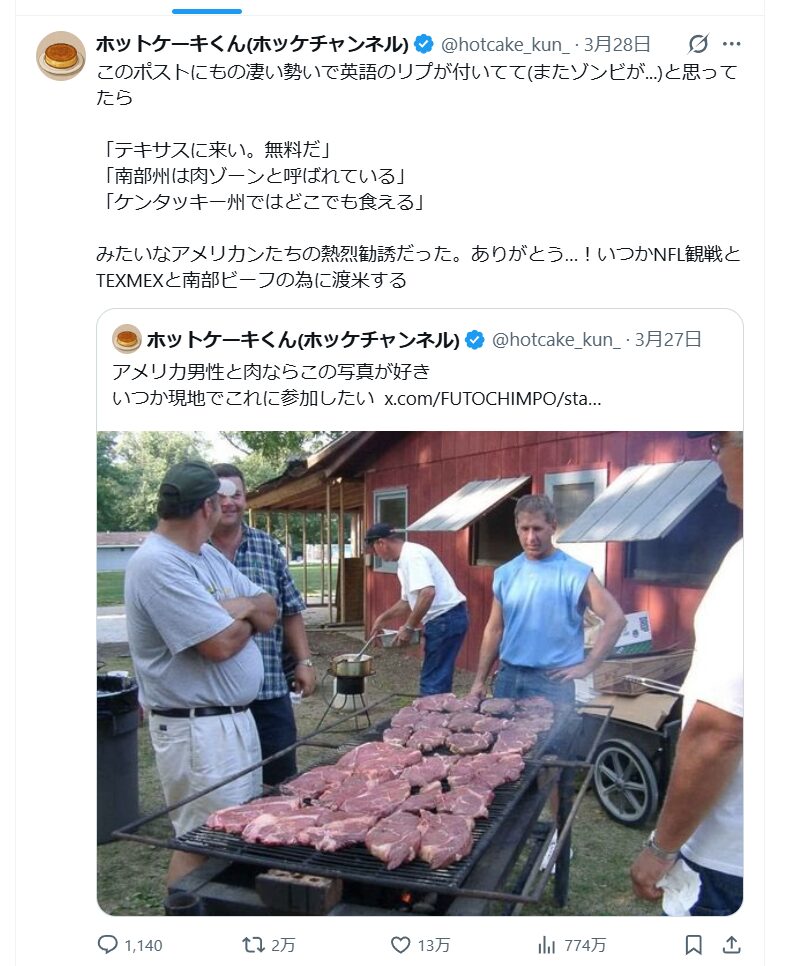
There’s a particular kind of magic that happens when Japanese users stumble across something American by accident. Not through media, not through a travel influencer with a brand deal — but through pure, unfiltered cross-language exploration on X (formerly Twitter). And lately, that accidental discovery has been American backyard BBQ, and the reaction has been nothing short of joyful hysteria.
Here’s how it works: a Japanese user, curious about what people in other countries eat on weekends, starts searching in English for phrases like “backyard BBQ” or “Sunday cookout.” What they find shatters expectations.
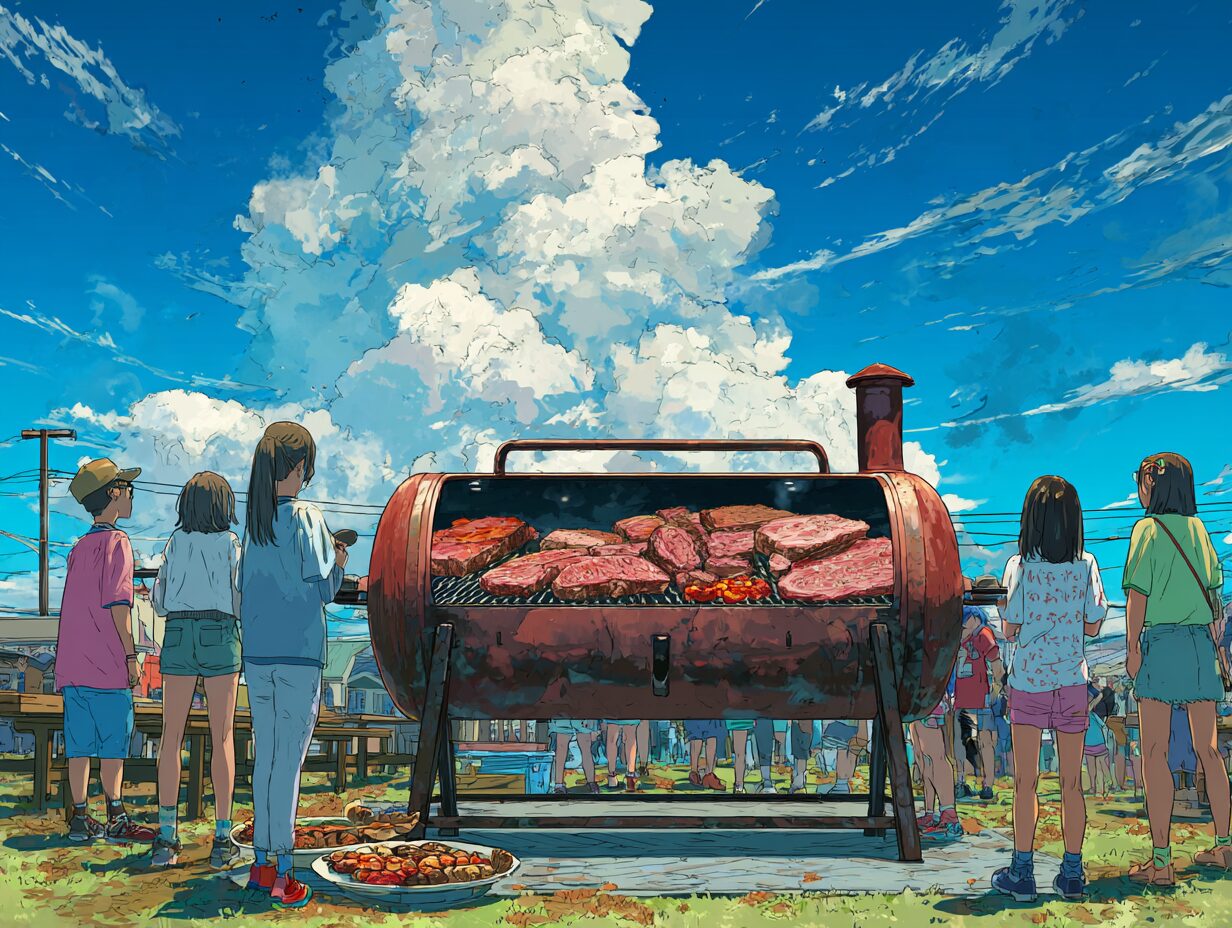
They weren’t expecting this. The scale of it. Not small electric grills on apartment balconies, not carefully portioned yakiniku with sauce bowls — but a full Weber smoker running since 6am, a picnic table buried under racks of ribs, a man in a novelty apron flipping brisket with the energy of someone who has done this every weekend since 1987. Coolers the size of compact cars. Folding lawn chairs. Children chasing each other through the sprinkler while adults drink beer and argue about sauce.
The reaction from Japanese users was immediate, warm, and incredibly earnest. Posts flooded timelines with comments like:
“Wait… Americans just DO this every week? In their own yard??”
“This is a festival. They’re doing a festival. Just for themselves.”
“The size of that piece of meat is illegal.”
What struck Japanese observers wasn’t just the food — it was the culture around it. The communal ease of it. The informality of feeding fifty people in flip-flops. Japan has its own tradition of elaborate grilling (yakitori, yakiniku, hanami BBQ in the park), but the American version — the sheer casualness of that scale — felt like a different species of outdoor cooking entirely.
The viral moment became a genuine cross-cultural exchange, with American users discovering the reactions and responding with equal delight, posting videos of their setups and tagging their Japanese commenters. For a brief, beautiful internet moment, brisket became an ambassador.
Planning a Japan trip where you can experience Japanese grill culture firsthand? Check out our guide to Wagyu Beef Experience Japan 2026: Where to Eat on Every Budget — because if American BBQ made Japan curious about your food, you owe it to yourself to try theirs.
#2: The Bonbon Drop Sticker Craze — Japan’s Most Wanted Stationery Item


Before you scroll past this one: these are not the stickers from your childhood. They are not the holographic dinosaur stickers you got for doing your homework. They are not the little gold stars your teacher handed out for a good test score.
The Bonbon Drop Sticker — nicknamed “Bondoro” in Japan — is a 3D, puffy, glossy piece of stationery that looks exactly like a hard candy jewel. We’re talking about something that catches the light like a gemstone, that sits slightly raised off the page like a tiny architectural miracle, that makes every planner and notebook look like it belongs to a fictional rich girl in a manga. They are, objectively, remarkable objects.
Released in 2025 by Osaka-based stationery maker Q-LiA, the Bondoro launched quietly and then exploded the moment TikTok got hold of it. Videos of teenagers arranging sticker books went viral. Then older viewers started recognizing something in those videos — a kind of tactile, analog joy they hadn’t felt since childhood. Women in their 20s and 30s who grew up trading stickers in the Heisei era (the 1990s and 2000s) started buying them. Then their mothers. Then, inevitably, their elementary-school daughters.
The data is remarkable. A 2026 survey of nearly 2,500 Japanese children and teenagers by Nifty Kids found that 70.2% were currently collecting stickers. Among elementary school students, the number jumped to 77.5%. When asked what type of sticker they preferred, nearly 95% said drop stickers — the Bondoro style — by a landslide.
The Bondoro is now so difficult to find that counterfeits have entered the market. Read that again: there is a black market for children’s stickers in Japan in 2026. The knockoffs are apparently identifiable because the 3D effect isn’t quite right — the genuine article has a particular depth to it that’s hard to replicate.
What does this trend tell us? Japan is in the middle of a serious Heisei nostalgia wave — a cultural craving for the simpler analog pleasures of the 1990s and early 2000s. Sticker albums sit at the heart of that. But the Bondoro isn’t just nostalgia: it’s a legitimately beautiful object that happens to be cheap. It’s tactile in an era of screens. It’s shareable in an era of algorithms. It’s physical proof that you were somewhere, collected something, swapped it with a friend.
If you want to understand what Japan is buying and making in the stationery space right now, our guide to Best Luxury Shopping in Tokyo 2026 covers the department stores where Japan’s best stationery brands are represented — from Itoya in Ginza to the craft floors of Takashimaya.
#3: Jiro-Style Ramen — The Cult Noodle Bowl That Refuses to Be Tamed


Japan’s ramen world contains multitudes. There is delicate, refined Tokyo shoyu with its clear amber broth and perfectly calibrated tare. There is creamy Hakata tonkotsu, served so fast the ticket machines have a time limit. There is the miso-forward Sapporo style that evolved specifically to survive Hokkaido winters.
And then there is Jiro-style ramen, which operates by completely different laws of physics.
To understand Jiro-kei, you need to understand that it is not a refined dining experience. It was never meant to be. It originated at Ramen Jiro, a small, no-frills shop near Keio University’s Mita campus in Tokyo, run by a man named Yamada Jiro who started serving enormous, gut-filling portions to hungry college students in the 1960s. What he built over the following decades was not a restaurant so much as a philosophy: the bowl should be an achievement.
Here is what a Jiro-kei bowl looks like. The noodles are thick — much thicker than most ramen — and slightly wavy, made with a high ratio of water that gives them a distinctive chew. The broth is tonkotsu-soy, opaque with rendered fat, aggressively seasoned with garlic. On top of the noodles sits a mountain — and we mean a mountain — of bean sprouts and cabbage, blanched but still with some crunch. Buried beneath the vegetables are one or two massive chunks of chashu pork, braised until they threaten to dissolve. Over everything, a ladle of the shop’s signature mayu: blackened garlic oil that perfumes the entire bowl.
The bowl is, by any reasonable measure, too big. That is the point.
The ordering ritual. First-timers are warned about this ahead of time by veterans. When the cook finishes your bowl and announces it’s ready, he will ask you “kime?” — essentially, “what do you want on top?” In rapid succession, you need to declare your choices:
- Ninniku — garlic (add it)
- Abura — extra fat (yes or no)
- Karame — extra soy seasoning (yes or no)
- Yasai — extra vegetables (and if so, how much: mashi = extra, mashi mashi = double extra)
You have about two seconds. The regulars — called Jirolians by the internet — have their order memorized and deliver it with the calm confidence of someone reciting their own name.
In 2026, Jiro-style ramen is experiencing a mainstream moment that would have been unthinkable a decade ago. What was once a cult experience known mainly to Tokyo college students and serious ramen obsessives has spread to every major Japanese city, spawned dozens of official “Jiro-affiliated” shops and countless inspired imitators, and become a genre that food creators can’t stop filming. Videos of first-timers confronting their bowl — the moment they see it, the moment they try to pick up their chopsticks and realize the vegetables are blocking access to the noodles, the eventual triumph or defeat — rack up millions of views on YouTube and TikTok.
For context on how this fits into Japan’s ramen landscape, our guide to Sapporo vs Tokyo vs Fukuoka Ramen: Which City’s Style Is Best? breaks down the three dominant regional styles — none of which will prepare you for Jiro, but all of which will help you understand what Japan is doing with noodles at the highest level. And if you want to learn to make ramen yourself while you’re in Japan, check out Learn to Make Ramen From Scratch in Japan 2026.
#4: Malatang Fever — The Spicy Chinese Hot Pot Japan Cannot Stop Eating

Here is a food trend that makes complete, logical sense once you understand Japan’s relationship with Chinese cuisine, and also with spice.
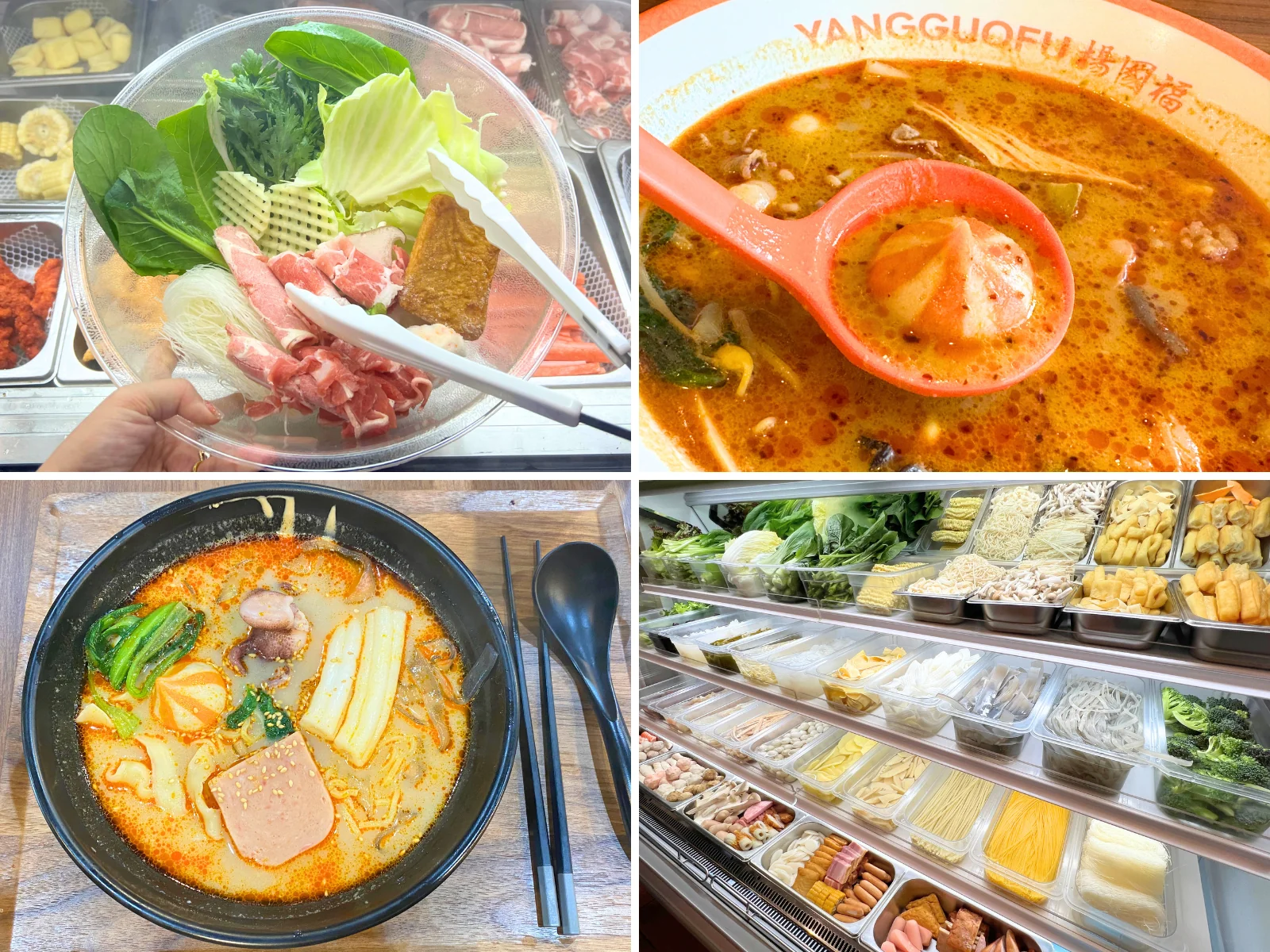
Malatang (麻辣烫) is a Chinese street food that originated in Sichuan province and has been one of China’s great democratic eating experiences for decades. The concept is brilliantly simple: you walk up to a counter or a refrigerated display, you pick out whatever raw ingredients you want from an enormous selection — sliced beef, pork belly, lotus root, enoki mushrooms, tofu skin, fish balls, udon noodles, glass noodles, broccoli, baby bok choy — everything gets skewered or placed in a basket, weighed, and then cooked together in a huge vat of broth. The broth is the event: a deep, dark, aggressively spiced base made with Sichuan peppercorns, dried chilis, doubanjiang (fermented chili bean paste), and enough aromatics to make your kitchen smell extraordinary for two days.
The name “malatang” translates roughly to “numbing, spicy, hot.” The Sichuan peppercorn delivers the “numbing” (ma) — a tingling, electric sensation on the lips and tongue that is unlike anything in Western cooking. The chili delivers the heat (la). Together, they create what Chinese food lovers call mala flavor: an addictive combination that makes your mouth simultaneously burn and crave more.
Japan has eaten Chinese food forever. Ramen itself is rooted in Chinese noodle traditions. Gyoza came from China. Japan has long had its own versions of hotpot (nabe) and has no shortage of beloved Sichuan-influenced restaurants in major cities. But malatang — in its pure, customizable, build-your-own street food format — is having a specific 2026 moment.
Multiple trend surveys have identified malatang as the top trending food item among Japanese young adults in 2025–2026. Dedicated malatang restaurants have been opening across Tokyo, Osaka, and Nagoya, consistently drawing lines of college students and young professionals at lunch and dinner. Convenience stores have released malatang-inspired instant products. Food media has flooded the zone.
Why now? A few reasons. Japanese food culture has become markedly more open to international and spicy cuisines over the past decade — younger Japanese consumers are actively seeking bolder flavors. The build-your-own format aligns perfectly with Japan’s love of customization and fresh, high-quality ingredients. And malatang is, at its core, a great value: you get exactly what you want, in exactly the quantity you want, cooked to order.
For Americans: if you’ve ever loved hot pot, shabu-shabu, or anything with a Sichuan profile, malatang is your entry point. It’s more casual than Japanese nabe, more customizable than most hot pot restaurants, and more exciting than almost anything you can find in a mall food court.
If the malatang craze has you curious about the Japanese version — refined hot pot culture at the traditional end of the spectrum — our guide to Kyoto Matcha Experience 2026 touches on Kyoto’s kaiseki tradition, where seasonal ingredients are treated with similar reverence. And for Osaka’s wild, democratic food scene where malatang fits right in, start with our Osaka category for guides to the city’s best food neighborhoods.
#5: Snack Albums — Japan’s Analog Revolt Against the Algorithm


This one requires a moment to appreciate, because on the surface it sounds like nothing: kids putting snacks in a binder. But zoom out, and snack albums might be the most culturally interesting trend on this list.
Here’s the context. Japan is currently in the middle of a significant sticker-collecting revival — driven by the Bondoro craze we covered above, by Heisei nostalgia, by a genuine hunger for tactile, physical objects in an age of screens. The sticker album (a clear-pocket binder where collectors store and display their stickers) became the natural companion to this revival. As of early 2026, sticker albums are a standard accessory for Japanese elementary school kids, with trading sessions happening at school like Pokémon cards once did.
The snack album is what happens when the album format escapes its original purpose.
The concept: instead of — or alongside — stickers, you fill a clear-pocket album with small snack packages. Mini chocolate wrappers. Regional potato chip bags. Tiny mochi packaging with cute characters. Candy tins. Seasonal limited-edition snack wrappers that are more interesting than the snack itself (a real phenomenon in Japan, where packaging design is treated as seriously as the product). You arrange them, display them, carry the album to school or to meet up with friends, and then you trade.
The trading is the point. Snack albums have become a genuinely social technology — an excuse for in-person exchange, for showing someone what you’ve been eating, for discovering regional snacks through a friend’s collection. A kid from Osaka might have packaging from a local konbini brand that a Tokyo friend has never seen. A trip to visit grandparents in rural Tohoku might yield snack packaging that’s never been spotted in the city. The album is a record of movement, taste, and experience.
This trend has been officially flagged by Japanese teen trend surveys as a notable 2026 phenomenon — described specifically as a tool for “enjoying analog communication,” which is a beautifully deliberate phrase. At a moment when group chats have become the primary social infrastructure for Japanese teenagers, snack albums pull conversation back into physical space. You can’t screenshot a snack. You can’t send a snack album over Line. You have to actually be there.
For Americans, the closest analogy is probably trading Pokémon cards or baseball cards as kids — the same social ritual, the same currency of rare versus common, the same thrill of a swap that both sides feel good about. Except with more cheese-flavored options.
If snack albums have you curious about Japan’s broader stationery and shopping culture, our Nishiki Market 2026 guide covers the Kyoto market where food and souvenir culture collide in the best possible way — and the Luxury Shopping in Tokyo 2026 guide covers the department stores where Japan’s extraordinary snack and stationery culture reaches its highest form.
What These 5 Trends Have in Common
Look at this list and a pattern emerges. American BBQ viral moments. Handmade stickers. Ramen that’s too big on purpose. Street food from Sichuan. Binders full of candy wrappers.
Every single one of these trends is, at its core, about physical pleasure and real-world connection. They all involve making something, eating something, trading something, or gathering around something in person. In 2026, when the average person’s social life runs largely through a 6-inch screen, Japan keeps finding ways to pull people back into the room.
That’s not a coincidence. It’s a response.
And it might be the most interesting thing happening in Japanese culture right now.
Want to Experience Japanese Food Culture Firsthand?
These trends don’t exist in a vacuum — they’re threads in a much larger tapestry that you can actually walk through if you visit Japan. Here are some starting points from our site: