There’s a version of Japan travel that exists entirely inside algorithm: the top-10 lists, the booking platforms, the experiences with thousands of five-star reviews and a maximum throughput of 300 visitors per day. That version is fine. It covers real places and real experiences. But it exists because it’s optimized — and optimization leaves things out.
Japan has more hidden depth than almost any other country, partly because so much of what makes it extraordinary doesn’t translate into marketing copy. A 200-year-old lacquerware workshop that accepts visitors by introduction only. A mountain village festival that locals have never thought to advertise. A ceramics artist in rural Tottori who teaches workshops in silence because the point is the silence. These experiences don’t appear on TripAdvisor because the people running them have never felt the need to list them.
This is a guide to finding that version of Japan in 2026.

Staying in a Working Farmhouse: Nôyado
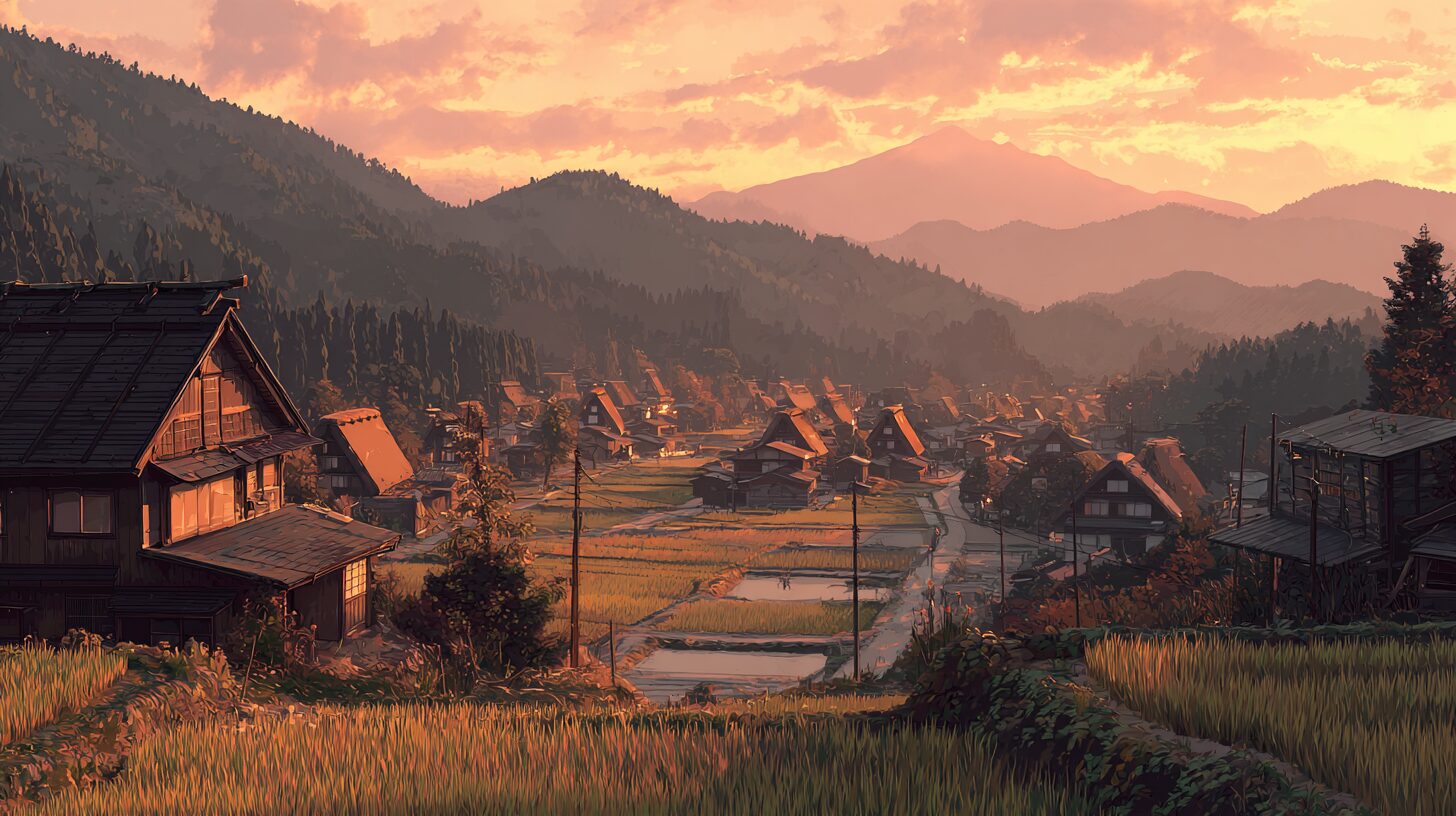
Nôyado (農宿) are farmhouse accommodations where guests stay with working farming families — not in a renovated boutique property designed to look like a farmhouse, but in an actual family home where the wake-up call is the sound of the family beginning their agricultural day. The concept exists throughout rural Japan, with concentrations in the Satoyama landscape regions of Niigata, the Noto Peninsula in Ishikawa, and the Iya Valley in Tokushima.
The experience varies by family. Breakfast is what the family eats. Dinner is usually a remarkable spread of preserved vegetables, locally caught fish, and rice from the field visible from the dining room window. Some families offer participation in farmwork — planting, harvesting, weeding — as part of the experience; others do not. Payment is typically ¥8,000–¥14,000 per person including two meals.
These accommodations are found through the NORA (農家民宿) network and regional tourism cooperatives rather than major booking platforms. In the Noto Peninsula specifically, several families rebuilt their nôyado operations after the January 2024 earthquake and are actively welcoming visitors as part of the recovery effort.
Attending a Local Festival That Doesn’t Have an English Website
Japan has approximately 300,000 matsuri (祭り, festivals) per year. Roughly 200 of them have been translated into English-language tourism content. The remaining 299,800 happen anyway, attended by the community members who have attended them their entire lives, with no expectation that foreign visitors might show up.
Finding these requires a different approach. The most reliable method: identify the town or rural area you’ll be in, search [town name] + 祭り + the month of your visit in Japanese, and cross-reference with the local municipal tourism page (市観光ページ). Alternatively, ask at the local tourist information center (観光案内所) in any mid-sized city — staff can usually name 2–3 local events happening within 50 kilometers that don’t appear in guidebooks.

Specific examples for 2026: the Owara Kaze no Bon (おわら風の盆) in Toyama in early September, which draws enormous crowds locally but remains almost unknown internationally. The Aizu Tajima Gion Festival in Fukushima (会津田島祇園祭) in late July, a 700-year-old procession with no English-language presence to speak of. Any of the anonymous Obon lantern lighting ceremonies (灯籠流し) that happen at rivers throughout Japan in mid-August — show up at a river around dusk and you may find yourself helping to light lanterns.
Learning a Craft from a Craftsperson Who Doesn’t Usually Teach
Japan’s traditional craft sector — washi paper, lacquerware, textile dyeing, bamboo weaving, ceramics, knife-making — is maintained by a dwindling number of practitioners who have spent decades mastering specific techniques. Most do not offer lessons. A small number do, usually to pass knowledge along rather than for income, and they’re reachable if you approach the right way.
The right way involves contact that demonstrates genuine interest: a short message (Google Translate is fine) explaining what you make, why you are interested in their specific craft, and a flexible request — not “I want a lesson” but “I would like to spend time in your workshop and help if that’s useful.” Many practitioners who would decline a tourist lesson will agree to this phrasing, because it’s closer to the traditional apprenticeship model they understand.
Organizations including the Traditional Craft Association (伝統工芸産業振興協会) and regional craft centers in cities like Kyoto, Kanazawa, and Matsumoto maintain directories of working craftspeople, some of whom accept visitors. These directories are not publicized widely in English but are discoverable through the organizations’ Japanese-language websites.

Eating at a Restaurant That Has No Online Presence
The best meal I’ve had in Japan occurred at a counter with six seats, run by a man in his seventies who has served the same lunch menu for 40 years and has never created a social media account. He was found by walking the back streets of a neighborhood that foreign visitors have no specific reason to visit — Nakameguro’s residential blocks northeast of the canal — and noticing a handwritten menu card in a ground-floor window.
These places exist throughout Japan. The methodology for finding them: avoid streets with tourist foot traffic, look for restaurants with handwritten menus or no menu visible at all, notice the presence of neighborhood regulars. In Tokyo, the shotengai (商店街, covered shopping streets) in Shimokitazawa, Koenji, Togoshi Ginza, and Jiyugaoka contain dozens of family-run teishoku restaurants and izakayas that have never needed digital marketing. In Osaka, the Nishinari district (西成区) has a density of serious and inexpensive local eating that receives almost no coverage in English-language travel media.
Taking a Local Train Line to Nowhere in Particular
Japan’s rural railway network includes dozens of single-car diesel lines connecting communities that tourism has not reached. The experience of riding one — often through mountain valleys, past rice paddies and lone-house stations where nobody boards — is a window into the country’s geography and pace that the Shinkansen doesn’t offer.
Recommended lines for this purpose: the Ōito Line (大糸線) between Matsumoto and Itoigawa through the Northern Alps; the Kiha 40 trains on the Koumi Line (小海線) through Yamanashi and Nagano at altitude; the Hisatsu Orange Railway (肥薩おれんじ鉄道) hugging the coast of Kagoshima prefecture; and the Sanriku Railway (三陸鉄道) along the reconstructed Tohoku coastline. None of these require booking in advance. A Seishun 18 Kippu (青春18きっぷ), valid five days and usable on all JR local and rapid trains for ¥12,050, is the optimal ticket for exploring this network during school holiday windows in summer, winter, and spring.

Visiting a Neighborhood Sento
Public bathhouses — sento (銭湯) — are vanishing from Japan’s cities at the rate of roughly 300 closures per year. What remains is scattered through residential neighborhoods and still serves the community of older regulars who have been using the same bath since before the neighborhood changed. These are not spas, not ryokan baths, not curated onsen tourism — they are functional, sometimes beautiful, always local.
Entry costs ¥500–¥600 in most cities. You bring your own towel and soap, or buy them from the attendant for ¥100–¥200. The rules are simple and universal: wash completely before entering the communal bath, keep noise minimal, don’t bring your phone into the bathing area. In Tokyo, the Ota Ward (大田区) has the highest remaining concentration of traditional sento — the Koganeyu (黄金湯) in Sumida, Kamata Onsen (蒲田温泉) in Ota Ward, and the Tatsunoko-yu (辰の湯) in Nerima are all worth visiting. In Kyoto, the Funaoka Onsen (船岡温泉) in Kita Ward is a designated cultural property and one of the most architecturally remarkable bathhouses in Japan, with entry at ¥500.
How to Find More of These Experiences
The most reliable method is conversation — with inn owners, with train seatmates, with the person behind the counter at a convenience store in a small town who has never been asked by a foreign customer what the best thing nearby is. The answer, when it comes, is usually specific and always honest. Japan’s tourist infrastructure is excellent enough that most visitors never need to ask these questions. The ones who do tend to come back.