The first time I attended what was marketed as an “authentic tea ceremony” in Kyoto, it lasted 22 minutes, involved a laminated instruction card, and was conducted in a room with LED strip lighting and a gift shop attached. The matcha was fine. The wagashi were pretty. But the experience of being processed through a cultural ceremony in under half an hour, alongside 15 other people who were also consulting laminated cards, was not what I had traveled to Japan to find.
That experience is common. The tourism industry around the Japanese tea ceremony (茶道, chado) is enormous and varies wildly in quality, context, and honesty. This guide is for people who want the real version — and who are willing to spend a little more time and money to find it.

What Makes a Tea Ceremony “Authentic”
Chado — the Way of Tea — is a practice with origins in 9th-century Japan and a formalized aesthetic philosophy developed by Sen no Rikyu (千利休) in the 16th century. Its core concepts include wabi-sabi (finding beauty in imperfection and transience), ichigo-ichie (this moment will never come again), and the idea that the physical arrangement of a tea room, garden, and implements should create a state of meditative presence in both host and guest.
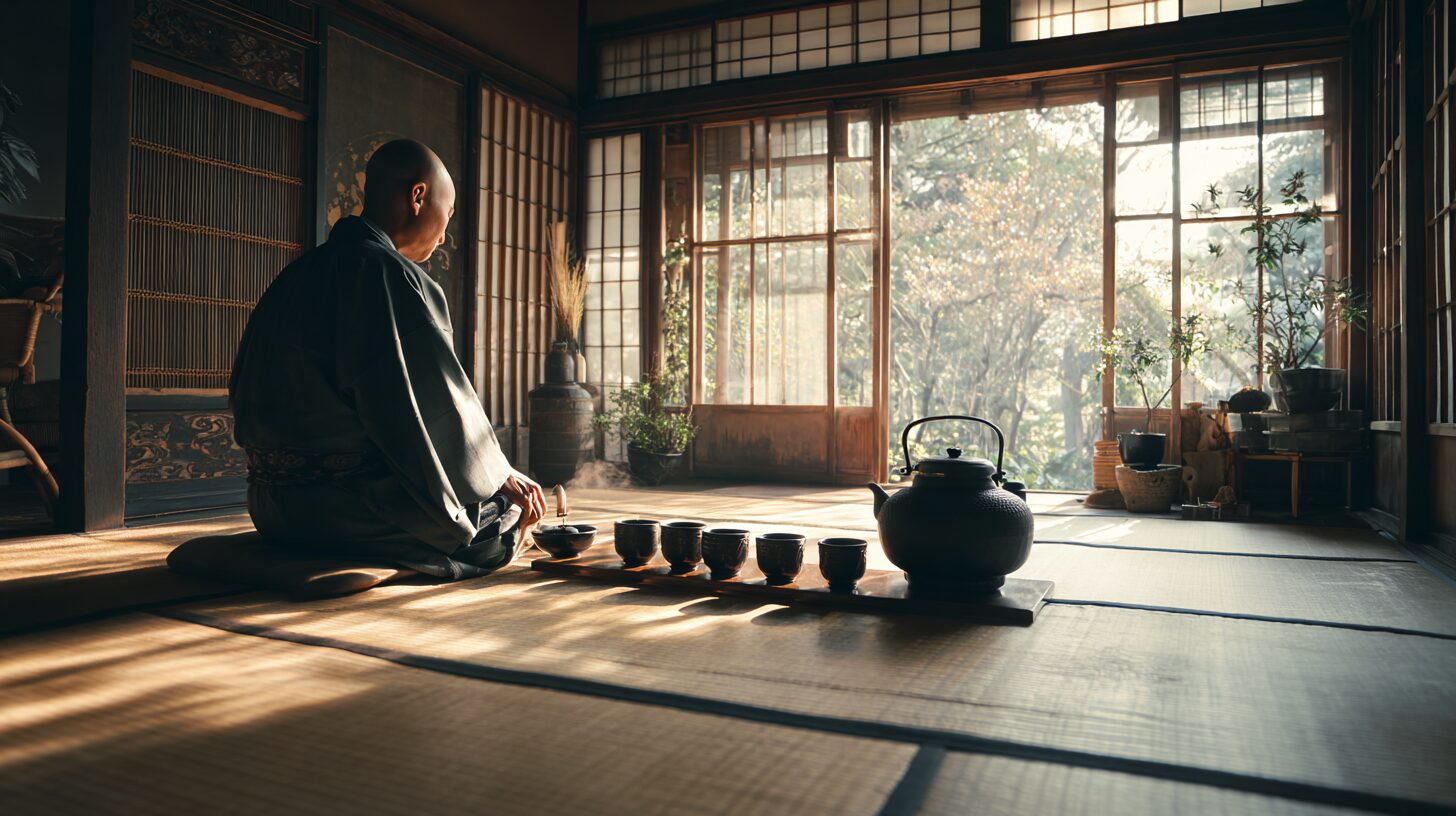
An authentic experience preserves at least some of this context. The host has studied chado for years. The room — the chashitsu (茶室) — follows traditional proportions and aesthetics. The implements — iron kettle, bamboo whisk, ceramic bowl, ladle — are selected with care and sometimes of significant age. The pace is unhurried. You are told what you are observing, not just handed a bowl.
None of this requires a ceremony that lasts hours. Even a 45-minute experience can be genuine if it’s led by someone who knows the practice and has designed the environment to reflect it. The laminated card version is inauthentic not because it’s short, but because it treats the ceremony as spectacle rather than practice.
Where to Find Genuine Experiences in Kyoto
Kyoto is the center of Japanese tea culture and the home of the three major schools of chado: Urasenke (裏千家), Omotesenke (表千家), and Mushakoji Senke (武者小路千家). All three schools have cultural foundations that sometimes offer public programs or can connect interested visitors with licensed instructors.
For foreign visitors in 2026, several reliable options stand out. En tea ceremony experience (en-tea.jp) in the Higashiyama area operates in a historically significant machiya (町家, traditional townhouse) with instruction led by licensed practitioners from the Urasenke school. Sessions run 60–90 minutes, accommodate small groups of up to 6, and include a full explanation of each movement and its meaning. Cost is approximately ¥8,000 per person. Booking is online and required well in advance for weekend slots.

The Kinkakuji Area and Nishiki: What to Avoid
Conversely, the tea ceremony stalls clustered around high-traffic tourist areas — the approach to Kinkakuji, the Nishiki market corridor, Gion’s main shopping street — almost universally offer the laminated-card version. These sessions prioritize throughput: 20 minutes, large groups, a brief matcha preparation demonstration, matcha and wagashi served, done. Some guests enjoy these and that’s completely legitimate. But if your goal is to understand what the practice is about, they will not provide it.
The tells are visible from the street: menu boards listing multiple “experience” types by price bracket, staff handing out flyers to passersby, sessions that begin within five minutes of booking. None of these signals quality — they signal a product optimized for volume.
Booking a Private Session with a Licensed Instructor
The most authentic option for serious visitors is a private session with a licensed chado instructor outside the tourist economy. Several instructors in Kyoto offer sessions specifically for foreign visitors through platforms including Airbnb Experiences and local booking services like Voyagin.
Key indicators to look for when booking: the instructor holds a license from one of the three major schools (this will be stated clearly if true), the session is conducted in a traditional room rather than a converted modern space, the group size is 6 or fewer, and the booking process includes an explanation of what the session covers. Price for genuine private sessions ranges from ¥10,000–¥20,000 per person and is justified by what that price pays for: undivided attention, a proper setting, and an hour with someone who has practiced for decades.

Tea Ceremony Experiences Beyond Kyoto
Tokyo offers genuinely good options that receive far less attention than Kyoto’s. Hamarikyu Gardens (浜離宮恩賜庭園) in the Tsukiji area has a traditional tea house — Nakajima no Ochaya (中島の御茶屋) — situated on a tidal pond in the center of the garden. Sessions are informal but conducted properly in a 17th-century structure with a view that places you entirely outside the city. Cost is ¥800 for the matcha and wagashi set plus the ¥300 garden entry fee. No booking required.
Kanazawa (金沢) in Ishikawa Prefecture is significantly less visited than Kyoto for tea ceremony experiences but has an equally strong cultural heritage — the Kenroku-en garden area contains multiple traditional tea houses with daily public sessions. Urasenke Kanazawa (裏千家金沢茶道会館) offers regular public classes that foreign visitors can join with advance registration.
What to Wear and How to Prepare
No special clothing is required for most tea ceremony experiences. Traditional settings request that you remove shoes (socks are appropriate — bare feet are generally not). Loose-fitting clothing that allows comfortable seating on tatami is practical. Some venues offer kimono rental as an add-on; this is optional and does not affect the quality of the tea ceremony itself. Remove watches and jewelry from your hands before the session — these can scratch ceramic bowls that are sometimes centuries old.
You will be seated in seiza (正座, kneeling on your heels) for portions of the ceremony. For people who find this uncomfortable, legitimate instructors will always offer a folded cushion or permission to sit cross-legged — raising this before the session begins is entirely appropriate. The tea bowl is held with both hands, rotated clockwise before drinking to avoid placing your lips on the front face of the bowl, and returned with a brief acknowledgment. You will be shown this before being asked to do it.

The Right Mindset for the Experience
The most valuable thing you can bring to a genuine tea ceremony experience is patience with your own unfamiliarity. Every gesture in the ceremony carries meaning developed over centuries. You will not understand most of it in a single session. That’s the point: chado is a practice, not a performance, and even students who study for years describe it as an ongoing process of discovery. The hour you spend with a skilled instructor is not meant to leave you competent — it is meant to leave you curious.
What tends to happen, even in a single well-conducted session, is that the quality of attention in the room shifts. The slowness is deliberate. The silence is deliberate. The arrangement of the implements and the selection of the scroll hanging in the tokonoma alcove (床の間) are deliberate. By the time the bowl reaches your hands, if the session is conducted well, you are probably already experiencing something different from what you walked in with. That’s the practice. That’s what’s worth finding.