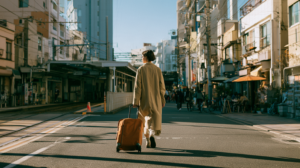
I arrived in Tsuruoka, Yamagata Prefecture, on a Wednesday morning in October. The station was quiet in the way that small Japanese stations are quiet — orderly, clean, and attended by exactly two passengers who both seemed local. There was no tourist information booth staffed by English speakers. The vending machine outside sold regional apple juice and hot canned corn soup. I had to figure out the bus schedule from a paper timetable on a pole.
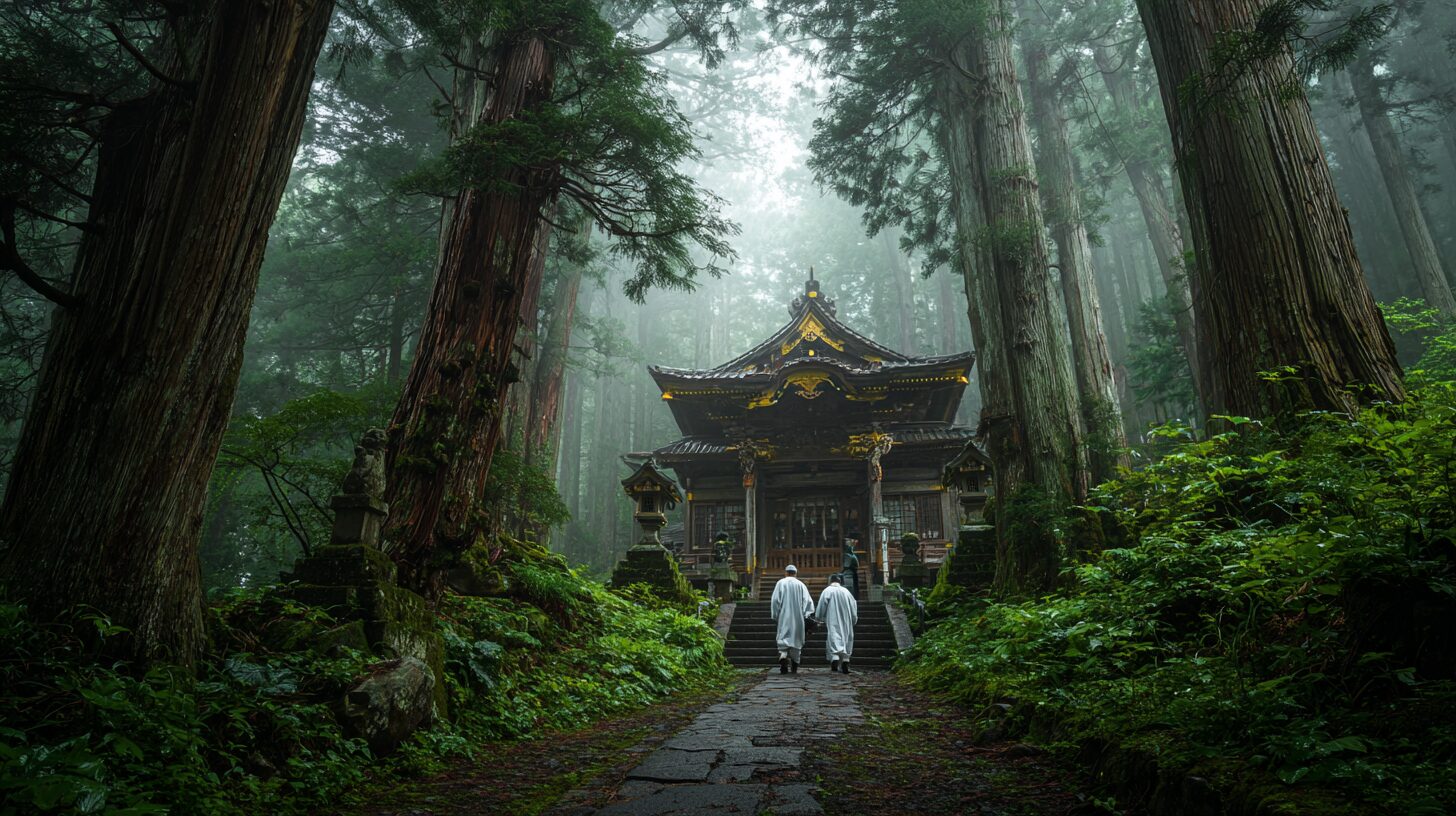
Two hours later, I was standing in the courtyard of Dewa Sanzan’s Gassan Shrine, which had been an active religious site since the 6th century, with mountain pilgrims in white robes passing me on a cedar-lined path, and not a single other foreign visitor in any direction. This is what Japan looks like outside the main tourist corridors. It exists everywhere and is accessible to anyone willing to spend slightly more time on planning than a Google search requires.
Kyoto and Tokyo are extraordinary. They are also, in 2026, extremely crowded, and the experience of visiting them during peak season has changed noticeably over the past five years. Here are Japan’s most consistently undervisited prefectures and what they offer to travelers who look beyond the obvious routes.

Yamagata Prefecture: Mountain Shrines and Japan’s Best Cherries
Yamagata (山形県) sits in the Tohoku region of northern Honshu, roughly three hours from Tokyo by Shinkansen (not covered by the standard JR Pass — the Yamagata Shinkansen requires a separate ticket or a JR East Pass). Its primary attraction for travelers is Dewa Sanzan (出羽三山) — three sacred mountains (Haguro, Gassan, and Yudono) that have been the focus of Shugendo mountain worship since at least the 7th century. Pilgrims in white robes still walk the mountain paths seasonally; the Zuishin-mon gate and the 5-story pagoda at Haguro-san are among the most atmospheric historical sites in Japan.
Yamagata also produces what many Japanese food specialists consider the country’s finest cherries (サクランボ — Sato Nishiki variety), available in June, and an exceptional range of sake from the region’s cold-water rice cultivation. The city of Yamagata has a well-regarded contemporary arts scene and the Yamadera (山寺) cliff-face temple complex — 1,015 stone steps leading to a series of halls cut into a vertical rock face — takes a morning to climb and offers views across the valley that no photograph adequately conveys.
Shimane Prefecture: The Most Sacred Shrine in Japan
Shimane (島根県) on the Sea of Japan coast is Japan’s second-least-visited prefecture by foreign tourists — a distinction that becomes bewildering once you understand what’s there. Izumo Taisha (出雲大社) is one of the oldest and most important Shinto shrines in Japan, predating written records and considered the gathering place of the country’s gods every October in the lunar calendar. The shrine complex is vast, somber, and entirely unlike the tourist-optimized Shinto sites in Kyoto and Nara.
Matsue (松江), the prefectural capital, retains one of Japan’s best-preserved feudal castle towns — Matsue Castle (松江城) is one of only twelve original (non-reconstructed) feudal castles remaining in Japan, surrounded by a moat that you can tour by wooden boat. Lafcadio Hearn — the Irish-Greek writer who became one of the first Westerners to interpret Japanese culture for Western readers — lived in Matsue in the 1890s and his former residence is maintained as a museum. Access: fly to Izumo Airport or take the Super Matsukaze limited express from Okayama (2.5 hours).

Tottori Prefecture: Sand Dunes and Samurai Towns
Tottori (鳥取県) is Japan’s least populated prefecture and — outside Japan — almost entirely unknown. This is a strange oversight. The Tottori Sand Dunes (鳥取砂丘) are the largest sand dune system in Japan, stretching 16 kilometers along the Sea of Japan coast, rising to 90 meters, and creating a landscape that is genuinely disorienting in a country defined by green hills and dense urban texture. You can paraglide, ride a camel, or simply walk to the ridge and stare at a scene that looks entirely unlike any other prefecture.
Kurayoshi (倉吉), Tottori’s best-preserved traditional town, has a whitewashed merchant district on a canal that was a significant commercial center in the Edo period and has been left largely intact. The regional crab (松葉ガニ, Matsuba crab) season from November to March draws domestic visitors but remains unknown to most international travelers — a week in Tottori in December centered on eating crab is a legitimate trip strategy that costs a fraction of equivalent seafood experiences in Hokkaido. Access: fly to Tottori Airport or take the Super Hakuto limited express from Kyoto (2 hours 40 minutes).
Tokushima Prefecture: The Awa Odori and the Pilgrimage Circuit
Tokushima (徳島県) on Shikoku Island is best known internationally for the Awa Odori (阿波踊り) — Japan’s largest and most energetic traditional dance festival, held every August over four days in the prefectural capital and drawing up to 1.3 million visitors. Outside August, Tokushima receives almost no international visitors, which means the extraordinary Iya Valley (祖谷渓) — a deep gorge in the mountains of western Tokushima with vine bridges, traditional thatched farmhouses, and one of Japan’s clearest river systems — is as close to solitary as any major natural attraction in Japan gets.
Tokushima is also one of the starting points for the Shikoku Pilgrimage (四国八十八箇所) — an 1,200-kilometer circuit of 88 temples across Shikoku Island associated with the Buddhist monk Kobo Daishi (空海). You don’t need to walk the full circuit — individual temples are accessible by car and several make excellent standalone visits, particularly Ryozen-ji (Temple 1, near Tokushima city) and the clifftop Unpen-ji (Temple 66). Access: fly to Tokushima Airport or take the Uzushio limited express from Okayama (2 hours).

Iwate Prefecture: The Tohoku Worth Crossing Japan For
Iwate (岩手県) in northern Tohoku is Japan’s second-largest prefecture by area and one of its most scenically varied. Hiraizumi (平泉), a World Heritage site near the Kitakami River, was the political and cultural capital of the Oshu Fujiwara clan from the 11th to 12th centuries — its Chuson-ji Temple’s Konjiki-do (Golden Hall) is a gilded masterwork that contains the preserved remains of three Fujiwara lords and has been maintained in near-perfect condition for 900 years. It is one of the most significant historical sites in Japan and receives a fraction of the visitors that Nara’s Great Buddha attracts, despite being arguably more remarkable.
The Sanriku Coast in eastern Iwate — a rugged stretch of ria coastline running 600 kilometers to the Pacific — is one of Japan’s most dramatic coastal landscapes, accessible by the Sanriku Railway. The region was severely affected by the 2011 Tohoku earthquake and tsunami, and several memorial sites along the coast offer a somber but important perspective on that history. Morioka city, Iwate’s capital, is a quiet, beautifully proportioned castle town with extraordinary wanko soba (an interactive noodle experience where small bowls are continuously refilled until you surrender) and a craft beer scene that punches above its national profile. Access: Shin-Hanamaki Station by Shinkansen from Tokyo (approximately 2 hours 20 minutes).
How to Approach These Prefectures Practically
The honest friction with off-the-beaten-path Japan is not cost or distance — it’s the reduced availability of English-language information and English-speaking staff. Tourist information centers in these prefectures are less likely to have English speakers than those in Kyoto or Tokyo. Restaurant menus are less likely to include English translations. This is not insurmountable, but it requires slightly more preparation: downloading offline maps on Google Maps, using the Google Translate camera function for menus and signs, and booking accommodation through Japanese platforms that require navigation of a Japanese-language booking process.
The JR East Pass (for Tohoku destinations) and the Shikoku Rail Pass (for Tokushima, Tottori, and Shimane) are worth calculating against individual tickets for multi-destination trips in these regions. Neither is as well known internationally as the national JR Pass, but both offer significant value for the specific regions they cover. A three-day JR East-South Hokkaido Pass at ¥20,000, for example, covers the full Yamagata Shinkansen round-trip from Tokyo plus unlimited travel on regional lines in the area — far cheaper than individual tickets.