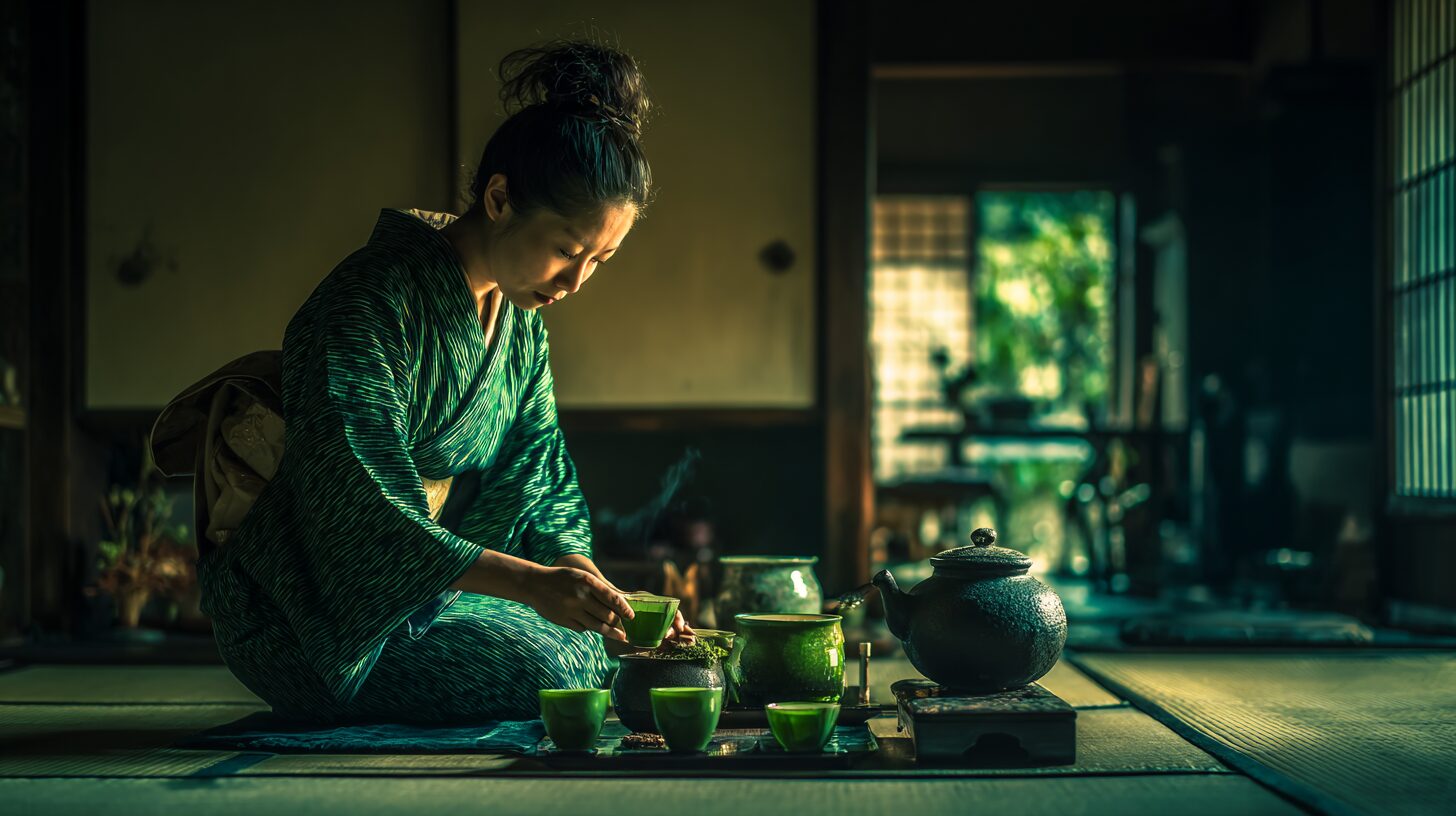
Matcha did not become a global phenomenon gradually. It arrived fast, in the form of matcha lattes at Western coffee chains, matcha-flavored chocolate, and eventually entire cafes built around the ingredient. This created a distinction that most visitors to Kyoto are not prepared for: the difference between the matcha they’ve had before and the matcha that has been grown in the Uji district of Kyoto Prefecture by tea farmers using techniques refined over eight hundred years.
They are not the same ingredient. The best ceremonial-grade Uji matcha is vivid green, deeply umami, and slightly bitter in a way that resolves into sweetness a few seconds after you swallow. The culinary-grade matcha in most international cafes and confections is a lighter-colored, more astringent powder optimized for use as a flavoring agent. Understanding this difference before you arrive in Kyoto changes how you allocate your time and money once you’re there.
Understanding Grade and Flavor: What You’re Actually Tasting
Matcha quality is determined primarily by harvest timing and growing method. First flush leaves (ichibancha, harvested in late April and May) from shade-grown plants — covered with fabric or reed screens for three to four weeks before harvest to increase chlorophyll and amino acid content — produce the ceremonial grade used in formal tea ceremony. Second and third flush harvests produce the culinary grades used in cooking, ice cream, and lower-tier café preparations. The amino acid L-theanine, which produces matcha’s characteristic calm alertness and round umami flavor, is concentrated in shade-grown first flush leaves; culinary grade has significantly less of it. When you drink authentic high-grade matcha in Kyoto and notice that it produces a different kind of focus than a matcha latte at home, this is why.
Tea Ceremony in Kyoto: What to Actually Expect
A formal Japanese tea ceremony (茶道, chado) is a choreographed practice governed by precise etiquette that takes years of study to perform and a shorter but still specific preparation to receive correctly as a guest. Most visitor-oriented tea ceremony experiences in Kyoto are abbreviated versions — typically 30 to 60 minutes — that teach the guest how to receive and drink the tea rather than how to prepare it. This is genuinely worthwhile: you learn to bow when receiving the bowl, how to rotate it before drinking so you don’t drink from the front face, and how to appreciate the bowl as an object by turning it slowly in your hands afterward. What you should not expect is to experience the full depth of chado philosophy — that requires multiple sessions with the same teacher over months or years.

The Best Tea Ceremony Experiences in 2026 (By Format)
For visitors who want an authentic and relatively unhurried experience without the mass-tourism atmosphere of some Gion-area venues, En tea room in Higashiyama and Camellia Tea Experience (near Nishi Honganji) are consistently recommended for their small group sizes (typically under eight guests) and their focus on the practice itself rather than the photo opportunity. En specifically offers a sit-down explanation of the philosophy behind each gesture before beginning, which significantly increases comprehension. Urasenke Konnichian — the headquarters of one of Japan’s two main tea ceremony schools — accepts a limited number of visitor observers for certain practices; this requires advance correspondence and is logistically demanding but produces an experience of an entirely different depth than tourist-oriented venues. For visitors who want a visual experience in a beautiful setting without extended philosophical instruction, the teahouse at Enshoji in northern Kyoto or the tatami room at Ginkaku-ji’s attached tea house offers the aesthetic with fewer instructional demands.
Uji: The Source of Kyoto’s Matcha
Uji (宇治) is a small city 18 kilometers southeast of central Kyoto, reachable by JR or Kintetsu line in 17 minutes from Kyoto Station. It has been Japan’s most important tea-growing region since the 13th century, and the Uji River valley’s specific combination of morning mist, afternoon sun, and mineral-rich soil produces conditions that cannot be fully replicated elsewhere. Walking through Uji in late April during the tea harvest — the fields bright green, the air carrying the fresh grassy scent of freshly cut leaves — is an experience that connects the cup you’re drinking to the agricultural reality behind it in a way that no shop in central Kyoto can replicate. Uji also contains Byodoin Temple (the Phoenix Hall on the 10-yen coin), one of Japan’s most important 11th-century structures, which makes the journey logistically productive for visitors managing limited time.

Matcha Cafes Worth Visiting in Kyoto 2026
Nakamura Tokichi (中村藤吉本店) in Uji is the benchmark matcha dessert experience in the Kyoto region — the matcha parfait here, made with first-flush Uji matcha ice cream, shiratama, adzuki beans, and warabi mochi, has been refined over decades and remains the standard against which all Kyoto matcha desserts are measured. Queues at the main Uji location are long (plan for 30-60 minutes); the Kyoto Station branch offers a shorter wait with slightly less atmospheric setting. Itohkyuemon (伊藤久右衛門), also with both Uji and central Kyoto locations, makes the best matcha soba in the region and excellent matcha ice cream. In central Kyoto, Saryo Tsujiri (茶寮都路里) near Gion has been a fixed reference point for matcha sweets since the 1990s; the evening queue is shorter than lunchtime. Cha Cha no Ma near Fushimi Inari takes a more experimental approach — single-origin matcha served as espresso-style shots, matcha cocktails — and is worth visiting for visitors who’ve already done the traditional formats.
Matcha Classes and Hands-On Experiences
Learning to whisk your own matcha is a different experience from drinking matcha prepared by someone else. Most tea ceremony venues in Kyoto now offer a hands-on component where guests use the bamboo whisk (chasen) themselves, but the results vary considerably based on whether instruction is given on technique — the proper W-motion of whisking, the correct amount of water, the right angle of the bowl — or whether it’s simply a self-service opportunity. Ippodo Tea’s Kyoto store (on Teramachi, near Nijo) offers informal in-store preparation sessions and sells everything needed to prepare good matcha at home, with staff who will walk you through both at whatever level of detail you request. For dedicated classes focused specifically on the skill of matcha preparation rather than the full tea ceremony context, Ju-An Higashiyama and En tea room both offer 90-minute sessions that prioritize technique.

Buying Matcha to Take Home
Marukyu Koyamaen (丸久小山園) is the most respected matcha producer available for direct retail purchase in Kyoto, with shops in Uji and near Nishiki Market. Their ceremonial-grade Wako and Unkaku matcha tins are the products that Japanese tea practitioners use for formal ceremony — not tourist grade dressed in premium packaging, but the actual thing. Ippodo Tea (一保堂茶舗), on Teramachi, has sold tea from the same Kyoto location since 1717 and makes its staff available to explain the differences between their grades in detail. Buy the 20-gram or 40-gram tins rather than the 100-gram bags for travel; matcha begins to oxidize quickly once opened and smaller quantities maintain freshness better. A 40-gram tin of mid-range ceremonial grade (approximately ¥2,000–3,500) will produce roughly 20 cups of properly prepared matcha — the best food souvenir available from Kyoto and one of the few that changes how you think about something you already use at home.