Nishiki Market is called “Kyoto’s Kitchen” (京の台所) because that’s what it was for most of its history: the place where Kyoto’s residents, restaurants, and temple kitchens came to buy the specialized ingredients that define Kyoto cuisine. Fish from the Sea of Japan coast. The particular varieties of Kyoto-specific vegetables (Kyo-yasai) that exist nowhere else. Tofu skin in three fresh textures. Pickles made from eleven different vegetables according to methods that haven’t changed in two hundred years.
That market still exists. It’s just now surrounded by, and in many stalls replaced by, the apparatus that serves 20 million annual visitors: tourist-optimized food on sticks, branded matcha everything, and souvenirs that are sold at identical stalls along every shopping street in Japan. Navigating the difference in 2026 requires knowing what you’re looking for and where to look. Here is what that looks like in practice.
2026年の錦市場の実態とは?
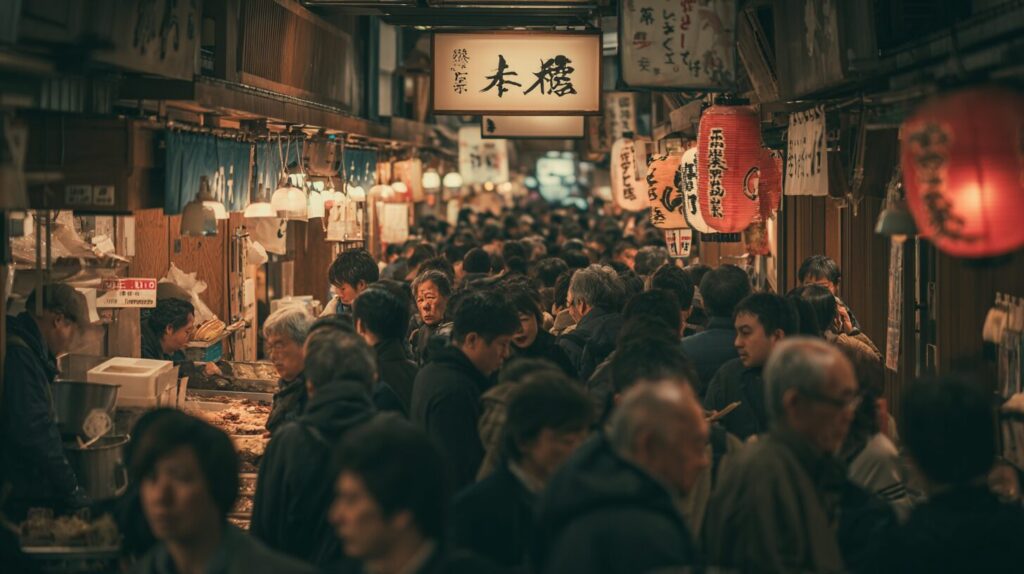
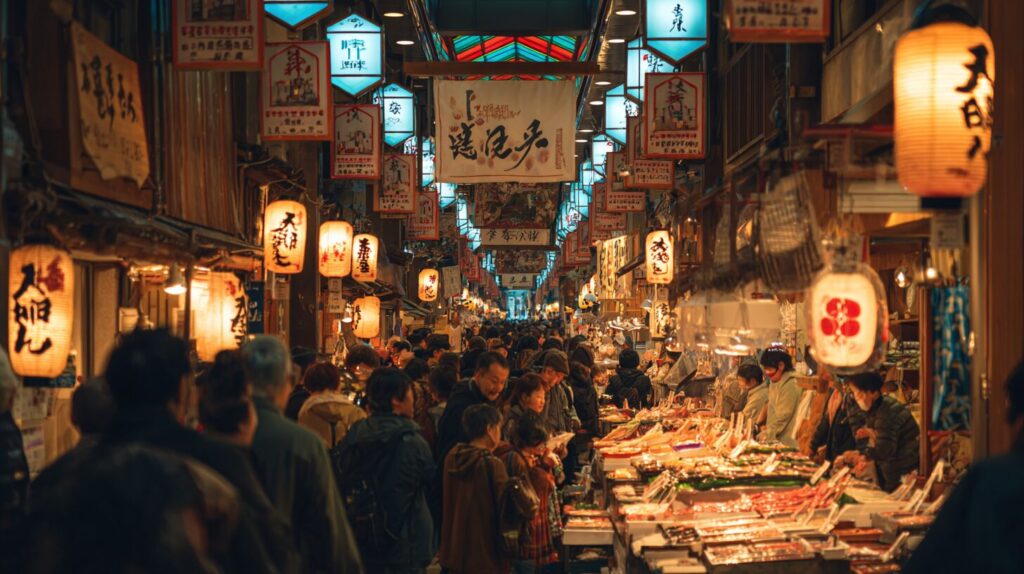
The market stretches approximately 390 meters along a covered shopping arcade running east-west between Teramachi and Nishikikoji in central Kyoto, one block north of Shijo-dori. It has approximately 130 stalls and shops. Of these, perhaps 40 to 50 sell something genuinely specific to Kyoto that you cannot easily find at a supermarket or gift shop elsewhere. The rest sell tourist-grade takoyaki, mass-produced matcha products, and souvenirs that were manufactured in a factory far from Kyoto Prefecture. This ratio has shifted since 2019 as tourist footfall increased. The market is currently at its most crowded in the morning from 10am through early afternoon, with some relief after 4pm as closing times approach for older traditional vendors.
What to Eat: The Genuine Highlights
The specific things worth eating in Nishiki in 2026 are the things that can only be made or sourced in Kyoto. Kyoto-style tamagoyaki — a sweet, thick rolled omelette on a bamboo skewer — is made fresh at several stalls and is legitimately distinct from the egg dishes available elsewhere in Japan; the Kyoto version is sweeter and denser than the Tokyo style. Fresh yuba (湯葉, tofu skin) sold by the sheet is the best single-ingredient purchase in the market; buy the fresh version rather than the dried and eat it with a small dish of soy sauce. Kyoto tsukemono (pickled vegetables) from established vendors — particularly the vendors selling shibazuke (purple pickled cucumber with perilla) and senmaizuke (thinly sliced turnip) — represent Kyoto food culture in concentrated form and are unavailable in this quality anywhere else.

Specific Stalls Worth Finding
Aritsugu (有次) is a kitchen knife and cookware shop that has been operating since 1560. It is not a food vendor but it is the most important single shop in the market: handmade kitchen knives produced to individual specification, copper pots, and professional-grade Japanese kitchen equipment. The prices are higher than souvenir kitchen goods, but the items are the real thing. Ask the staff to engrave your name on a knife in Japanese phonetic script — a straightforward service that takes minutes and makes the purchase meaningfully specific. Daizen (大善), near the Teramachi end, is the stall known for fresh octopus-and-quail-egg skewers — the preparation is done in front of you and the product is worth the queue. Yamamoto Morita Tofu has sold fresh tofu and yuba from the same location for decades; the fresh yuba sold by the sheet here is the market’s most reliably authentic food purchase.
買うべきもの(食品以外)
Beyond Aritsugu’s knives, the market has several shops worth specific attention. Uchida Shoten sells Kyoto-specific dry goods and pantry items — specific miso varieties, dashi components, seasonings — that function as practical ingredients for recreating Kyoto cuisine at home rather than as decorative souvenir packaging. The tsukemono shops along the middle section of the market sell vacuum-packed pickles that travel well internationally and represent genuine Kyoto food culture rather than manufactured omiyage. A package of good shibazuke or suguki (fermented turnip) is the food purchase that most reliably prompts the best response from anyone who knows Japanese food when you unpack it at home.
What to Skip
The matcha soft-serve stalls near the Shijo-dori entrance are overpriced and identical in quality to matcha soft-serve available at dozens of locations throughout Kyoto. The skewered food stalls selling what is functionally identical to street food available in Osaka’s Dotonbori at higher prices because of the Nishiki premium. Any stall selling packaged goods in bright English-language packaging — “KYOTO” branded containers of seasoning, decorative chopstick sets, green tea Kit Kats — reflects the tourist-souvenir economy rather than Kyoto food culture; these products are available at the airport for approximately the same price. The stalls selling live animals, oversized novelty items, or bright-colored confections that bear no resemblance to traditional Kyoto sweets are simply tourist infrastructure and not worth stopping for.
Timing, Crowds, and Practical Notes
Nishiki Market is at its worst between 10:30am and 2pm, when tour groups from nearby Nijo Castle and Nishiki-koji fill the arcade to standing-room density. The arcade is approximately 3 meters wide in most sections, and at peak hours the experience of moving through it is simply crowd management rather than market exploration. If you can visit before 10am, many of the traditional vendors are already open, the light is better, and the experience of the market as a place where people actually shop for food becomes available. After 4pm, some vendors close but the crowds thin significantly. A morning visit on a weekday in the off-peak months (January, February, June, early September) is the version of Nishiki Market that most resembles what it actually was and is.

Eating Near Nishiki
The market itself is best used for snacking and purchasing rather than as a lunch destination — the standalone restaurants in the area surrounding it (along Kawaramachi and in the alleys off Shijo) are generally better value and less chaotic than eating your way through the stalls while managing luggage and crowds. Specifically: the small soba shops on the streets immediately north and south of the market arcade serve Kyoto-style cold soba at lunch prices (¥700–1,200) in the kind of quiet that makes the food taste better. After the market, walking two blocks to the Pontocho alley that runs parallel to the Kamo River and choosing any restaurant with a legitimate handwritten menu in Japanese (translateable with Google Translate camera) will produce a better meal than anything the market’s food stalls offer in 2026.