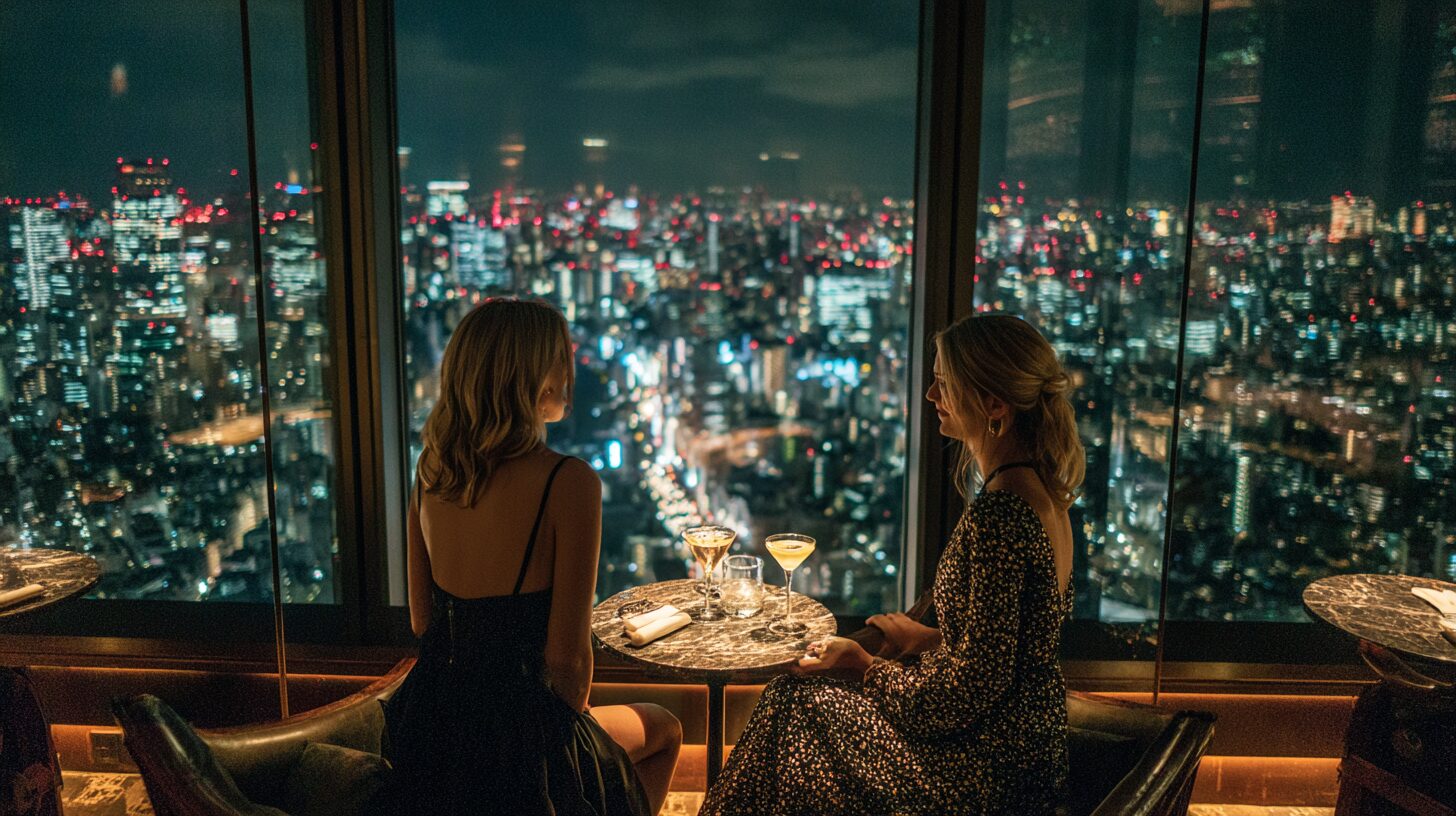
Tokyo is the only city in the world where you can eat dinner at a three-Michelin-star restaurant, continue to a standing jazz bar in a basement for live piano, walk to a six-seat whisky bar where the owner has been curating bottles since 1974, get ramen at 3am from a shop that has been open continuously since 1946, and be back at your hotel in time to sleep before your first train. The logistics of this are genuinely available to any visitor who knows where to go.
The challenge is that Tokyo’s nightlife is organized not by a single district but by neighborhood character — each ward and neighborhood has its own specific appeal, and what you want for the evening determines where you should go. Here is how to navigate Tokyo at night in 2026, broken down by what kind of traveler you are.
For the Bar Crawler: Shinjuku’s Golden Gai
Golden Gai (ゴールデン街) is a block of 200 tiny bars in eastern Shinjuku, each typically seating between four and ten people, each with a distinct personality and regular clientele. The neighborhood survived multiple waves of Tokyo’s development only through persistent community resistance, and the bars that remain — many operating out of two-story wooden structures that look unchanged since the 1960s — are the result. There are bars that play only jazz, bars with walls covered in film-school memorabilia, bars run by former academics with book-filled shelves, bars where the only menu is what the owner felt like making that night. The cover charge at most bars (typically ¥500–1,500) funds the privilege of taking one of the few available seats. Golden Gai is best started around 9pm when the regulars arrive and best explored by simply opening a door and seeing if the space appeals. Most owners speak some English and welcome tourists who approach with curiosity rather than entitlement.

For the Cocktail Enthusiast: Ginza and the Bar Scene
Tokyo’s high-end cocktail culture is among the best in the world, centered on the Ginza district and the concept of the Japanese bartender — professionals who train for years in the craft of precise preparation, cold-carved ice, and house-made spirits. Bar High Five, run by master bartender Hidetsugu Ueno on the fifth floor of a Ginza building, is widely considered one of the best cocktail bars in Asia; reservations are possible but walk-ins are accommodated when seats are available. Star Bar Ginza, Tender Bar, and Bar Orchard Ginza maintain similar reputations. In Roppongi, Bar Gen Yamamoto specializes in seasonal Japanese ingredient cocktails — vegetables, herbs, and regional fruits — that serve as an edible introduction to Japanese seasonality. These bars are not cheap (expect ¥2,000–4,000 per cocktail), but the craft is genuine and the experience is unlike cocktail culture anywhere else.
For the Karaoke First-Timer: How to Do It Right
Karaoke in Japan is private room karaoke — you rent a room by the hour for your group, order drinks directly to the room, and sing without an audience. This format removes the anxiety of public performance and creates one of the genuinely communal experiences available to visitors regardless of singing ability. The major chains — Big Echo, Karaoke no Tetsujin, and Joysound — have extensive English-language song libraries and rooms available until early morning. Shibuya and Shinjuku have the highest concentration of karaoke venues. The typical cost is ¥500–1,000 per person per hour plus drinks, with late-night rates often cheaper than evening rates. The correct approach: go for at least three hours, order food, and treat it as dinner rather than an activity separate from dinner. Most chains have apps that allow pre-booking in English.

For the Jazz Lover: Shimokitazawa and Shinjuku
Tokyo has a jazz culture that dates to the post-war American occupation period, and the live jazz bars that survive from that era — as well as newer venues — maintain remarkably high performance standards. Shimokitazawa (a 15-minute train ride from Shibuya) is Tokyo’s alternative music neighborhood, with jazz and live music venues concentrated around its two station exits. The Shinjuku Pit Inn has hosted continuous live jazz since 1965 and remains the city’s most historically significant jazz venue — afternoon and evening shows run most days of the year. In Ginza, Blues Alley Japan runs a dinner-and-jazz format. Cotton Club in Marunouchi books international acts. A note on the format: most Tokyo jazz bars charge a table charge or music charge (¥1,500–3,000) separate from drinks and food, billed at the end. This is standard and not a scam.
絶景を求める方へ:屋上バーと展望デッキ
Tokyo’s skyline — low to the horizon in most directions, punctuated by the Tower and the Sky Tree — is best seen from height at night, when the grid of lights extends to every visible edge. The New York Bar at the Park Hyatt Shinjuku (52nd floor) is where Lost in Translation was filmed and remains exactly as atmospheric as advertised, if expensive (¥2,400 music charge on weekends). Shibuya Sky, an observation deck at the top of Shibuya Scramble Square, offers 360-degree views and has a rooftop bar section; advance ticket purchase is strongly recommended. The 45th floor bar at the Andaz Tokyo Toranomon Hills is less famous and correspondingly less crowded, with exceptional views north over the city. All of these are best visited between 8pm and 11pm, after the sunset but while the city is fully lit.
For the Late-Night Eater: Tokyo at 2am and After
Tokyo’s late-night food culture is one of its defining characteristics. Ramen shops in Shinjuku and Shibuya serve continuously through the night. Gyudon chains (Yoshinoya, Sukiya, Matsuya) operate 24 hours throughout the city and provide the most honest version of a Japanese meal for under ¥500. In Asakusa, a handful of traditional tempura and soba restaurants open at 6am — arriving there at 5:30am after a long night and eating breakfast tempura as the city wakes up is an experience with no equivalent anywhere. The convenience stores (7-Eleven, Lawson, FamilyMart) operate 24 hours and sell genuinely excellent prepared food — onigiri, sandwiches, oden from the heated counter — that serves as either a late snack or a substitute for a full meal at 3am. Tokyo’s convenience stores are not a tourist trap or a backup option; they are a legitimate and widely used part of the food culture.

For the Club Goer: Shibuya and Beyond
Tokyo’s electronic music scene is concentrated in Shibuya, with Womb (on Dogen-zaka slope) as the city’s most internationally recognized club — a four-floor venue that regularly books international DJs and maintains consistent sound quality. Contact in Daikanyama is smaller and more technically focused, with an emphasis on house and techno. Ageha in Shinkiba (accessible by the Rinkai line from Shibuya) is Tokyo’s largest club venue, used for major international shows and festivals. Club nights in Tokyo typically start later than European equivalents — midnight is considered early, 2am is when events begin properly — and the city’s first trains at 5:30am serve as the natural close. Tokyo’s club culture is also considerably less aggressive than many European cities: behavior toward other guests that would be tolerated elsewhere will get you removed from Japanese venues quickly.
Getting Home at Night in Tokyo
Tokyo’s train network runs until approximately midnight on weekdays (later on Fridays and Saturdays), leaving a gap between last train and first train (around 5:30am) during which taxis become necessary. Taxi apps (GO, Uber) work throughout the city, but late-night taxis in Tokyo are expensive — expect ¥3,000–8,000 for a Shibuya-to-Shinjuku or similar trip, more for longer distances. The alternative is to plan for the gap: karaoke venues, some izakayas, and 24-hour family restaurants (Denny’s Japan, Jonathan’s) provide places to wait out the gap without spending heavily on a taxi. Many first-time visitors are surprised to find Tokyo’s streets entirely safe at 3am — you will walk from a bar to a convenience store and back without any concerns that would arise in equivalent situations in other major cities.