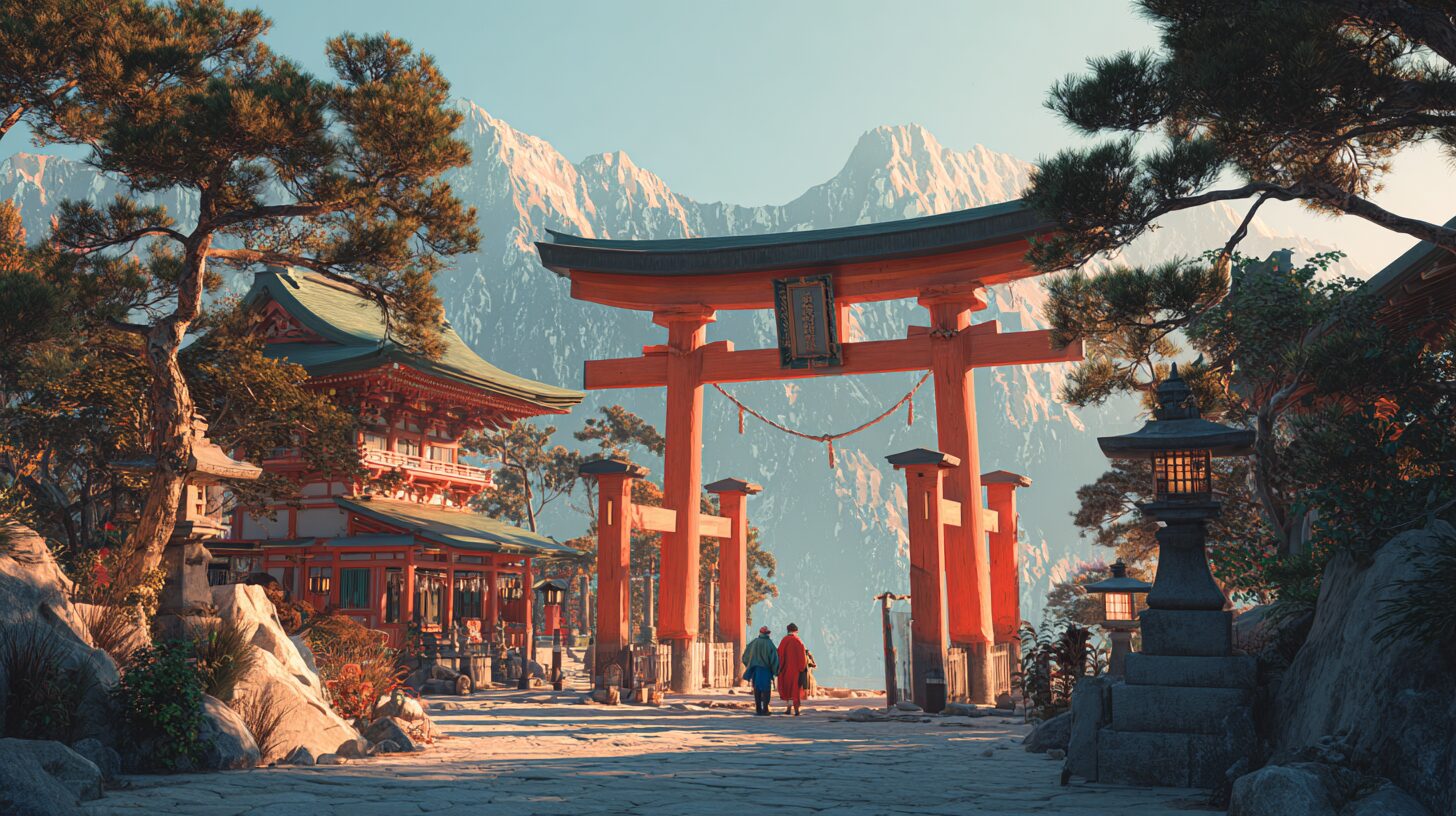
Most visitors to Japan visit at least one Shinto shrine. Most do it wrong — not in any dramatic way, but in the quiet, unfamiliar way of people who have never been told the rules. Japan is too polite to correct you out loud. Shrine staff rarely approach visitors to explain. The result is a steady stream of visitors walking down the center of the sando, skipping the purification ritual, tossing coins carelessly, and leaving without any sense that they’ve participated in something with fourteen hundred years of continuous practice behind it.
Understanding what you shouldn’t do — and why — is the difference between visiting a shrine and simply passing through one. Shrines are genuinely welcoming to visitors of all backgrounds. But that openness isn’t the same as indifference about how the space is used. Here are the ten most important things to get right before you visit.
1. Don’t Walk Down the Center of the Sando
The sando (参道) is the approach path from the torii gate to the main shrine. The center strip — called the seichū (正中) — is traditionally considered the path of the kami, the divine spirits enshrined at the site. Walk to the left or right side of the path from the moment you step through the torii. At Fushimi Inari in Kyoto, where the sando consists of thousands of orange torii gates, you will notice that Japanese visitors instinctively keep to the edges even when the path is wide. Bow briefly before stepping through the outermost torii to mark your transition from the ordinary world into the sacred precinct.
2. Never Skip the Temizuya
The temizuya (手水舎) is the stone basin near the entrance where visitors purify their hands before approaching the altar. In Shinto, this is not a hygiene practice — it is the removal of kegare (穢れ), a spiritual impurity that accumulates through ordinary daily life. Skipping it before approaching the altar is the equivalent of entering a sacred space with deliberate disrespect. The correct sequence: take the ladle with your right hand and pour water over your left; switch the ladle to your left hand and pour over your right; cup water in your left palm to briefly rinse your mouth without putting the ladle to your lips; then tilt the ladle upright so remaining water runs down the handle to cleanse it. Many temizuya were modified during recent years to use flowing water — the gesture of purification remains expected regardless of format.

3. Don’t Bow Just Once at the Altar
The standard prayer sequence at a Shinto shrine altar is 二礼二拍手一礼 (ni-rei, ni-hakushu, ichi-rei): two deep bows, two claps, one final bow. Some shrines have their own variations — Izumo Taisha in Shimane uses four claps — but two bows, two claps, and one bow is the correct default at nearly every shrine in Japan. Before bowing, toss a coin gently into the offertory box. Five-yen coins are traditionally preferred because “go-en” (五円) sounds like the word for auspicious connection. After your two bows and two claps, hold your hands briefly together in silent prayer before the final bow. The full sequence takes about thirty seconds.
4. Never Attempt to Enter the Honden
The honden (本殿) is the innermost sanctuary of the shrine — the actual dwelling of the kami. It is not accessible to visitors under any circumstances. Not during special events. Not with special permission. Even Shinto priests enter only for specific ceremonies. What you see from the worship hall (haiden) at the altar is the facade of the honden or a corridor leading toward it. Never step past roped barriers, attempt to enter shrine buildings that are not explicitly open to visitors, or treat an ongoing private ceremony as an opportunity for close photography. The inner sanctum is permanently and intentionally closed.
5. Don’t Be Loud or Use Your Phone Speaker
Shinto shrines are active places of prayer, not historical attractions. Even at the most tourist-dense shrines — Fushimi Inari, Meiji Jingu, Itsukushima — there will be Japanese visitors who are there to genuinely communicate with their kami, for health, for safe travel, for a grieving family, for a hoped-for pregnancy. Speaking loudly, playing audio from phone speakers, conducting video calls, or shouting across the grounds is disrespectful in ways that require no elaborate explanation. The acoustic atmosphere of a working shrine — wind through cedar, a distant bell, gravel underfoot — is part of what makes the space sacred. Preserve it for everyone present.

6. Don’t Throw Coins Hard Into the Offertory Box
The saisen-bako (賽銭箱) — the wooden offertory box at the altar — is not a wishing well. Tossing coins in a high arc, throwing multiple coins at once, or treating the offering as a game is considered disrespectful to the practice and to other worshippers nearby. The correct offering is a gentle toss or simple placement of a single coin. Once a coin enters the saisen-bako, it belongs to the shrine. Do not reach in to retrieve a misdirected coin, and do not pick up coins that have bounced out.
7. Don’t Take Anything From the Grounds
This extends further than most visitors assume. Do not take stones, sand, fallen leaves, flowers, or natural materials from shrine grounds. Do not remove tags, ropes, or decorations from torii gates or trees. If you draw an omikuji (fortune slip) and the fortune is bad — which by traditional classification approximately 30% are — the custom is to tie it to the designated rack at the shrine so the kami can absorb the misfortune. If the fortune is good, you can keep it. But do not take anything that has not been specifically offered for purchase. The grounds and everything in them are part of the kami’s residence.
8. Don’t Treat Ema Boards as Photo Props
Ema (絵馬) are small wooden plaques on which visitors write personal prayers — for examination success, recovery from illness, a hoped-for marriage, a new job. They are hung on designated racks and left as offerings to the kami. Photographing ema boards up close and sharing them on social media is a meaningful privacy violation. These are personal prayers written with the understanding that they would remain between the writer and the divine. Reading ema as you pass is generally acceptable — zooming in, extracting individual wishes, and broadcasting them is not. The same consideration applies to written prayers placed in offering boxes.

9. Don’t Confuse Shrines and Temples
Shinto shrines (神社, jinja) and Buddhist temples (寺, tera/ji) are two distinct religious traditions with different architecture, different objects of worship, and different prayer etiquette. Shrines have torii gates, gravel approach paths, and kami as their objects of worship. Temples have incense burners, large bronze bells, Buddha statues, and monks in robes. At temples, the prayer gesture is hands pressed together (gassho) with a bow — clapping at a Buddhist altar is unusual and can feel jarring to practitioners present. The distinction matters. Most sites in Japan are clearly one or the other; some complexes like Nikko include both, and the differences become obvious once you are actively looking for them.
10. Don’t Leave Without Bowing at the Torii Gate
Just as you bow before entering the torii gate, you should bow when leaving — facing back toward the shrine interior as you pass through from inside. This closing gesture mirrors the opening one and signals that your visit was intentional and respectful rather than incidental. At shrines with many nested torii gates, bowing at each individual gate is unnecessary; the outermost main gate is sufficient for both arrival and departure. The gesture takes three seconds. It makes a real difference in how you carry the experience of what you’ve just done.
Approach With Genuine Attention
None of these practices require you to hold Shinto beliefs. The temizuya water does not need to literally remove spiritual impurity for the ritual to be worth performing with care. What shrine etiquette asks is simply that you treat the space, the people using it, and the tradition it embodies as deserving of genuine attention — not just compliance. Japan’s shrines have survived fourteen hundred years of continuous use. The care visitors bring to them is part of how they will survive the next fourteen hundred.