The Tokaido Shinkansen runs between Tokyo and Kyoto approximately every ten minutes during daytime hours. It is one of the most traveled rail corridors in the world, and also one of the most poorly explained to first-time visitors. Online guides cover the broad facts: it takes about 2 hours and 15 minutes, it costs around ¥13,000–¥14,000, the JR Pass covers it. What they tend to skip: which specific train service to take, where the interesting windows are, what to eat on board, and what you’re missing if you make the journey a purely functional exercise.
After taking this route more than a dozen times in various directions and seasons, here is the complete picture for 2026 — including the things that took me several trips to figure out and that most travel articles still don’t mention.

Nozomi vs Hikari vs Kodama: Which Train to Take
Three Shinkansen services operate on the Tokaido line between Tokyo and Kyoto: the Nozomi (fastest, fewest stops), the Hikari (slightly slower, more stops), and the Kodama (slow, stops everywhere). For Tokyo-to-Kyoto, take the Nozomi if you’re paying out of pocket. Take the Hikari if you have a standard JR Pass — the Nozomi and Mizuho services are excluded from the standard JR Pass, a critical detail that catches many first-timers by surprise.
Travel time differences: the Nozomi takes approximately 2 hours 15 minutes from Tokyo to Kyoto. The Hikari takes approximately 2 hours 45 minutes. The Kodama takes over 4 hours and is essentially for local travel between intermediate stops — not relevant for the full Tokyo-Kyoto run. If you have a JR Pass and are therefore taking the Hikari, the extra 30 minutes is not a significant inconvenience; the Hikari is the same train with the same seats, just stopping at Nagoya and Shizuoka along the way.
The Mt. Fuji Window: Which Side, When
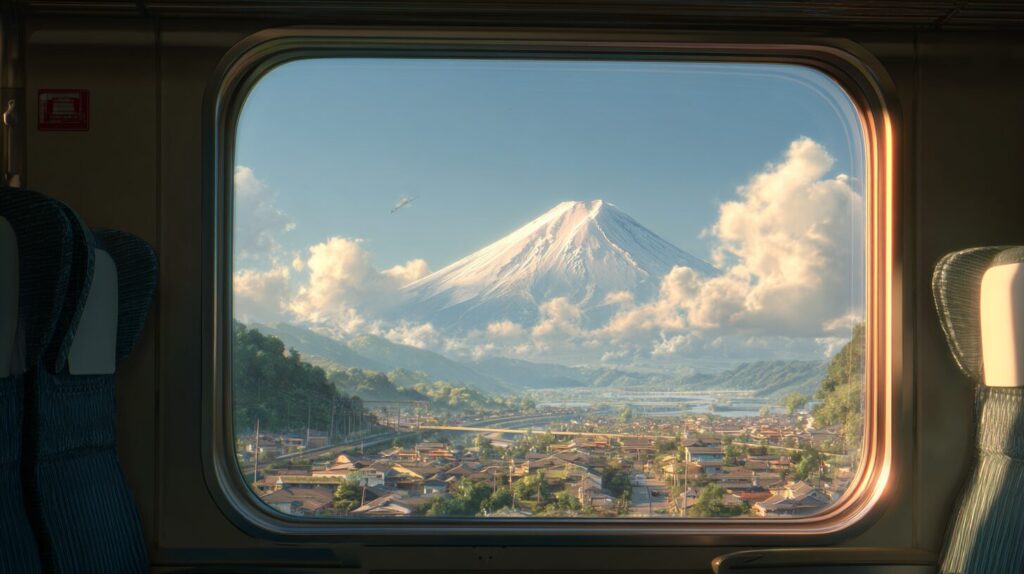
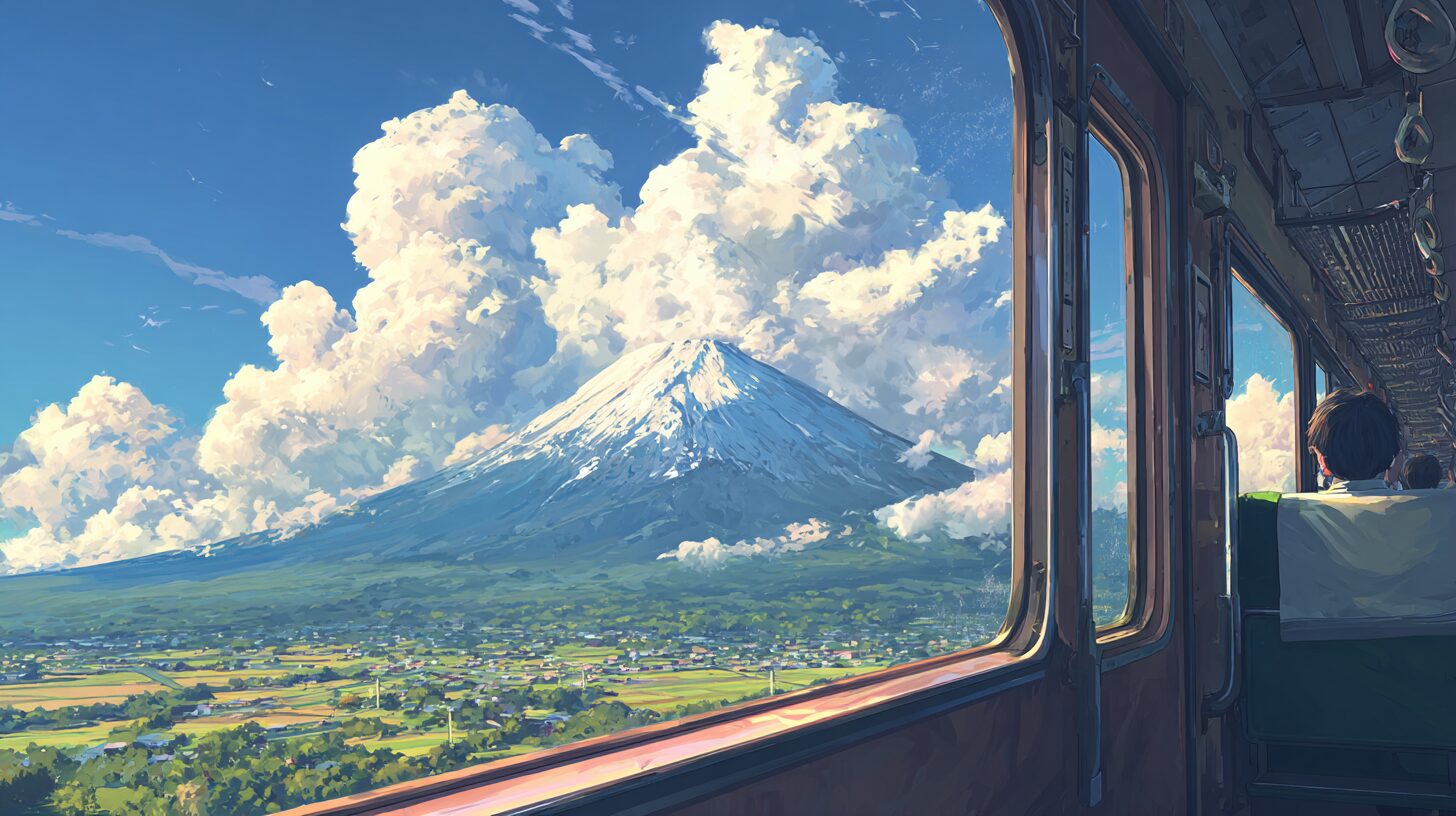
Mount Fuji is visible from the Shinkansen for approximately 5–7 minutes on a clear day, at a point roughly one hour into the journey from Tokyo (between Shin-Fuji and Mishima stations). The view is on the right side of the train when traveling from Tokyo toward Kyoto — car numbers 1 through 6 in the E-seat (window seats on the right side). Fuji-facing seats fill quickly with informed travelers; if this view matters to you, reserve specifically E-seat in the first half of the train when booking.
Clear Fuji views are most reliable in winter (December through February), when dry air and low humidity produce the sharpest silhouettes. Summer views are frequently obscured by cloud and haze — the mountain is there, but the famous snow-capped peak is often indistinct. Autumn is intermediate. If you’re planning a specific trip for the Fuji view from the train, aim for a clear winter or early spring morning departure.
Ekiben: The Underrated Part of the Journey
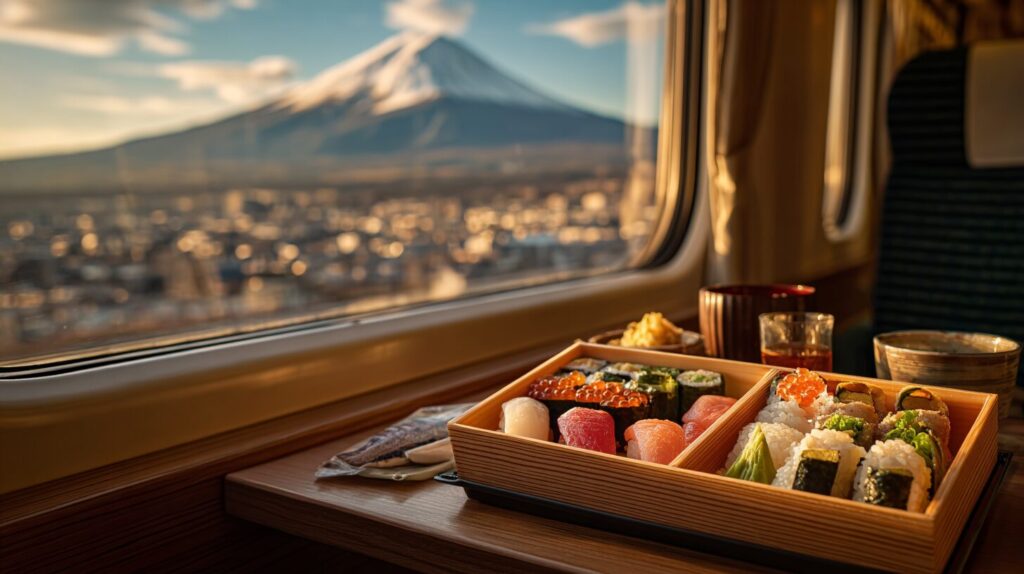
Ekiben — bento boxes sold at train station platforms — are one of Japan’s most overlooked travel pleasures. Tokyo Station has approximately 200 different ekiben varieties available before departure, ranging from ¥900 to ¥3,500. The basement food halls at Shin-Osaka and Kyoto stations have comparable selections for the return journey.
What to look for at Tokyo Station’s ekiben shops (primarily located in the Daimaru department store basement and the Gransta mall inside the station): the Makunouchi bento (幕の内弁当) is the classic format — rice, fish or meat, pickles, several sides — and a reliable choice. Regional specialty ekiben are worth seeking: the Kamameshi pot rice boxed sets (different varieties for different regional styles) and seafood-focused Tokyo bento using fresh market seafood are both excellent. Buy before boarding; platform vendors are limited and prices are similar. Eating on the Shinkansen is normal — there are no restrictions and the tray tables fold out of the seat-back.
Breaking the Journey: Nagoya, Hakone, or Kamakura?
The Tokyo-to-Kyoto route passes near several worthwhile stops that many travelers skip entirely. The three most worth considering for a mid-journey break:
Nagoya (名古屋) is approximately 1 hour 40 minutes from Tokyo by Nozomi. The Nagoya Castle district and the Atsuta Shrine are both excellent and require 3–5 hours combined. Nagoya Station has outstanding regional food — hitsumabushi eel rice and miso katsu are the city’s signature dishes and worth a lunch stop alone. A 2–3 hour Nagoya layover is easy to arrange between Shinkansen services.
Hakone (箱根) requires a detour — exit at Odawara (小田原) on the Tokaido Shinkansen and transfer to the Hakone-Tozan Line. It’s a half-day minimum detour and a full day if you want to see the open-air museum, Hakone Checkpoint, and the Owakudani volcanic area properly. The Mt. Fuji view from Lake Ashi (when clear) rivals anything on the Shinkansen itself. A Hakone break works best if you have flexible timing and are not on a tight schedule.
Kamakura (鎌倉) requires a separate day trip from Tokyo before you depart — it’s not en route. But if you haven’t seen the Great Buddha (Kotoku-in) and the Engakuji temple complex, a Kamakura morning before your afternoon Shinkansen to Kyoto is a highly efficient way to add both to a single itinerary day.
What Nobody Mentions: The Night Bus Option
The overnight highway bus from Tokyo to Kyoto — operated primarily by Willer Express and JR Bus Kanto — costs ¥3,500–¥7,500 depending on the comfort level of seat booked, and travels overnight (departing around 11pm, arriving around 7am). For budget travelers, this is a legitimate option that combines transport with accommodation for one night, saving both money and time.
The honest assessment: it’s not comfortable. The buses are modern and the seats recline significantly, but sleeping upright in a moving vehicle is not quality rest. The trade-off is real. Travelers who have done both consistently say: take the night bus once, take the Shinkansen thereafter. But once is instructive — you arrive in Kyoto in the early morning before the crowds and with a full day ahead of you, which has its own advantage.
Kyoto Station: What to Do When You Arrive
Kyoto Station is larger and more confusing than most visitors expect — it’s a 15-story complex with a shopping mall, hotel, and extensive underground food halls. Orient yourself before you leave the station: the JR ticket gates are on the central floor; tourist information is immediately outside the Karasuma Central Exit (the main north exit); IC card top-up machines are at every major gate entrance.
Store large luggage in a coin locker before venturing into the city — Kyoto Station has lockers at multiple points, ranging from ¥400 (small) to ¥900 (large) per day. For same-day locker availability during peak season (March-April, October-November), arrive before 9am. If lockers are full — they do fill — the takkyubin luggage forwarding service (available at convenience stores) can deliver your bags to your next hotel for ¥1,400–¥2,000, allowing you to spend your first Kyoto hours unburdened.
One Thing Almost Nobody Does: The View From the Rooftop
Kyoto Station’s rooftop observation path (空中径路) — reached by escalator from the 11th floor — offers a panoramic view across the city and is free to access. Most visitors arriving at Kyoto Station walk straight through to their hotel or the first temple on their itinerary. Spending 20 minutes on the rooftop first, orienting yourself to the city’s layout before descending into it, is something that sounds unnecessary and consistently proves useful. You can see the Higashiyama hills, the direction of Fushimi Inari, and on clear days, the Arashiyama mountains to the northwest. It costs nothing and takes less time than a confused first hour of navigation.