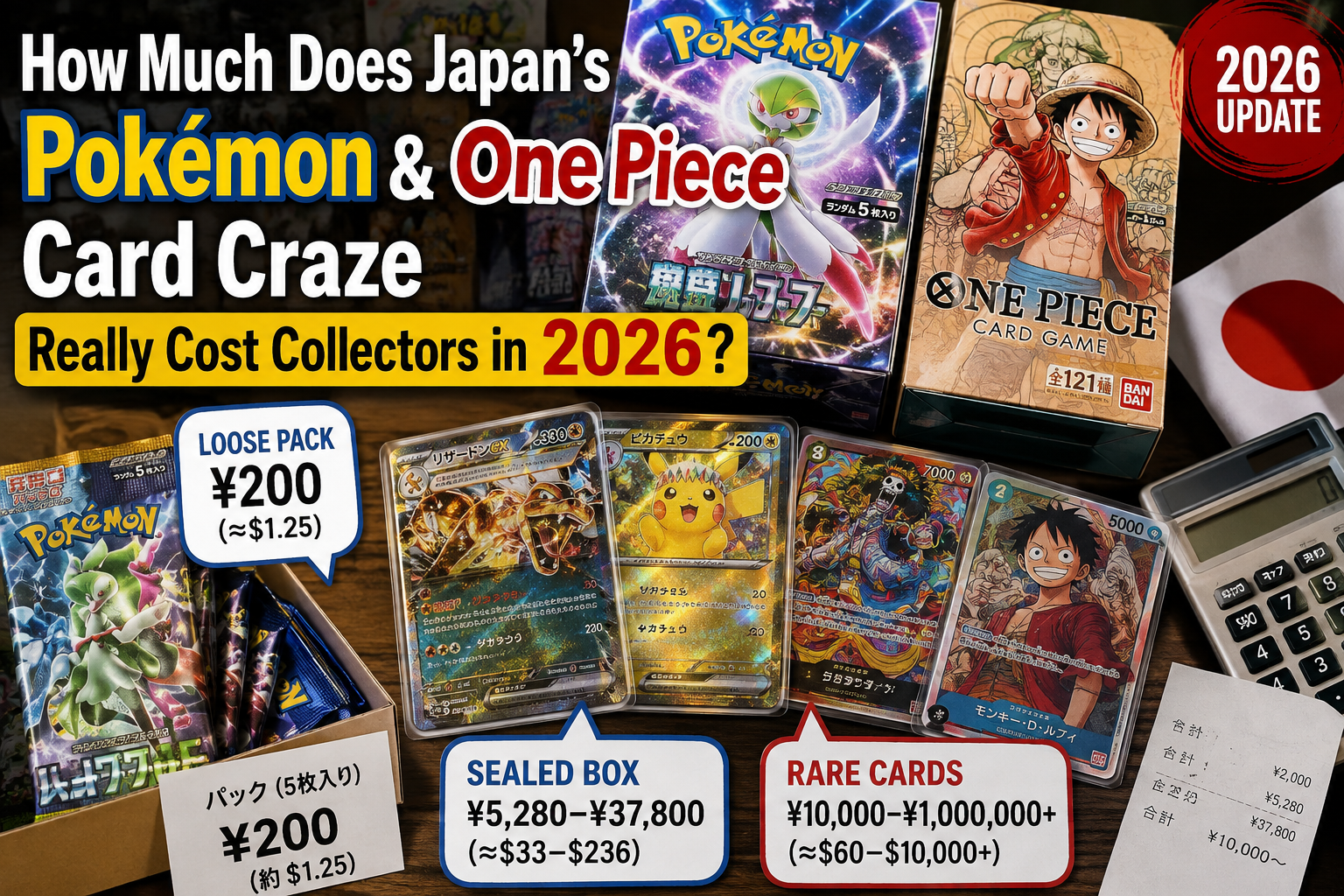
A pack of Pokémon cards costs about $1.25 at any Japanese convenience store. In February 2026, a single Pokémon card sold at auction for roughly $16 million.
Almost nobody visiting Japan will get anywhere near that number — but plenty of travelers overpay for a $1.25 pack without ever realizing it.
⭐ Bottom Line
A casual pack-or-two habit costs about $10–$50 in Japan; chasing a specific rare card can run $150 to several thousand dollars — and the single biggest way travelers overpay is buying loose packs from street resellers instead of the official retail system.
- Best for: collectors and casual fans who want an authentic, Japan-only shopping experience, not just a souvenir
- Budget: $10–$50 for a fun, low-stakes haul; $150+ for a sealed box or a genuine chase card
- Book ahead: not required for browsing, but hot new releases sell through pre-registered online lotteries, not walk-in purchase
Japan’s Pokémon Card Game and One Piece Card Game are both in the middle of a genuine boom in 2026 — Pokémon heading toward its 30th anniversary on October 20, and One Piece releasing its most valuable cards yet. A single booster pack still costs about ¥200 (roughly $1.25). The real cost of the hobby, though, shows up several steps past that first pack, in a market where the exact same unopened box can trade for anywhere from face value to nearly eight times face value within days of release.
Card shops, official retailers, and resale marketplaces all quote wildly different numbers for what looks like the same product, and a first-time buyer has no easy way to tell which price is normal. That gap is where most of the overspending happens — not on the rare cards collectors deliberately chase, but on ordinary packs and boxes bought at the wrong price, in the wrong place.
The short answer: a light collecting habit in Japan costs roughly $10 to $50 for a memorable, authentic haul, while a serious one can run into the thousands. What follows is the actual breakdown, category by category, with the real prices behind each one.
Loose Packs: The Cheapest Way In
A single booster pack retails for about ¥200 ($1.25) for both the Pokémon Card Game and the One Piece Card Game, sold at hobby shops, electronics retailers, and even some convenience stores. Official retailers like Pokémon Center and major electronics chains cap purchases — often a strict number of packs per person — on the day a hot set launches.
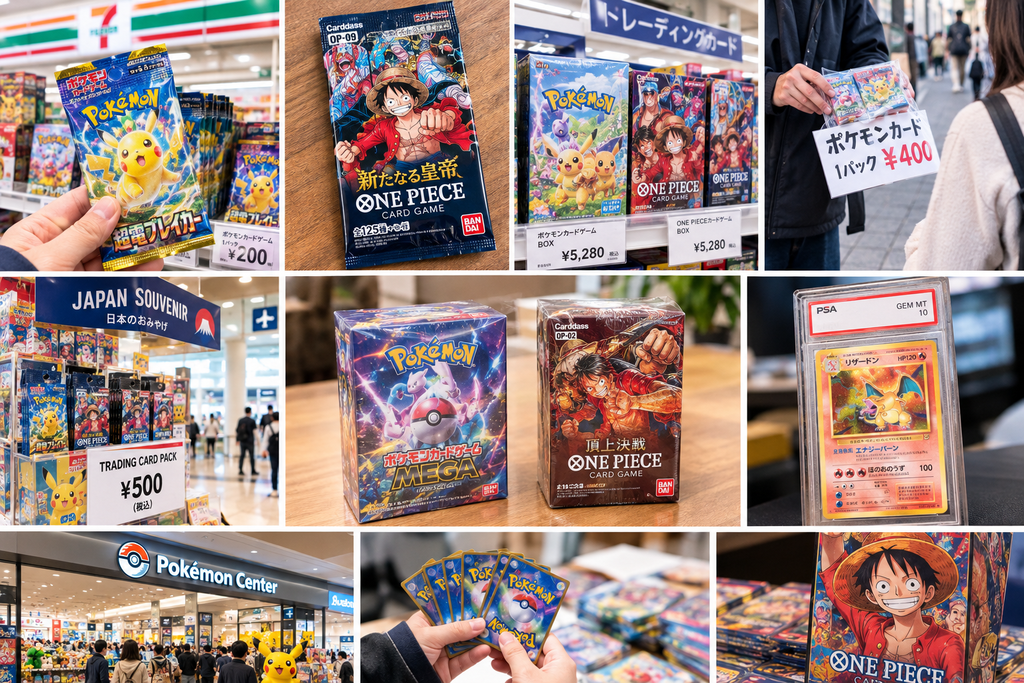
At face value, this is the cheapest, lowest-stakes way into either hobby — and it’s also where the next section’s mistake happens most often.
The $1.25 Pack Tourists Pay $3 For
Remember the $16 million card from the opening. Nobody stumbles into that by accident — but plenty of travelers stumble into paying triple for a $1.25 pack, and it happens in a much more mundane way.
Airport gift shops and tourist-district souvenir racks push the price higher still, sometimes past ¥500 ($3) per pack for the same product available at face value a few train stops away. The fix costs nothing: buy from an official retailer or a posted-price card shop, and treat anyone selling packs from a bag on the sidewalk as a markup, not a bargain.
Sealed Boxes: Where the Real Money Moves
This is the category where prices genuinely diverge. A One Piece Card Game booster box retails around ¥5,280 ($33). A recent high-demand set was tracked reselling for about ¥37,800 ($236) — roughly seven times face value — within weeks of release. Pokémon’s MEGA-series boxes retail near ¥6,000 ($38); one 2026 release was already trading around ¥23,500 ($147), nearly four times face value, before it had even hit shelves.

Discontinued sets climb even further with time. A Pokémon set originally sold at a comparable price point was reselling for about ¥61,000 ($381) by mid-2026, roughly three years after release. One especially sought-after older box has been tracked at more than 120 times its original retail price.
Chasing a Single Rare Card
This is where the numbers stop looking like souvenir shopping. Pokémon’s special-art rare cards (marked SA or SAR) commonly trade above ¥100,000 ($625). One Piece’s rarest “comic parallel” cards, featuring full-scene manga artwork, have traded around ¥500,000 ($3,125) for cards tied to major characters, and some shops have offered buyback prices as high as ¥4,000,000 ($25,000) for a single tournament-exclusive card.
Picture the moment a collector actually wants: peeling back a fresh pack in a crowded Akihabara shop, and the card underneath catches the light differently than the rest — the telltale shimmer of a hit.
The honest expectation-setter: the overwhelming majority of packs contain nothing close to that. The odds are part of what makes the rare pulls worth talking about at all.
This is also where that opening number stops being trivia. In February 2026, a one-of-a-kind Pokémon “Illustrator” card reportedly sold at auction for roughly $16 million (about ¥2.5 billion), a new record for any trading card sale. The jump from a ¥200 pack to a seven-figure single happens in exactly one step — pulling the right card — even if almost nobody ever takes that step by accident.
Where the Splurge Is Actually Worth It: Professional Grading
Getting a valuable card professionally authenticated and graded (commonly through PSA) costs between ¥3,980 and ¥11,980 ($25–$75) per card, depending on how fast you want it back — the cheapest tier takes roughly six months, the mid-tier about one month. It sounds like an unnecessary extra cost for a piece of cardboard. The math usually says otherwise.
Recent tracked sales show a raw, ungraded rare card selling for around ¥120,000 ($750) while the same card graded a perfect PSA 10 sold for roughly ¥330,000 ($2,063) — nearly triple. A well-known Pokémon illustration card followed a similar pattern: about ¥185,000 ($1,156) ungraded versus ¥490,000 ($3,063) once graded.
A graded PSA 10 chase card can genuinely cost more than the round-trip flight that brought you to Japan to buy it. That’s not a reason to avoid grading — it’s a reason to only grade a card you’re confident is actually worth it.
The Running Total for a Real Trip
Put together, a typical visiting collector’s spending tends to land in one of three tiers. A casual browser who buys ten or so packs and pokes through a shop’s binder of loose singles usually spends $10 to $50 for a genuinely fun afternoon. Someone who wants a sealed box to bring home unopened, plus a modest single card as a souvenir, is realistically looking at $150 to $300. A collector chasing one specific card — a comic parallel, a special-art rare, a graded piece — should expect anywhere from $500 to several thousand dollars, with no reliable ceiling once a specific print run has sold out for good.
What pushes any of these tiers higher: buying during the run-up to Pokémon’s October 2026 anniversary, chasing a card from a set that’s already been discontinued, or shopping resale instead of the official lottery system. What keeps it lower: pre-registering for official releases, buying loose singles instead of gambling on packs, and treating grading as an investment reserved for cards that have already proven their value.
✅ Go if you are:
- curious about Japanese pop culture and want a $10–$50 souvenir hunt with a genuine story behind it
- already a collector back home who wants access to Japan-exclusive sets and specialist shops
- comfortable browsing without full translation — pointing at a display case and comparing price tags works fine
- interested in one specific character or series and want to hunt for a single meaningful card, not a full collection
❌ Skip if you are:
- hoping to find a bargain that funds the rest of your trip — the resale market is efficient, and street-priced packs are rarely a deal
- not prepared to walk away from a hyped release rather than pay a 4–7x resale markup
- working with a tight one-day Tokyo itinerary — a proper Akihabara card-shop crawl easily eats two or three hours
- uncomfortable with the reality that even a graded, expensive card might not resell for what you paid
| Category | Low | Typical | High | Who It’s For |
|---|---|---|---|---|
| Loose pack | ¥200 ($1.25) | ¥300–¥400 ($2–$2.50) | ¥500+ ($3+) | Anyone browsing casually |
| Sealed box | ¥5,280–¥6,000 ($33–$38) | ¥10,000–¥24,000 ($63–$150) | ¥35,000–¥61,000+ ($219–$381+) | Collectors chasing a specific set |
| Single rare card | ¥30,000 ($188) | ¥100,000–¥500,000 ($625–$3,125) | ¥4,000,000+ ($25,000+) | Serious collectors with a target card |
| PSA grading, per card | ¥3,980 ($25) | ¥7,980–¥11,980 ($50–$75) | ¥65,980+ ($412+) | Anyone planning to resell or insure a card |
- Is it normal for a tourist to buy trading cards in Japan?
- Completely. Card shops in Akihabara, Ikebukuro, and Nipponbashi (Osaka) see heavy foreign tourist traffic, and staff are used to visitors browsing and buying singles or packs with no Japanese required.
- Where can I buy without getting scalped?
- Official retailers (Pokémon Center, Pokémon Center Online, major electronics chains, and Bandai’s official One Piece Card Game shops) sell at face value but often through pre-release lotteries. Established card shops sell at posted, verifiable prices; unbadged street sellers near a popular shop are the ones most likely to be marking up.
- Are fake cards a real risk?
- Yes, particularly for high-value singles bought outside a verified shop. Reputable stores authenticate what they sell; flea markets and unofficial resellers are where counterfeits and tampered packs most often surface.
- Do I need a Japanese ID or address to buy cards?
- No for walk-in purchases at shops. Some official online lotteries for the most in-demand releases have begun asking for identity verification to curb bulk buying, but in-person retail purchases don’t require Japanese ID.
- Can I bring the cards home through customs?
- Yes — trading cards are treated as ordinary personal goods. Very high-value single cards are worth declaring if your home country has a duty-free import threshold you might exceed.
- What’s the best neighborhood to go card shopping?
- Akihabara in Tokyo has the highest concentration of specialist shops, from tiny single-card counters to multi-floor stores; Nipponbashi in Osaka is the Kansai equivalent.