My first trip to Japan, I budgeted ¥15,000 a day and ran out of money on day nine. My second trip, I budgeted ¥25,000 a day and came home with ¥40,000 unspent. The difference wasn’t discipline — it was understanding which costs are fixed and which are almost infinitely adjustable.
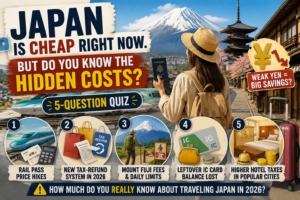
Japan has a reputation as an expensive destination that, in 2026, requires some unpacking. The weak yen has made Japan’s real costs lower for most Western visitors than at any point in the past decade. At the same time, the surge in international tourism has pushed prices upward at certain price points — particularly mid-range accommodation in Tokyo and Kyoto during peak periods. The net result is a destination that can be shockingly cheap at the budget level and surprisingly expensive at the luxury level, with a genuinely wide range of legitimate options in between.
What follows are real, current numbers for a 14-night Japan trip in 2026, broken down by budget tier and spending category. All figures are in Japanese yen; current exchange rates fluctuate but serve as the most stable reference point for planning.

The Three Budget Tiers: What They Actually Mean
Budget travel in Japan means staying in hostel dorms or cheap business hotels, eating primarily at convenience stores, ramen shops, and teishoku lunch sets, using regional transport passes instead of Shinkansen where possible, and limiting paid attractions. A realistic daily budget at this tier is ¥7,000–¥10,000 per person. For 14 nights, that’s ¥98,000–¥140,000 on the ground, plus international flights and travel insurance.
Mid-range travel means private rooms in mid-tier business hotels or guesthouses, eating at sit-down restaurants once or twice a day, using Shinkansen and JR passes, and attending some paid attractions. A realistic daily budget at this tier is ¥20,000–¥30,000 per person. For 14 nights: ¥280,000–¥420,000 on the ground.
Comfort or higher-end travel means staying in nicer boutique hotels or a ryokan for several nights, dining regularly at quality restaurants, full Shinkansen flexibility, and no meaningful budget constraints on attractions. Daily costs start at ¥50,000 and rise steeply. A week at a decent ryokan alone will cost ¥200,000–¥400,000. This tier has no ceiling.
Accommodation Costs in 2026
Hostel dorms in Tokyo and Kyoto currently run ¥2,500–¥4,500 per night per person. Private rooms in budget business hotels (Toyoko Inn, APA, Super Hotel) run ¥6,000–¥10,000 per night for a single or ¥8,000–¥14,000 for a double — these are functional, clean, and ubiquitous. Mid-range business hotels (Dormy Inn chain, regional hotel brands) run ¥12,000–¥22,000 per night for a double room. International hotel brands (Marriott, Hilton, Hyatt properties) in Tokyo and Kyoto currently run ¥30,000–¥80,000 per night.
Ryokan — traditional Japanese inns with futon bedding, communal or private onsen baths, and multi-course kaiseki dinner included — range from ¥15,000 per person per night for a rural modest inn to ¥80,000+ per person per night at prestigious properties in Hakone, Kinosaki, or Kyoto. A single night at a mid-range ryokan (¥25,000–¥40,000 per person including two meals) is one of Japan’s best travel experiences by value — far better than paying equivalent prices for a hotel room with no meals.

Food Costs: Japan’s Greatest Budget Variable
Food is where Japan’s cost structure surprises most visitors — specifically, that eating cheaply is not a compromise. A convenience store onigiri (rice ball) costs ¥140–¥180 and is genuinely good. A bowl of ramen at a standing ramen counter runs ¥700–¥1,100. A teishoku lunch set (rice, miso soup, protein, pickles) at a regular restaurant runs ¥850–¥1,500. A good sushi conveyor belt lunch runs ¥1,200–¥2,500 per person. These are not tourist traps or street food alternatives — they are how most Japanese people eat every day.
At the other end: a kaiseki dinner at a reputable Kyoto restaurant runs ¥20,000–¥60,000 per person. A meal at a Michelin-starred sushi counter runs ¥30,000–¥80,000. These are extraordinary meals; they’re also optional. A realistic food budget for budget travelers is ¥2,000–¥3,500 per day. Mid-range: ¥5,000–¥8,000 per day. If you want to eat well at actual restaurants daily: ¥10,000–¥15,000.
Transport: The JR Pass Question in 2026
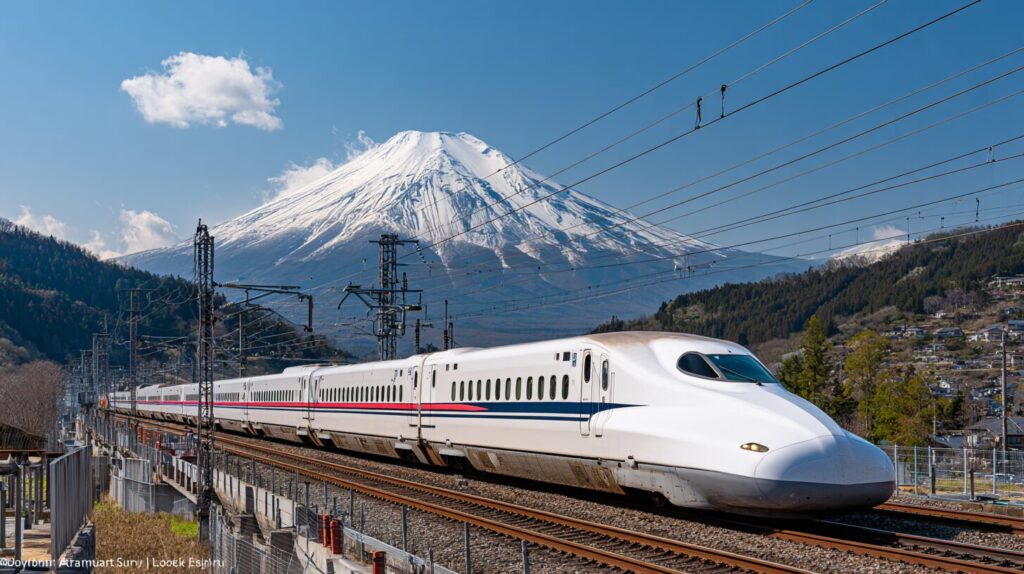
The JR Pass — a prepaid pass covering unlimited travel on most JR-operated trains including the Shinkansen — had a significant price increase in 2023 and the question of whether it’s worth buying has become more complex. In 2026, a 14-day JR Pass costs ¥50,000. The same 14 days of equivalent Shinkansen travel, purchased individually, might cost ¥60,000–¥80,000 for an itinerary covering Tokyo, Kyoto, Hiroshima, and Osaka. But a more compact itinerary — Tokyo, Kyoto, day trips — might only generate ¥35,000–¥40,000 in Shinkansen costs, in which case the pass doesn’t pay for itself.
The calculation depends almost entirely on your specific itinerary. Use the Hyperdia or Japan Rail Pass calculator (both available online) to input your planned routes before purchasing. Key routes where the pass generates value: Tokyo–Hiroshima (¥19,440 each way), Tokyo–Fukuoka (¥22,220 each way), and any itinerary that includes a trip to Sapporo or Tohoku. Within Tokyo, the JR Pass does not cover the subway — a PASMO or Suica IC card (¥500 deposit, load as needed) covers all metro, bus, and many convenience store payments throughout Japan.
Activities, Attractions, and Experiences
Many of Japan’s best experiences are free or nearly free. Walking through Kyoto’s Gion district at dusk costs nothing. Visiting most Shinto shrines is free. Many Buddhist temple gardens charge ¥500–¥800 entry. The Hiroshima Peace Memorial Museum charges ¥200. Public parks, markets, and most urban neighborhoods require no entry fee.
Paid attractions stack up faster than most travelers anticipate. Universal Studios Japan: ¥10,400. teamLab exhibitions in Tokyo: ¥3,200–¥4,800. DisneySea or Disneyland: ¥10,900. A tea ceremony experience: ¥2,000–¥5,000. A cooking class: ¥5,500–¥25,000. A day trip to Nikko: ¥2,100 in entry fees plus ¥5,400 round-trip train. Budget ¥3,000–¥8,000 per day for activities if you plan to do several paid experiences; less if your interests run toward free exploration.
The Full 14-Night Budget: Real Numbers
Budget traveler (hostel dorms, convenience store meals, careful transport planning): ¥7,000–¥10,000 per day on the ground. Total in-Japan cost for 14 nights: ¥98,000–¥140,000 (~$650–$940 USD at current rates). Add international flights: ¥100,000–¥200,000 depending on origin and booking timing. Full trip budget: ¥200,000–¥340,000.
Mid-range traveler (private hotel rooms, mix of restaurant and cheap food, JR Pass, some paid activities): ¥22,000–¥28,000 per day. Total in-Japan: ¥308,000–¥392,000. With flights: ¥450,000–¥600,000.
Comfortable traveler (nice hotels, good restaurants daily, one or two ryokan nights, full JR Pass, most desired activities): ¥40,000–¥60,000 per day. Total in-Japan: ¥560,000–¥840,000. With flights: ¥700,000–¥1,000,000+.
Where People Overspend — and Where to Save
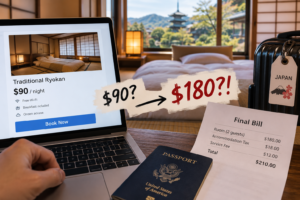
The most common budget mistake: booking accommodation through international platforms (Booking.com, Expedia) at a premium when booking direct or through Japanese platforms (Jalan, Rakuten Travel) offers 10–20% lower rates for the same rooms. A second common mistake: buying individual Shinkansen tickets without calculating whether a pass is cheaper, or buying a pass without calculating whether individual tickets are cheaper.
Where you should not try to save: accommodation in high-season Kyoto (March–April, October–November). Prices are what they are, and the budget options fill months in advance. Book Kyoto accommodation before anything else — then build your itinerary. Attempting to economize on Kyoto accommodation in peak season leads to bad locations, shared bathrooms, and long commutes that cost you time, which costs you money.
The cleanest saving available in 2026: eat like a local, not like a tourist. Sitting down at a teishoku restaurant rather than a tourist-facing sushi conveyor belt in a station food hall can cut your food spend by 40% while improving the quality of what you eat. Japan’s everyday food culture is extraordinary. Use it.