Why the Ramen City Debate Actually Matters
Japan has over 25,000 ramen restaurants. Every prefecture has its own interpretation of the dish, and the regional style wars between devoted fans are among the most spirited arguments in Japanese food culture. But three cities stand consistently above the rest when it comes to ramen identity: Sapporo in Hokkaido, Tokyo in the Kanto region, and Fukuoka in Kyushu. Each has a style so distinct, so fully developed, and so tied to local culture that eating ramen in each city is essentially eating three different foods that happen to share the same name.
This is not a definitive ranking — there is no universally correct answer. But this guide will give you an honest breakdown of each style’s character, what to expect from the best bowls, and which city deserves the title for different types of eaters.
Sapporo Ramen: The Cold-Weather Powerhouse
The Character of Sapporo Miso Ramen
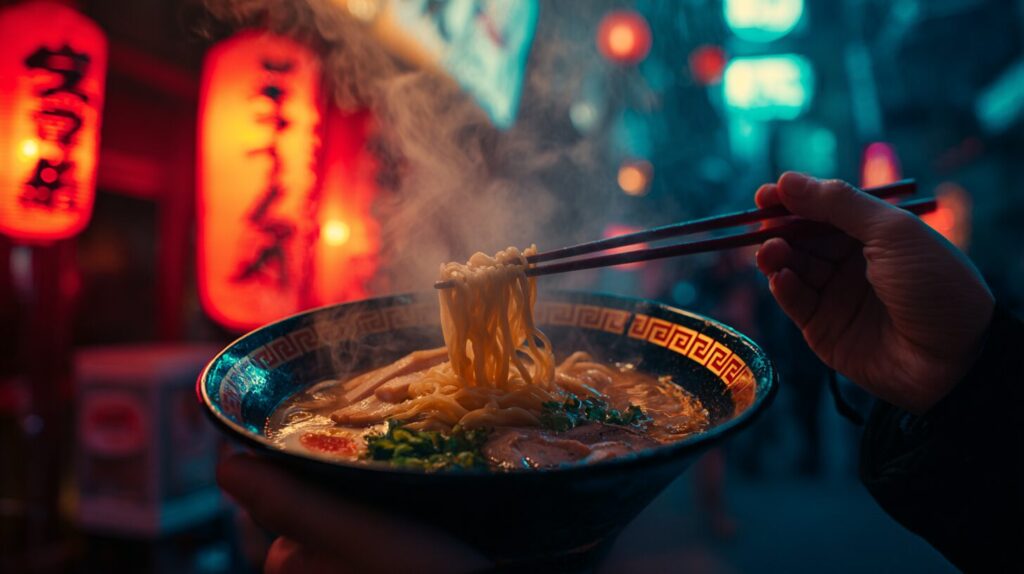
Sapporo ramen is built around miso — specifically a rich, deeply fermented blend of red and white miso that provides a base of extraordinary complexity. The broth combines miso with pork or chicken stock, and the bowl is finished with a pat of butter and sweet corn kernels, two ingredients that appear almost nowhere else in ramen tradition but make absolute sense in Hokkaido’s agricultural context. The noodles are thick, wavy, and specifically designed to hold the heavy broth. The toppings — chashu pork, bamboo shoots, green onion, bean sprouts, sliced butter — are generous.
The first Sapporo miso ramen is generally credited to Aji no Sanpei, which introduced the style in the 1950s. The dish was born from practical necessity: a thick, calorie-dense, warming bowl capable of sustaining workers through Hokkaido’s brutal winters. That origin is still visible in every bowl — this is food with a purpose beyond aesthetics.
Best Bowls in Sapporo
Ramen Republic on the 10th floor of Sapporo Esta (connected to JR Sapporo Station) collects eight of Sapporo’s most highly rated ramen shops under one roof — a perfect introduction to the range of Sapporo styles. Expect queues from around 11:30am. Sumire in Susukino is widely considered one of Sapporo’s finest miso ramen shops; the broth is intensely savory with a slight sweetness that distinguishes it from competitors. Nijo Ichiba (Sapporo’s morning market) has several counter-seat ramen shops that open at 6am — eating a miso ramen bowl at dawn in a fish market is one of Sapporo’s great experiences.
Who Sapporo Ramen Is For
Sapporo is the choice for eaters who want maximum flavor impact and are not afraid of richness. The miso-butter-corn combination reads as overwhelming to some first-time visitors, transcendent to others. In cold weather — Sapporo’s winter temperatures regularly drop to minus 10 Celsius — it is arguably the most satisfying bowl of food in Japan.
Tokyo Ramen: The Refined Tradition
The Character of Tokyo Shoyu Ramen
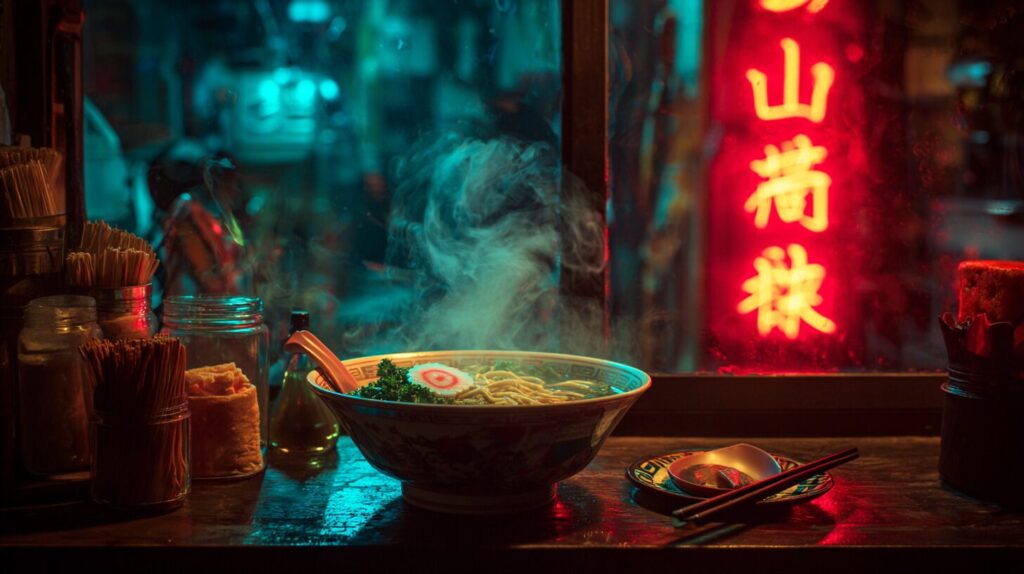
Tokyo’s definitive style is shoyu ramen: a clear amber broth built on chicken or pork stock seasoned with soy sauce (shoyu), with thin, straight or slightly curly noodles, and restrained toppings — chashu, menma (bamboo shoots), nori, and narutomaki (fish cake). The broth has a delicate, layered quality that rewards attention: you taste the soy sauce, then the stock beneath it, then the residual fat from the chashu. It is the most technically demanding style to execute well, which is why Tokyo has the highest concentration of Michelin-starred ramen shops in the world.
Tokyo shoyu ramen descends from Chinese noodle soup brought to Japan in the early 20th century, adapted through decades of iteration at the city’s tens of thousands of small ramen shops. The style values balance over intensity — it is not trying to overwhelm you with a single dominant flavor but to build a harmonious whole from multiple subtle elements.
Best Bowls in Tokyo
Fuunji in Shinjuku is arguably Tokyo’s most celebrated tsukemen (dipping ramen) shop — the rich dipping broth, made with whole fish and pork, is one of the most complex flavor constructions in the city. Ichiran, though a chain, offers a quietly excellent Hakata-style tonkotsu that lets you understand the style without the Fukuoka trip. For pure Tokyo shoyu, Kagari in Ginza — tiny, permanent queue, Michelin-recognized — serves a tori paitan (cloudy chicken broth) that demonstrates exactly what Tokyo ramen technique looks like at its peak. Afuri in Ebisu and Harajuku is the city’s most famous yuzu shio (salt and citrus) ramen — light, fragrant, almost delicate.
Who Tokyo Ramen Is For
Tokyo is the best city for ramen explorers who want variety and technical excellence. The sheer number of distinct ramen styles available within the 23 wards is unmatched anywhere in the world. If you want to understand what ramen can be as a culinary art form, Tokyo is the classroom.
Fukuoka Ramen: The Primal Bowl
The Character of Hakata Tonkotsu Ramen
Fukuoka’s Hakata-style tonkotsu ramen is the most recognizable ramen style internationally — and also the most divisive among serious ramen eaters. The broth is made by boiling pork bones at a rolling boil for 12 or more hours until the collagen dissolves and the soup turns creamy, opaque white. The flavor is intensely porky, rich with fat, with a strong bone marrow character that some find deeply satisfying and others find challenging. The noodles are the thinnest of any major Japanese ramen style — thin, straight, and specifically calibrated to cook in under a minute so that customers eating quickly do not get soggy noodles.
Hakata ramen shops pioneered the kaedama system: when you finish your noodles, you can order another portion (kaedama) for 100–150 yen while keeping your original broth. The bowl is designed to be eaten quickly and efficiently — this is a working person’s lunch food evolved into an art form.
Best Bowls in Fukuoka
Ichiran’s original Fukuoka locations (in Nakasu and near Hakata Station) are, despite the chain’s global expansion, a genuinely superior experience in their home city — fresher broth, better noodle calibration, higher staff-to-customer ratio. Shin-Shin in Tenjin is the local’s choice: a slightly more refined tonkotsu that prioritizes clarity in the broth over maximum richness. The Nakasu river yatai (outdoor food stalls) that line the canal are a more atmospheric way to eat ramen in Fukuoka than any sit-down restaurant — small, plastic-sheeted, cramped, and brilliant. Canal City Hakata contains a Ramen Stadium on the fifth floor, collecting eight shops from across Fukuoka’s ramen spectrum.
Who Fukuoka Ramen Is For
Fukuoka is the choice for eaters who want the most direct, uncompromising ramen experience in Japan. No subtlety, no delicacy — just a bowl that hits you with everything it has from the first sip. The best tonkotsu is not heavy in the way that makes you uncomfortable; it is rich in the way that makes you want another bowl ten minutes after finishing the first.
The Verdict: Which City Wins?
For maximum flavor impact and regional character: Sapporo. The miso-butter-corn combination is unlike anything else in Japan, and the bowl’s relationship to its environment — cold climate, dairy farming, fishing culture — gives it a coherence that no other style can match.
For technical excellence and variety: Tokyo. No other city in the world has produced as many distinct, refined ramen styles. If you want to understand ramen as a culinary form, Tokyo is where you study.
For the rawest, most primal ramen experience in Japan: Fukuoka. Hakata tonkotsu is not trying to impress you — it is trying to sustain you. That honesty, that directness, is itself a kind of perfection.
The honest answer is that you should eat ramen in all three cities. Japan’s rail network makes it entirely possible to eat Sapporo miso on Monday, Tokyo shoyu on Wednesday, and Fukuoka tonkotsu on Friday — and to spend the days between thinking about each bowl. For a food lover, there are worse ways to plan a trip to Japan.