Why the Temple Morning Session Is Unlike Anything Else in Kyoto
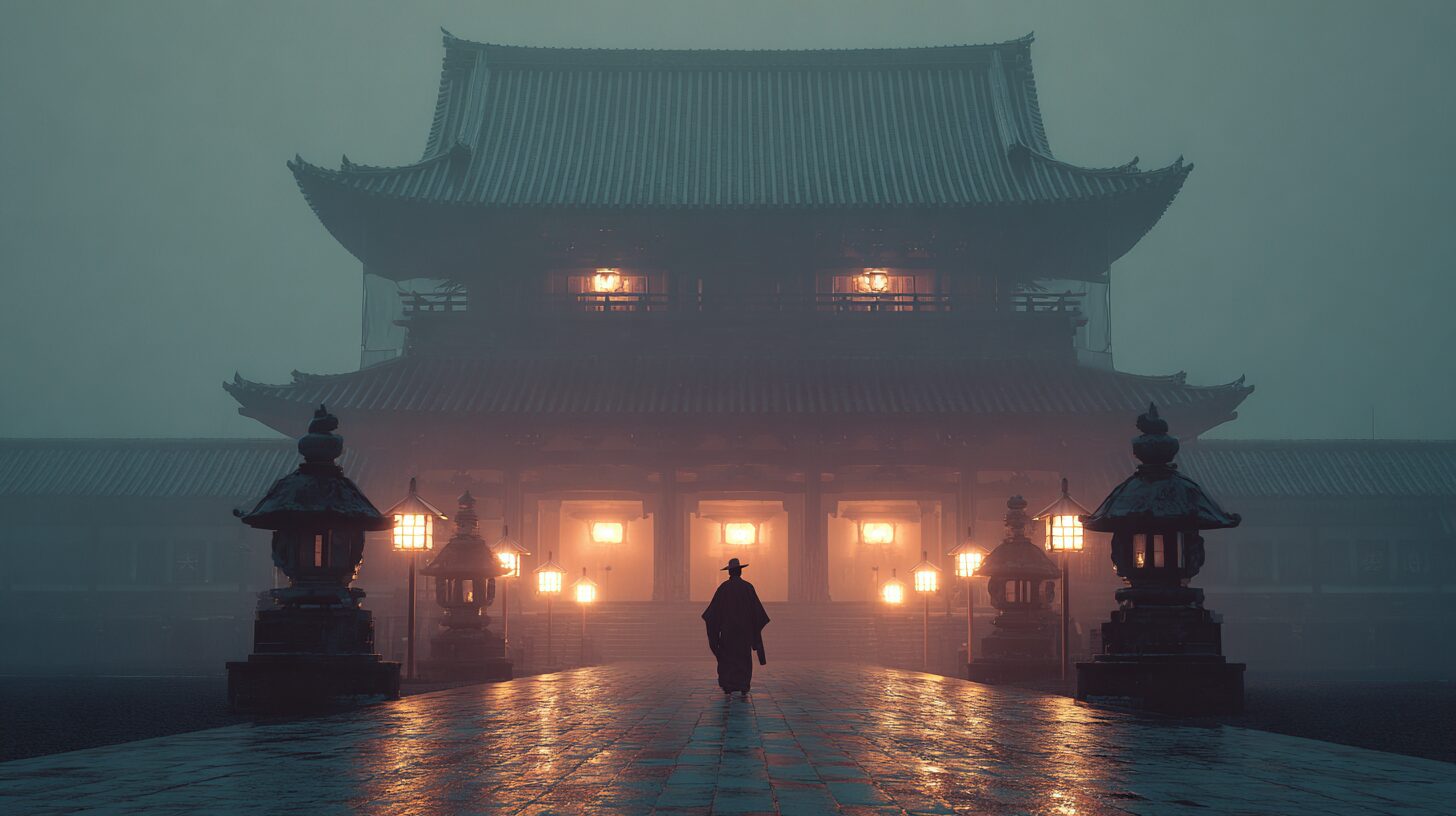
Kyoto has over 1,600 temples. Most visitors encounter them in the same way: afternoon crowds, gravel paths, admission ticket, fifteen minutes of photographs, and departure. The temple morning session inverts every part of this experience. You arrive before the city wakes. You enter rooms that tourists never reach. You sit in silence in spaces that have functioned as places of practice for 500 or 600 years. And you do so alongside monks who perform these rituals every day, not for visitors, but because this is their life.
The morning session — whether it takes the form of zazen (seated meditation), sanzen (individual instruction), or simply the opportunity to sit during morning sutra chanting — is among the most authentic experiences available to a visitor to Japan in 2026. It requires almost nothing in preparation, costs very little, and leaves most visitors with a memory that outlasts every other moment of their trip.

Understanding the Structure of a Zen Temple Morning
The Daily Schedule of a Zen Monk
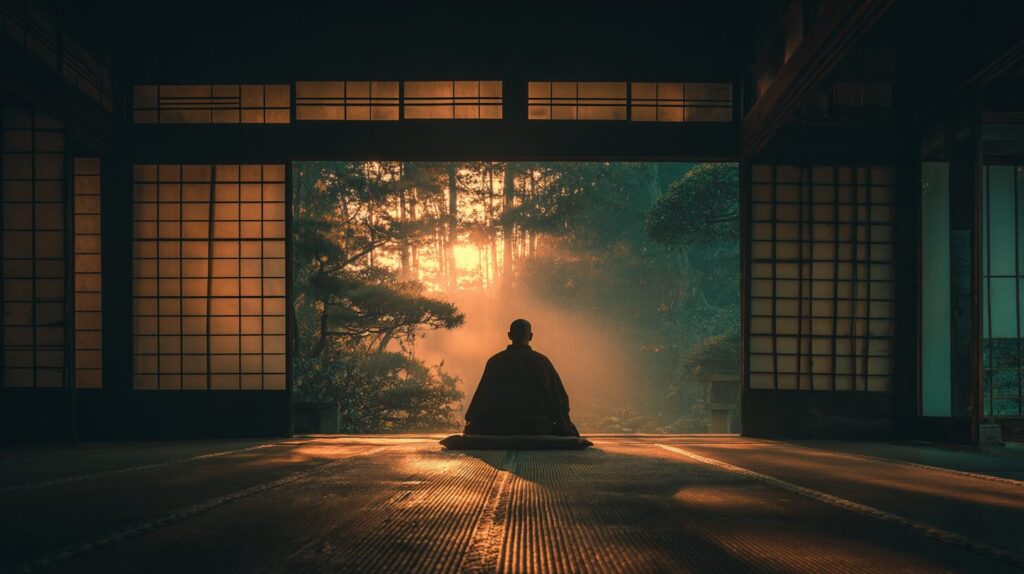
Zen monks in Kyoto wake between 4:00 and 5:00 in the morning, depending on the season and tradition. The day begins with personal cleaning duties — sweeping corridors, raking gravel gardens — followed by formal zazen, then morning chanting (choka), then breakfast, then further zazen or study. This structure has remained essentially unchanged in the major Kyoto Zen traditions (Rinzai and Soto) for centuries.
The morning session open to visitors typically takes place between 6:00 and 7:30am, and is built around the zazen period — 25 to 40 minutes of seated meditation, usually in two rounds separated by kinhin (walking meditation). At some temples, this is followed by a brief dharma talk from the head monk, conducted in Japanese with varying degrees of English supplementation depending on the temple and the specific program.
What Zazen Actually Involves
Zazen is seated meditation in the formal Zen posture. You sit on a zafu (round cushion) in either full lotus, half lotus, or Burmese position, with your spine upright and your hands held in the cosmic mudra (left palm resting in right, thumbs lightly touching). Your eyes are slightly open, cast downward at a 45-degree angle. You breathe naturally. You do not try to suppress thoughts; you simply return attention to the present moment whenever it wanders.
For newcomers, the first session is almost always challenging for the first five minutes and then surprisingly peaceful. The body’s resistance to stillness diminishes faster than most people expect. What remains after the initial fidgeting is something genuinely difficult to describe — a quality of attention that feels different from ordinary wakefulness. Most visitors report a feeling of unusual calm that persists for several hours afterward.
The kyosaku — a flat wooden stick used by a senior monk to strike practitioners who are slouching or falling asleep — is used at some temples but not all. At temples with international visitors, you are typically asked whether you wish to receive it; at more traditional settings, it may be automatic. It does not hurt significantly and functions as a physical reminder to return to upright posture and attention.
Which Kyoto Temples Welcome Morning Visitors in 2026
Shunkoin Temple (Myoshinji Complex)
Shunkoin is the most internationally accessible Zen morning experience in Kyoto. Reverend Takafumi Kawakami, the deputy head priest, speaks fluent English and leads zazen sessions specifically designed for international visitors. Sessions are held on most mornings at 8:00am (book in advance via the temple website). The donation-based fee is around 1,500 yen. The temple is in the Myoshinji compound in Nishikyoto — a vast complex of sub-temples that forms one of the largest Zen temple grounds in Japan. The compound itself is worth an hour of exploration before or after the session.
Daitokuji Temple Complex
Daitokuji in northern Kyoto is a complex of 22 sub-temples, several of which open for morning zazen during specific periods of the year. Daisen-in and Koho-an within the complex are particularly noted for their morning sessions, which tend toward more traditional formats with less English supplementation than Shunkoin — better suited to visitors who want a less mediated experience. Check individual temple schedules in advance; Daitokuji’s sub-temples have independent opening schedules that change seasonally.
Kennin-ji Temple (Gion Area)
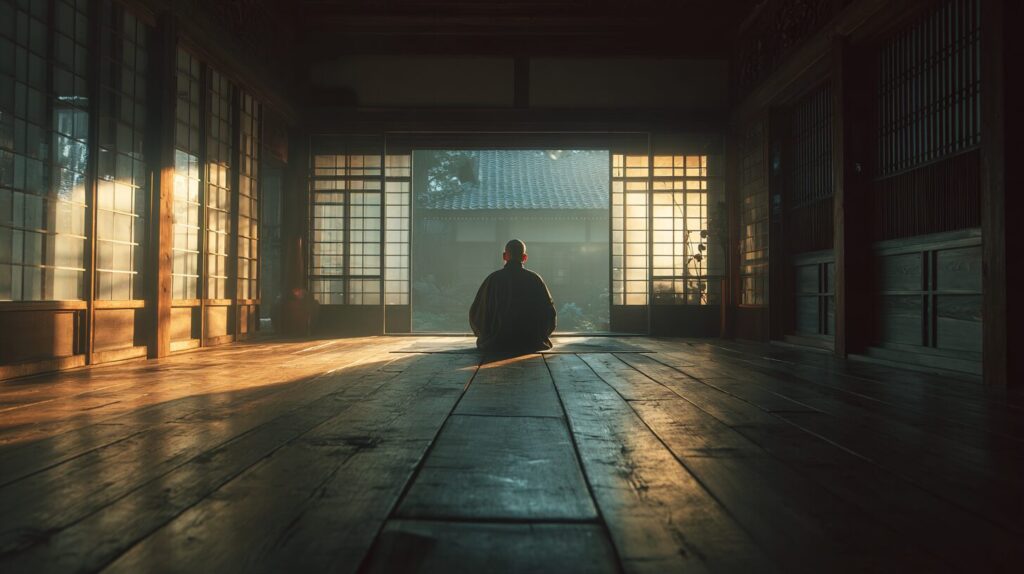
Kennin-ji, Kyoto’s oldest Zen temple (founded 1202), holds zazen sessions on weekend mornings from 7:30am. The main hall’s tatami floor, the fusuma sliding doors painted with twin dragons, and the garden visible through the open shoji screens make this one of the most visually powerful meditation environments in the city. The session is approximately 40 minutes and conducted in Japanese with brief English explanations. No reservation required; 500 yen donation. Kennin-ji’s location in Gion means you pass through Kyoto’s geisha district in the early morning quiet — worth adding 20 minutes to walk the Hanamikoji street before arriving.
The Morning Garden Experience: Before and After Zazen
What the Rock Gardens Look Like at Dawn
Kyoto’s Zen rock gardens — karesansui — are designed to be contemplated rather than entered. The most famous, Ryoanji’s fifteen-stone garden, is visited by thousands of people daily in a state of noise and crowd that makes genuine contemplation essentially impossible. At 8:00am on a weekday, with a temple morning pass, you may find it with three or four other people present. The raked gravel reflects the low morning light differently than it does at noon; the moss on the stones holds dew; the wall behind the garden is darker and more textured in the early light. It is a categorically different experience from the afternoon visit.
Not all temples with morning sessions have famous rock gardens, but many have remarkable garden spaces accessible only to morning session participants. Shunkoin’s Haiku garden — a small moss and stone composition designed by the current head priest — is typically not open to afternoon visitors. This is a common pattern: the morning session is both a practice and a form of access to spaces that the standard tourist circuit does not reach.
Morning Chanting — What You Will Hear
At many temples, the morning zazen period is followed by or preceded by morning chanting (choka): monks reciting sutras in a rapid, rhythmic monotone that fills the meditation hall with a sound unlike anything in ordinary experience. The Heart Sutra (Hannya Shingyo) is the most commonly chanted text — 262 characters in Sanskrit transliteration, recited in under three minutes by experienced monks. You do not need to participate, but visitors are typically given a text to follow along if they wish.
Practical Information for 2026
How to Book and What to Wear
For Shunkoin, book online at least 3 days in advance. For Kennin-ji, walk-in is accepted but arrive by 7:15am to secure a cushion. For Daitokuji sub-temples, check individual schedules in advance — some require prior arrangement through email or phone. Dress comfortably and conservatively: loose trousers and a plain top are ideal. You will remove your shoes before entering the meditation hall. Avoid clothing with logos or graphics. Your phone stays in your bag or pocket from the moment you enter the hall.
Getting There Before 7am
Kyoto’s public bus network begins running around 6:00am. A taxi from central Kyoto to Myoshinji costs approximately 1,500–2,000 yen. A bicycle — Kyoto is extremely flat and cycling infrastructure is excellent — is the most pleasant way to arrive at a morning session: the city in the hour before full sunrise has a quality that regular tourists never see, and arriving at a Zen temple gate by bicycle, through quiet streets and pre-dawn light, is itself a meditation.
The morning session at a Kyoto Zen temple is one of those travel experiences that is difficult to explain and impossible to overstate. It is two hours of your morning, a small donation, and the willingness to sit still. What it returns is disproportionate to any of those costs.