Three Performance Traditions, Three Worlds
Japan’s three great classical performance arts — Kabuki, Noh, and Bunraku — are each recognized by UNESCO as Intangible Cultural Heritage of Humanity. They were developed in different centuries, for different audiences, with radically different aesthetics and techniques. What they share is a commitment to formal perfection that has been refined over hundreds of years, and a power that operates well beyond language. You do not need to understand Japanese to be moved by any of them. You do, however, need a basic orientation to what you are watching — and this guide provides exactly that.
Kabuki: The Theater of Excess
What Kabuki Is
Kabuki is the youngest of Japan’s three classical performance forms, developed in the early Edo period (17th century) and refined continuously over the following 400 years. Where Noh aspires to stillness, Kabuki aspires to spectacle. Where Bunraku operates through the medium of puppet and narrator, Kabuki places the human performer — and specifically the star performer’s face, body, and voice — at the absolute center of everything.
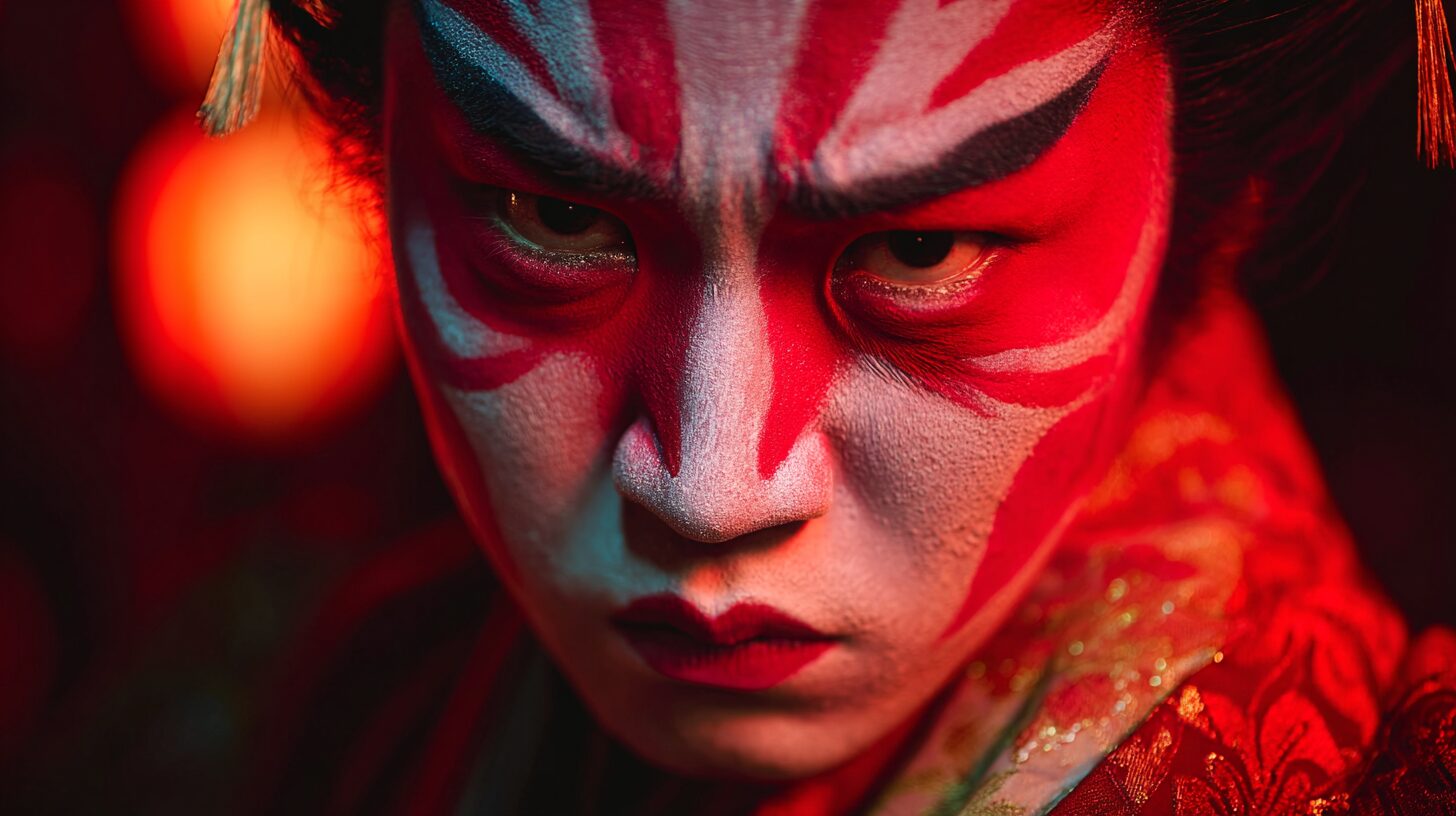
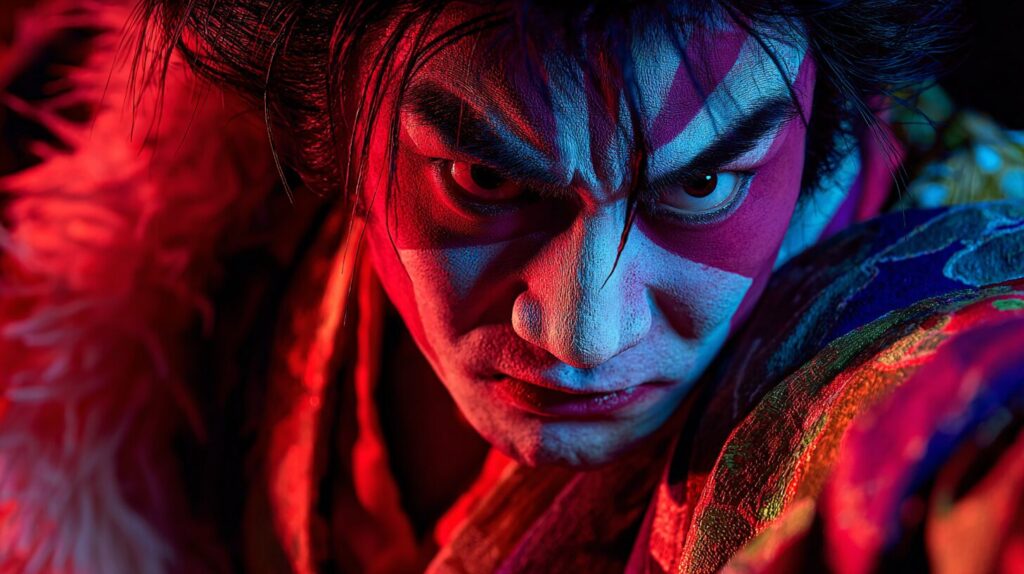
The word kabuki originally meant to behave in an unusual or eccentric way. The form has always celebrated extremity: extreme beauty, extreme villainy, extreme emotion, extreme technical virtuosity. The costumes can weigh 30 kilograms. The wigs are architectural constructions. The makeup — kumadori — applies vivid red, black, or blue lines to the face to represent inner character states (red for heroism, black for evil, blue for supernatural beings). A great kabuki actor’s entrance — hanamichi, the raised walkway that extends from the stage through the audience — is an event that fills the theater with electricity.
How to Watch Kabuki
The Kabukiza Theatre in Ginza, Tokyo, is the primary venue for kabuki performance in Japan. Full kabuki programs run four to five hours, divided into several acts. For first-time visitors, the most practical entry point is the hitomaku-mi (single-act viewing): you purchase a single-act ticket (1,500–3,000 yen, available same-day from the 4th floor box office) and watch one act of 45–90 minutes. This gives you a complete dramatic unit without requiring a full-day commitment.
The Kabukiza also provides English audio guides for rent (640 yen). The guides narrate the action in real time, explain the significance of specific poses and gestures, and provide context for the historical stories being performed. Using the audio guide on your first visit is strongly recommended — the commentary operates at a level that makes the performance dramatically more legible without reducing its impact.
What to Expect in the Theater
Kabuki audiences are participatory in a way that Western theater audiences are not. During a bravura moment — a particularly impressive pose held after a climactic line, called a mie — members of the audience shout the actor’s house name (yago) from their seats: Naritaya! Koraiya! Otowaya! This practice is called kakegoe and is considered a form of appreciative response, not disruption. As a visitor, you are not expected to participate, but you will hear it and should know what it is.
Kabuki programs run multiple times per month with different casts for different acts. Check the Kabukiza website or the Shochiku website for current programming and English summaries of each act before you buy a ticket.
Noh: The Theater of Stillness
What Noh Is
Noh is the oldest surviving form of theater in Japan, formalized by Zeami Motokiyo in the 14th and 15th centuries into the austere, intensely spiritual form that continues today. It is also the most challenging traditional performance form for a Western audience to approach — not because it is obscure, but because it operates through mechanisms that are the opposite of everything modern entertainment has conditioned us to expect.
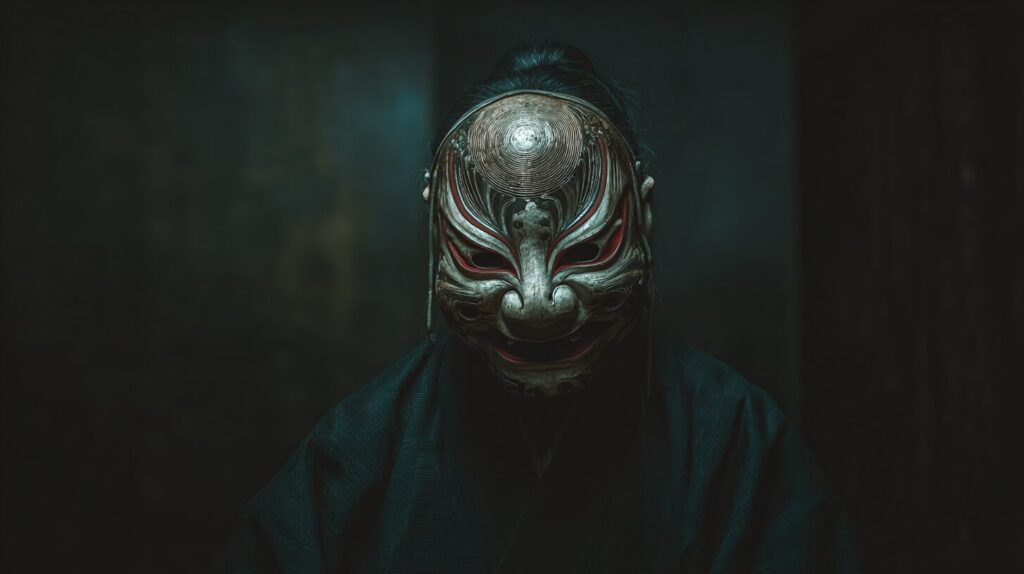
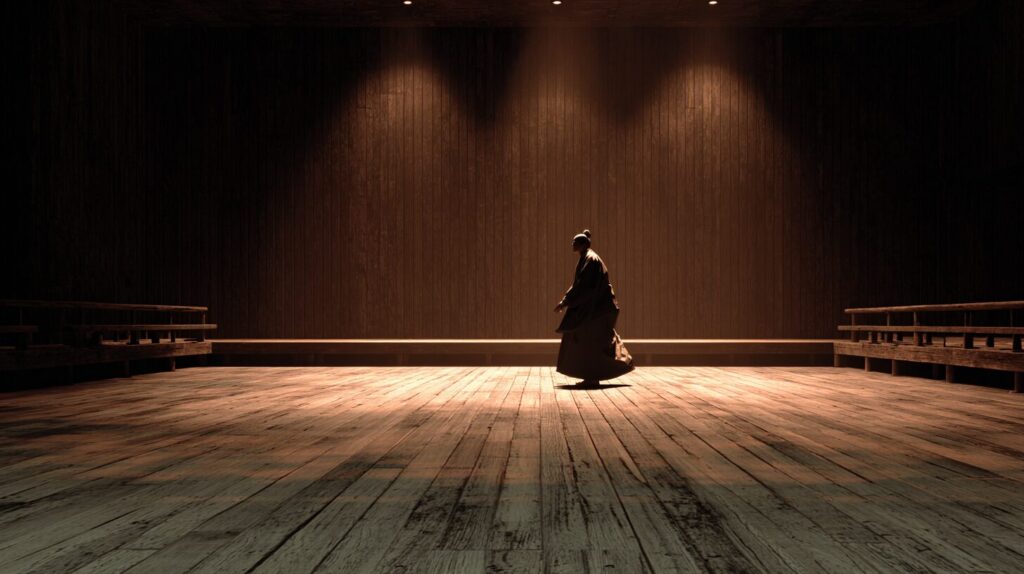
A Noh performance is slow — profoundly, deliberately slow. A single scene lasting 20 minutes might involve an actor moving three steps across a bare wooden stage. The text (utai) is chanted in archaic Japanese that even contemporary Japanese audiences largely cannot understand without preparation. The masks — each carved by artisans working within centuries-old traditions — are expressionless, yet appear to shift emotion as the stage lighting changes. The entire aesthetic of Noh is organized around the concept of ma: the pregnant pause, the meaningful emptiness between sounds and movements.
How to Watch Noh
The National Noh Theatre in Sendagaya, Tokyo, is the primary venue for professional Noh performance in Japan. Tickets range from 2,900 to 5,700 yen for most programs. Programs typically include two or three full Noh plays, separated by shorter comic interludes called Kyogen — which provide welcome tonal relief and are considerably more accessible to first-time viewers.
Kyoto’s Nishiki Tenmangu Shrine and Kongo Noh Theatre stage Noh performances in traditional outdoor settings that add considerable atmosphere to the experience. Program information is available in English on the National Noh Theatre website. English plot summaries are available for most major works in the standard Noh repertoire — reading the synopsis before attending, as with classical Western opera, dramatically increases what you take from the performance.
Why Noh Rewards Patience
Many visitors find the first 20 minutes of a Noh performance difficult — the pace, the unfamiliar sounds, the absence of conventional dramatic signaling. Those who stay past this threshold frequently report the opposite experience: a sense of being gradually absorbed into the performance’s world, a heightened attention to subtlety, a quiet that functions like a different state of consciousness. Noh is not entertainment in any modern sense. It is closer to a ritual in which audience and performer participate together. That distinction is worth knowing before you walk through the door.
Bunraku: The Theater of Puppets and Masters
What Bunraku Is
Bunraku is Japan’s traditional puppet theater, developed in Osaka in the 17th century to a height of popularity that, at its peak, rivaled kabuki for audience size and prestige. The puppets — each typically operated by three puppeteers — are approximately two-thirds human scale, and the degree of physical expression achievable through their operation is, to anyone watching for the first time, genuinely astonishing. Eyebrows move. Fingers curl individually. Mouths open and close in sync with the narration. The puppets breathe.
The three puppeteers operate in a specific hierarchy: the omozukai controls the head and right hand and works with face uncovered; the hidarizukai controls the left hand; the ashizukai controls the legs. Only the omozukai — a master puppeteer with at least 30 years of experience — reveals his face. The others are dressed in black robes and black hoods (kuroko) that convention asks the audience to treat as invisible. The joruri narrator (tayu) sits at stage right and delivers all dialogue, description, and emotional commentary for every character — shifting voice, register, and tone with extraordinary range. A single tayu may voice more than twenty characters in a performance.
How to Watch Bunraku
The National Bunraku Theatre in Nipponbashi, Osaka, is the dedicated Bunraku venue in Japan. Programs run three times yearly (January, July–August, and November), each for approximately 20 days. Tickets are 2,000–6,000 yen depending on seat and day. The theater provides English audio guide rental that explains the story, identifies characters, and contextualizes significant moments — highly recommended for first visits.
The National Theatre in Tokyo also stages Bunraku performances several times per year. The Osaka venue remains the preferred choice for purists: the tradition originated in Osaka, much of the classic repertoire concerns Osaka merchants and townspeople, and the audience in Osaka brings a familiarity and engagement with the form that is palpable in the theater.
Why Bunraku Is the Most Accessible of the Three Forms
Counterintuitively, Bunraku is often the easiest entry point for international visitors to Japan’s classical performance traditions. The puppets’ physical expressiveness communicates across language barriers more directly than a human actor’s more stylized movements. The narrational structure — with the tayu explaining events rather than leaving them implied — provides more explicit storytelling scaffolding than Noh. And the sheer craft visible in the puppetry — the precision, the tenderness, the uncanny lifelikeness — operates on pure visual fascination that requires no prior knowledge to appreciate.
Planning Your Classical Performance Experience in Japan 2026
Booking Tickets
Kabukiza single-act tickets are available same-day without advance booking. Full-program Kabukiza tickets can be booked online through the Shochiku website (English available) weeks in advance — recommended for specific programs. National Noh Theatre and National Bunraku Theatre tickets are available through Ticket Pia, e+, or directly from the theaters’ Japanese websites. A modest amount of navigation in Japanese is required for the national theaters — the tourist assistance counter at major hotels can help if needed. For Bunraku in particular, book at least two weeks before your trip if your schedule aligns with a performance run.
Which to See First?
For most first-time visitors, Kabuki is the recommended starting point. The visual spectacle is immediately arresting; the English audio guide makes it legible; the single-act format fits easily into a Tokyo afternoon. Bunraku is the natural second step — accessible, visually extraordinary, and deeply moving when the puppetry operates at its best. Noh should come after some experience with the other two forms, with plot preparation beforehand, and ideally at a traditional outdoor venue in Kyoto or Nara where the setting amplifies the experience.
Japan’s classical performance traditions are among humanity’s greatest cultural achievements. They are also alive — performed by artists working today in lineages stretching back to the Edo period and beyond. In 2026, with good planning, you can sit in a theater in Tokyo or Osaka and experience something that has been refined over four centuries into a form of human expression with no equivalent anywhere else in the world.