A medicine that’s perfectly legal at home can still cause problems at a Japanese airport. So can something far more ordinary — arriving with no cash, assuming a card will work everywhere, or finishing a snack and realizing there’s nowhere obvious to throw the wrapper away.
None of it is about safety. It’s about small mismatches between what works at home and what works here.
⭐ Bottom Line
Japan is one of the safest countries many first-time visitors will ever travel to — but safety isn’t the same as frictionless, and the seven things below cause more real trip disruption than crime ever will.
- Best for: First-time visitors planning their first week in Japan
- Budget: Most fixes cost $0–$20 (an eSIM, a bit of spare cash)
- Book ahead: Sort medicine and payment questions before packing, not after landing
Japan routinely ranks among the safest countries a first-time traveler can visit, which is exactly why the problems that do come up catch people off guard — nobody braces for a safe country to still trip them up in small ways. So what’s actually catching first-timers off guard, if not the things travel warnings usually cover?
Most of it comes down to assuming a system that works at home — a credit card, a public bin, an over-the-counter cold pill — will work the same way here. A country this technologically advanced turns out to run on cash more than most visitors expect, throws away less in public than almost anywhere else, and takes a noticeably stricter line on what counts as an acceptable medicine to bring in.
The short version: nearly every common Japan travel problem traces back to one of seven specific mismatches, and each one has a known, well-documented fix that takes only a few minutes to put in place before departure.
1. Check Your Medicine Before You Pack It
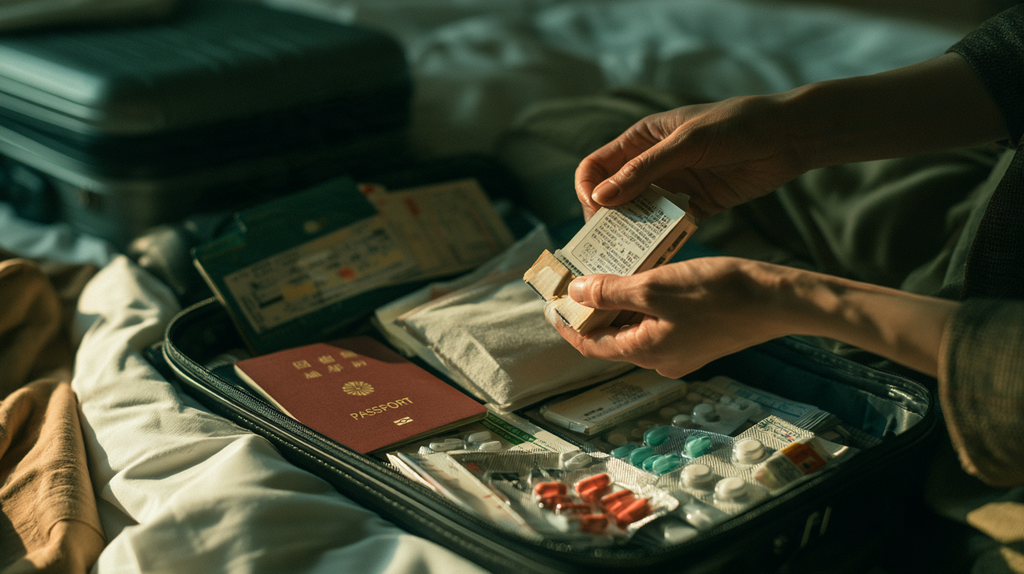
This is one of the easiest Japan travel problems to avoid, and one of the most worth checking before leaving home.
The mistake isn’t bringing medicine. It’s assuming that “over-the-counter at home” automatically means “allowed through Japanese customs.” Products containing pseudoephedrine above Japan’s limit — including Sudafed, Vicks inhalers, and Advil Cold & Sinus — along with stimulant medications like Adderall, are restricted or prohibited, according to the U.S. Embassy in Japan.
You don’t need to leave an entire medicine cabinet at home. Travelers can bring up to a two-month supply of most allowed over-the-counter medication and vitamins duty-free, and up to a one-month supply of most non-narcotic prescriptions with the original prescription in hand. Anything beyond that, or anything on the restricted list, requires a Yakkan Shoumei import certificate arranged in advance. Five minutes of checking before departure is much easier than solving the question after landing.
2. Don’t Assume Your Card Will Work Everywhere

Japan can feel almost completely cashless until the moment it isn’t. A card taps at a department store, a phone pays at a convenience store, contactless works at the hotel — then a small restaurant, a market stall, or an older shop turns out to take cash only.
A Japan Tourism Agency inbound survey found 94.5% of foreign visitors used cash at some point during their trip, versus 74.5% who used a credit card and just 31% who managed any form of electronic money. Part of the reason: Japan’s dominant QR payment app, PayPay, requires a Japanese phone number to register, which locks most tourists out of a system many small shops rely on.
The fix isn’t carrying an entire travel budget in yen — it’s keeping enough cash on hand for the situations where a card isn’t the easiest answer: a meal, local transport, or a small purchase if electronic payment isn’t available. Think of cash in Japan less as a primary payment method and more as travel insurance.
3. You Will Eventually Have to Carry Your Trash
It usually happens after something completely ordinary — a coffee, an onigiri, a snack bought five minutes earlier. Then the search for a trash can starts, and keeps going.
Public bins are genuinely scarce on Japanese streets, a legacy of security measures tightened after a security incident in the 1990s. It’s common enough to be the actual top complaint in one Japan Tourism Agency survey: 21.9% of over 4,000 visitors named it their single biggest travel inconvenience, ahead of language barriers and overcrowding, and about 70% said they ended up carrying trash back to their hotel.
Worth knowing for 2026: Tokyo’s Shibuya ward has started fining litterers directly rather than just asking visitors to carry trash home — a shift covered in more detail in a companion piece on new rules that can get tourists fined. The first time carrying trash around for half an hour feels strange. By day three, most travelers stop thinking about it.
4. The Language Barrier Is Usually Smaller Than You Expect
Communication issues are a real complaint — cited by roughly 15% of departing visitors in the same Japan Tourism Agency survey — but well behind the trash-can problem, and smaller than most first-timers expect going in.
Travelers can get through most of a trip comfortably with very little Japanese in major tourist areas. Train stations, convenience stores, and most restaurants in Tokyo, Kyoto, and Osaka now have English signage, picture menus, or point-and-order systems built around the assumption that a customer won’t share a language with staff. A translation app handles most of what’s left.
5. Get Your Data Working Before You Land
A working data connection solves more first-timer problems than almost anything else on this list — it’s what makes translation apps, train navigation, and restaurant menus usable in the first place.
An eSIM installed before departure activates automatically on landing, using the airport’s WiFi to finish setup while still in the immigration line, and it works alongside a home SIM rather than replacing it. It’s worth confirming a device is unlocked and eSIM-compatible before relying on this.
One thing worth being clear-eyed about: an eSIM solves internet access — maps, translation, train times, booking confirmations. It does not solve the Japanese-phone-number requirement behind apps like PayPay. Those are two separate problems, and getting connected only fixes one of them.
6. Save These Emergency Numbers Before You Land
Japan’s emergency numbers are different from home, and worth saving in a phone before landing rather than searching for mid-emergency.
| Situation | Number | Languages | Availability |
|---|---|---|---|
| Police | 110 | Japanese (English operators available) | 24/7, free |
| Fire / Ambulance | 119 | Japanese (English operators available) | 24/7, free |
| Non-urgent medical advice | #7119 | Japanese | Available in most, but not all, areas |
| Tourist help & general emergencies | 050-3816-2787 (JNTO Visitor Hotline) | English, Chinese, Korean, Japanese | 24/7, 365 days, nationwide |
The Japan Visitor Hotline, run by the Japan National Tourism Organization, is built specifically for foreign travelers and covers everything from a medical concern to a lost passport to general trip questions. The other three numbers are worth saving too, since the hotline is for guidance, not a substitute for calling police or an ambulance directly.
7. Know Where “Easy Japan” Ends

Everything above gets noticeably easier in Tokyo, Kyoto, Osaka, and other major tourist cities, where systems are genuinely built around international visitors. That same ease doesn’t automatically extend everywhere in the country.
✅ You’ll likely be fine with minimal prep if you are:
- Sticking mostly to Tokyo, Kyoto, Osaka, and other major tourist cities
- Comfortable using a translation app or pointing at a photo menu
- Staying in hotels or ryokan used to hosting international guests
- Not planning to drive or handle anything requiring a signed local contract
❌ Build in extra prep time if you are:
- Heading well off the tourist path into rural towns or small islands
- Planning to rent and drive a car outside major highways
- Relying on local buses or a small regional clinic
- Visiting during a small regional festival with locals-only signage
None of this means rural Japan is difficult — much of it is easier than travelers expect, too. It just means the fixes on this list get more important, not less, the further a trip strays from the well-worn tourist route.
Before You Leave the Airport: Do These 5 Things
Most of the fixes above take just minutes, and doing them in the right order on arrival day removes nearly every friction point before it has a chance to matter.
Picture stepping off the train into a new city already connected, with enough cash for the first taxi and the first konbini snack, no wrestling with an unfamiliar payment app at the counter.
None of it removes the genuine newness of the place — it just clears out the friction that has nothing to do with why anyone travels to Japan in the first place.
- Do I need to speak Japanese to travel in Japan?
- No. Major cities have extensive English signage, picture menus, and translation-app-friendly systems. Communication issues are a real but secondary complaint, cited by about 15% of visitors, well behind the more common problems around trash disposal and payment.
- Is Japan safe for first-time travelers?
- Yes — Japan consistently ranks among the safest countries for travelers on standard safety measures. Most of the problems first-timers actually run into are logistical (payment systems, trash disposal, medicine rules), not safety concerns.
- Can I use my credit card everywhere in Japan?
- Mostly in cities, but not universally. A Japan Tourism Agency survey found 94.5% of visitors used cash at some point during their trip. Carrying some yen as backup, especially for small shops and rural areas, is still worth doing.
- What over-the-counter medicine is banned in Japan?
- Medications containing pseudoephedrine above Japan’s limit — including Sudafed, Vicks inhalers, and Advil Cold & Sinus — along with stimulant medications like Adderall, are restricted or prohibited, per the U.S. Embassy in Japan. Check any regular medication against Japan’s rules before packing.
- What number do I call in a travel emergency in Japan?
- Police: 110. Fire or ambulance: 119. For English-language help with anything from a medical concern to general questions, the JNTO Japan Visitor Hotline (050-3816-2787) operates 24/7 in English, Chinese, and Korean.
- Does an eSIM solve Japan’s phone-number-locked apps like PayPay?
- No. An eSIM solves internet access — maps, translation, train navigation. Apps like PayPay require an actual Japanese phone number to register, which a data connection alone doesn’t provide. They’re two separate problems with two separate fixes.
Related Guides
- 7 Things That Can Now Get You Fined as a Tourist in Japan
- 10 Things You Should Never Do at a Japanese Shrine
- Taxi or Train? The Right Way to Get Around Japan on a Short Trip
- The Hidden “Visitor Price”: Where Japan Now Charges Tourists More Than Locals
- Why Japan’s Seven-Eleven is Better Than the US Version