Every tourist who visits Japan comes home with the same observation: Japanese people simply don’t look their age.
A 65-year-old woman in Kyoto looks 45. A 70-year-old man in Osaka moves like someone two decades younger. It’s not remarkable to notice once — it’s constant, and it stays with you long after you’ve landed back home.
Japan has more centenarians per capita than any country on earth — over 92,000 people aged 100 or older as of 2024, 88% of them women. Japanese women have held the record for the world’s longest average life expectancy for 39 consecutive years. But longevity statistics don’t capture what tourists actually notice: that Japanese people in their 50s and 60s routinely appear to be in their 30s and 40s.
“The skin health we observe in Japanese women, particularly in their 50s and 60s, is significantly better than age-matched cohorts in Western countries,” says Dr. Hiroshi Nakamura, a researcher at Osaka University’s Graduate School of Medicine who has studied skin aging across populations. “When we analyze the contributing factors, diet appears first, consistently — followed by bathing habits and daily activity levels.”

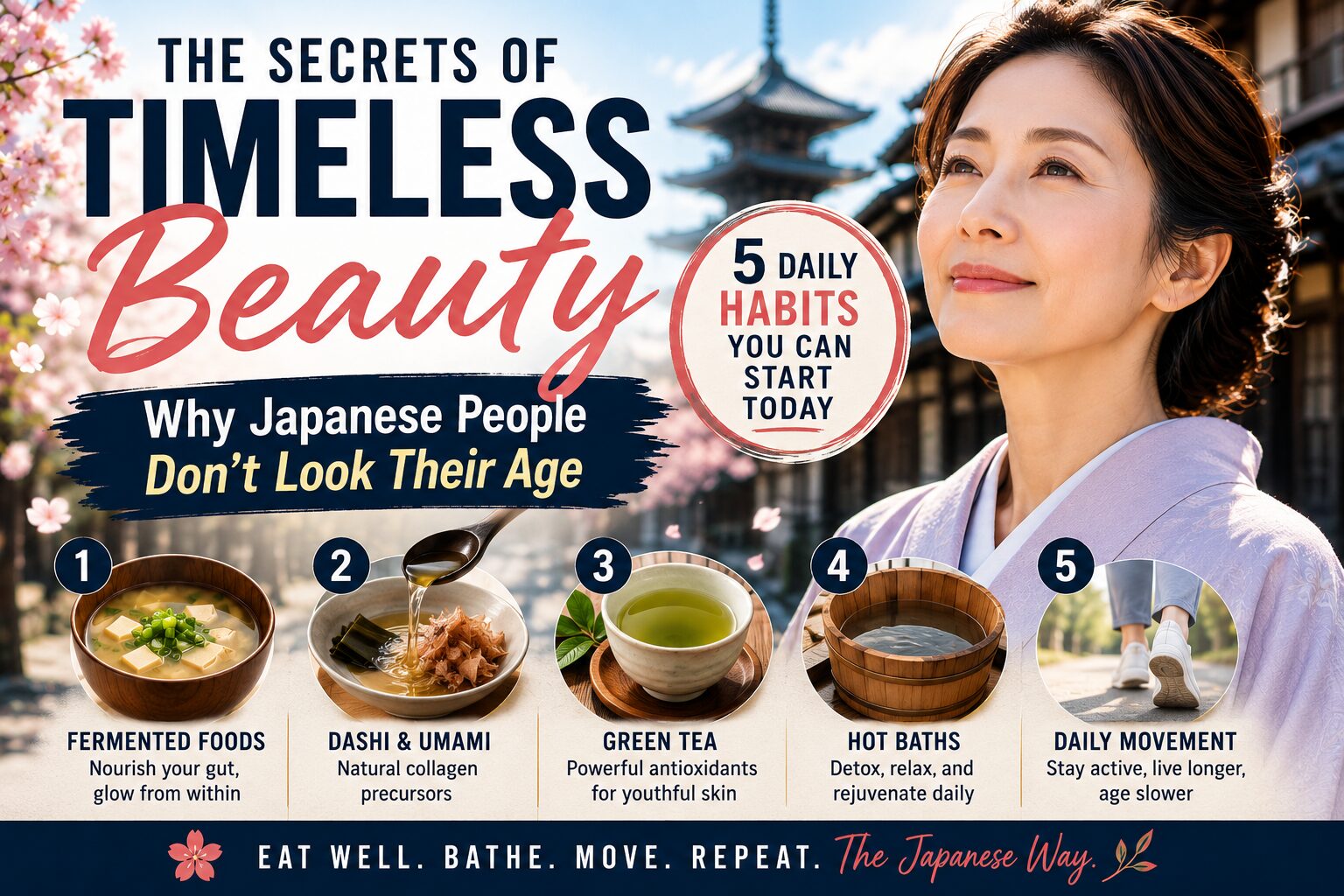
| Habit | Japanese Daily Practice | Typical Western Equivalent | Anti-Aging Mechanism |
|---|---|---|---|
| Fermented foods | Miso soup twice daily + natto + tsukemono | Yogurt a few times a week | Reduces gut-linked skin inflammation via microbiome diversity |
| Marine collagen precursors | Dashi stock in every meal (katsuobushi + kombu) | Collagen supplement ($40–$80/month) | Amino acid precursors for collagen synthesis and skin elasticity |
| Green tea antioxidants | 3+ cups loose-leaf sencha daily at 70–80°C | 0–1 cups bagged green tea occasionally | EGCG catechins neutralize free radicals that degrade collagen |
| Hot soaking bath | 20-minute ofuro at 40–42°C every night | Quick shower, no dedicated soaking | Improves lymphatic circulation, reduces cortisol, opens pores |
| Daily movement | 6,500–7,000 steps built into commuting | ~4,500 steps, mostly effort-required | Suppresses chronic low-grade inflammatory markers (IL-6, CRP) |
1. What Japanese People Eat — And Don’t Eat
Fermented Foods: The Gut-Skin Connection
The average Japanese household consumes miso soup at least once daily — most consume it twice. Miso — fermented soybean paste — is the foundation of Japanese cooking, and its skin health benefits have been the subject of hundreds of peer-reviewed studies. The relevant mechanism: fermentation produces beneficial lactobacillus bacteria that alter the gut microbiome in ways that reduce systemic inflammation, one of the primary drivers of accelerated skin aging.
Japan’s fermented food landscape extends far beyond miso. Natto (fermented soybeans) contains nattokinase and high levels of vitamin K2, which is involved in calcium metabolism and skin elasticity. Tsukemono (pickled vegetables) provides live cultures alongside essential vitamins. Amazake (fermented sweet rice drink) contains natural enzymes and B vitamins. The cumulative daily exposure to fermented foods is dramatically higher than in Western diets — and it shows.
A 2023 study from Keio University in Tokyo found that populations consuming more than three servings of fermented foods daily had measurably lower markers of skin inflammation and higher skin hydration scores. Subjects eating the most fermented foods were, on average, perceived as 4.7 years younger by independent raters who were shown only photographs.

Dashi: The Collagen-Precursor Stock in Almost Everything
The backbone of Japanese cooking is dashi — a clear stock made from kombu seaweed and katsuobushi (dried, fermented tuna flakes). Unlike Western stocks simmered for hours, dashi is made in minutes via simple steeping. What it produces is a liquid extraordinarily rich in umami and, critically, collagen precursor amino acids derived from the marine proteins in katsuobushi.
Hydrolyzed marine collagen — derived from fish — has become one of the most popular anti-aging supplements in Western markets, retailing at $40–$80 per month. Japanese people have been consuming its precursors daily, in their soup stock, for centuries. When you order miso soup, ramen, udon, or almost any Japanese hot dish, you are consuming dashi. It is nearly impossible to eat traditional Japanese food without consuming it multiple times per day.
Green Tea: Three Cups, Every Day, Without Exception
Japan’s per-capita green tea consumption is among the highest in the world. The active compound responsible for most studied skin benefits is EGCG (epigallocatechin gallate), a catechin with antioxidant properties approximately 25–100 times more powerful than vitamin C by some measures. Oxidative stress is among the most significant drivers of visible skin aging. EGCG neutralizes the free radicals that damage skin cells and break down collagen over time.
A 2021 study published in the Journal of Nutritional Biochemistry found that Japanese women consuming three or more cups of green tea daily had significantly higher skin collagen density and lower UV damage markers than age-matched women consuming less than one cup. Green tea in Japan is typically brewed loose-leaf at 70–80°C — not boiling, which destroys catechins. The difference in effective antioxidant concentration compared to bagged tea is substantial and measurable.
Fish Over Meat: Omega-3s at Every Meal
Japan’s traditional diet is built around fish, not meat. Average Japanese fish consumption is approximately 56 kg per person per year — roughly twice the global average. The skin-relevant nutrients are specific: omega-3 fatty acids (EPA and DHA from salmon, mackerel, and sardines) reduce inflammatory signaling at the cellular level; astaxanthin from salmon and salmon roe is a carotenoid antioxidant with documented photoprotective effects; and iodine from seaweed supports thyroid function and skin cell renewal. The cumulative effect of daily fish consumption on inflammatory markers is one of the most consistent findings in nutritional research on Japanese populations.
2. The Nightly Bathing Ritual That Changes Skin Over Decades
Western beauty routines focus on what you apply to skin. Japanese beauty culture focuses on what you immerse your body in, and how consistently you do it.
The ofuro (お風呂) — the traditional Japanese bath — is not equivalent to a Western shower. It is a deep soaking bath, typically at 40–42°C (104–108°F), taken for 15–20 minutes every night. You wash separately before entering; the bath is purely for soaking. The physiological effects are well-documented: improved peripheral circulation, reduced cortisol levels, and better sleep onset (the temperature drop after exiting triggers sleep-onset signals).
For skin specifically: the heat opens pores and allows accumulated sebum to be displaced more effectively than a shower; the hydrostatic pressure of deep water improves lymphatic circulation; and the repeated daily cycles of skin hydration and gentle temperature stress have a cumulative beneficial effect on collagen fiber organization over years of practice. A 2019 study from the University of Loughborough found measurably lower inflammatory markers in daily bathers compared to non-bathers — effects that compounded over time.

Onsen: When the Mineral Water Itself Is the Treatment
Japan’s 27,000+ onsen (natural hot spring) facilities are not tourist attractions in the Western sense. Many Japanese people visit a local onsen or sento (public bathhouse) weekly as a matter of habit. The mineral composition varies dramatically by source, and the documented effects on skin are specific.
Sodium bicarbonate springs — known as bijin no yu (beauty springs) — have a pH of 8–9, which gently softens the outer layer of dead skin cells, producing what regular visitors describe as skin that feels freshly treated without any product. Silica-rich springs produce water so smooth it almost resists rinsing off — silica molecules temporarily bind to skin proteins, filling fine lines and improving surface texture. Sulfur springs have documented antimicrobial and anti-inflammatory effects on conditions including eczema and acne.
Hakone, two hours from Tokyo, has multiple onsen with sodium bicarbonate compositions and full ryokan access from under $150 per night for two. Kinosaki Onsen in Hyogo offers seven distinct bathhouses with different mineral profiles that visitors can tour in one evening with one day-pass. Beppu in Oita Prefecture has nine distinct spring types within one city — the highest concentration in Japan.
3. The Walking Culture Western Countries Left Behind
Japan’s urban design — dense cities, comprehensive rail transit, and steep terrain in many historic areas — produces a population that walks significantly more than Western averages. Japanese health ministry data indicates the average Japanese adult takes approximately 6,500–7,000 steps per day. The American average is approximately 4,500. The difference is structural, not motivational: the built environment makes walking the default, not the effort.
A typical Japanese commute involves walking to a train station, navigating stairs (many urban stations have limited elevator access), walking between connecting lines at transfer points, and walking from the final station to the destination. A full day in Tokyo, Osaka, or Kyoto on public transit without any intentional exercise commonly produces 12,000–15,000 steps.

Research from Japan’s National Institute of Health and Nutrition found that populations with higher daily step counts had significantly lower circulating levels of inflammatory markers — particularly interleukin-6 and C-reactive protein — which are among the primary biochemical drivers of accelerated facial aging. The effect is separate from vigorous exercise: it is specifically the consistent low-intensity movement throughout the day that suppresses the chronic low-grade inflammation linked to skin aging.
The concept of hara hachi bu — eating to 80% fullness, a principle embedded in Okinawan culture and broadly reflected in Japanese portion norms — also plays a meaningful role. Avoiding chronic overeating has one of the most consistent evidence bases for slowing inflammatory aging of any dietary behavior studied across populations.
4. Where to Experience Japan’s Anti-Aging Culture on Your Trip
These habits are not hidden in specialist clinics or expensive wellness resorts. They are Japan’s default daily life, and every single one is accessible to travelers without special planning.
For the fermented diet: Visit Nishiki Market in Kyoto — a 400-meter covered market known as “Kyoto’s Kitchen” — where vendors sell fresh miso, tsukemono, dashi ingredients, and matcha in forms you can taste on the spot. Most stalls offer samples. Kuromon Market in Osaka delivers the same experience with the city’s bolder flavor profiles. For green tea, any department store basement food hall (depachika) stocks loose-leaf sencha and matcha from Uji and Shizuoka — the two highest-quality production regions. Budget ¥500–¥1,500 ($3–$10) for tea to bring home; it is the most evidence-backed and cost-effective anti-aging purchase available in Japan.
For the onsen: Hakone is the most accessible entry point from Tokyo — 90 minutes by limited express, with ryokan onsen access from under $150 per night for two people including dinner and breakfast. Kinosaki Onsen in Hyogo rewards visitors with time: the town’s seven bathhouses, each with different mineral water, can all be visited in one evening with a single yukata-clad bathhouse-hopping pass. For total immersion, Beppu in Oita Prefecture — reachable by shinkansen from Osaka — has Japan’s highest concentration of onsen environments and a relaxed pace that suits a two-night stay.
For the food culture: Book a cooking class in Osaka focused on dashi-based Japanese home cooking. Learning to make miso soup, dashimaki tamago (the rolled egg that appears at every Japanese breakfast), and grilled fish takes approximately three hours and permanently shifts how you understand the cuisine’s logic. Osaka has Japan’s highest density of accessible, English-language cooking experiences, and the city’s identity as a food capital means the instruction quality is consistently high.
For the walking: Simply do not rent a car. Use trains and walk between destinations. A standard Japan itinerary on public transit naturally produces daily step counts that most visitors describe as their highest in years — not from dedicated exercise, but from living in a city designed for human-scale movement. By the end of a 10-day Japan trip, most visitors report that they’ve eaten more, walked more, slept better, and feel noticeably better than in their normal life at home. Given what the research says about diet, bathing, and daily movement, that is not a coincidence.
5. Frequently Asked Questions
- Is Japan’s youthful appearance mostly genetic — or does lifestyle actually explain it?
- Research consistently shows behavioral factors, not genetics, are the primary drivers. Japanese communities that emigrate to Western countries and adopt Western dietary and lifestyle patterns show skin aging rates that converge with local populations within one to two generations. The Okinawans who moved to Brazil in the 20th century are the most studied example: within two generations of switching to a Brazilian diet, their longevity and skin-aging markers aligned with the Brazilian average rather than the Okinawan. Genetics set a ceiling; the habits described in this article determine where you actually land.
- Can I realistically adopt these habits at home, or does it only work in Japan?
- The four habits are all fully replicable outside Japan, though some require sourcing effort. Miso (refrigerated, unpasteurized) is available at Japanese grocery stores in most major cities worldwide. Loose-leaf sencha and matcha ship internationally. Marine collagen dashi can be approximated with kombu-katsuobushi stock. The soaking bath habit requires only a bathtub and a consistent routine. The walking component is the hardest to replicate if you live in a car-dependent area — a deliberate 20-minute walk added to morning and evening routines produces similar step counts. Research suggests measurable changes in skin inflammatory markers appear within 4–8 weeks of consistent adoption of any two or more of these habits.
- Which of the four habits gives the biggest return for someone starting from scratch?
- Dermatologists and nutritional researchers who study Japanese populations consistently point to daily miso soup as the single highest-leverage starting point. It delivers fermented probiotics, marine collagen precursors (if made with dashi), and umami compounds in one daily habit that takes under five minutes to prepare. A cup of miso soup every morning costs approximately $0.30–$0.50 per serving from refrigerated miso paste. The evidence base supporting its role in skin health, gut microbiome diversity, and inflammatory reduction is broader than for any other individual Japanese dietary habit. Start there.
- What’s the best onsen type for skin specifically, and how do I find it?
- For skin texture and hydration, sodium bicarbonate springs (炭酸水素塩泉, tansan suiso-en) are the most documented type. They are alkaline (pH 8–9) and temporarily soften the outer layer of dead skin cells without the drying effect of sulfur springs. The most accessible sodium bicarbonate onsen from Tokyo is in Hakone; from Osaka, Arima Onsen in Kobe (40 minutes by rail) has two distinct spring types including a sodium-chloride spring known for skin softening. When booking a ryokan, the spring composition is listed on every Japanese hotel booking site — search for 美人の湯 (bijin no yu) in the property description.