Japan consistently ranks among the countries with the highest life expectancy in the world.
Latest verified data (WHO / World Bank range):
- Women: ~87 years
- Men: ~81 years
That claim is accurate.
Japan also has one of the highest proportions of centenarians (100+ years old), with over 90,000 registered nationwide in recent government reports.
So what’s the secret?
It’s not just genetics.
It’s food — and how it’s eaten.
Washoku: The Foundation of Japanese Longevity


4
The traditional Japanese diet, known as washoku, was recognized by UNESCO in 2013 as an Intangible Cultural Heritage.
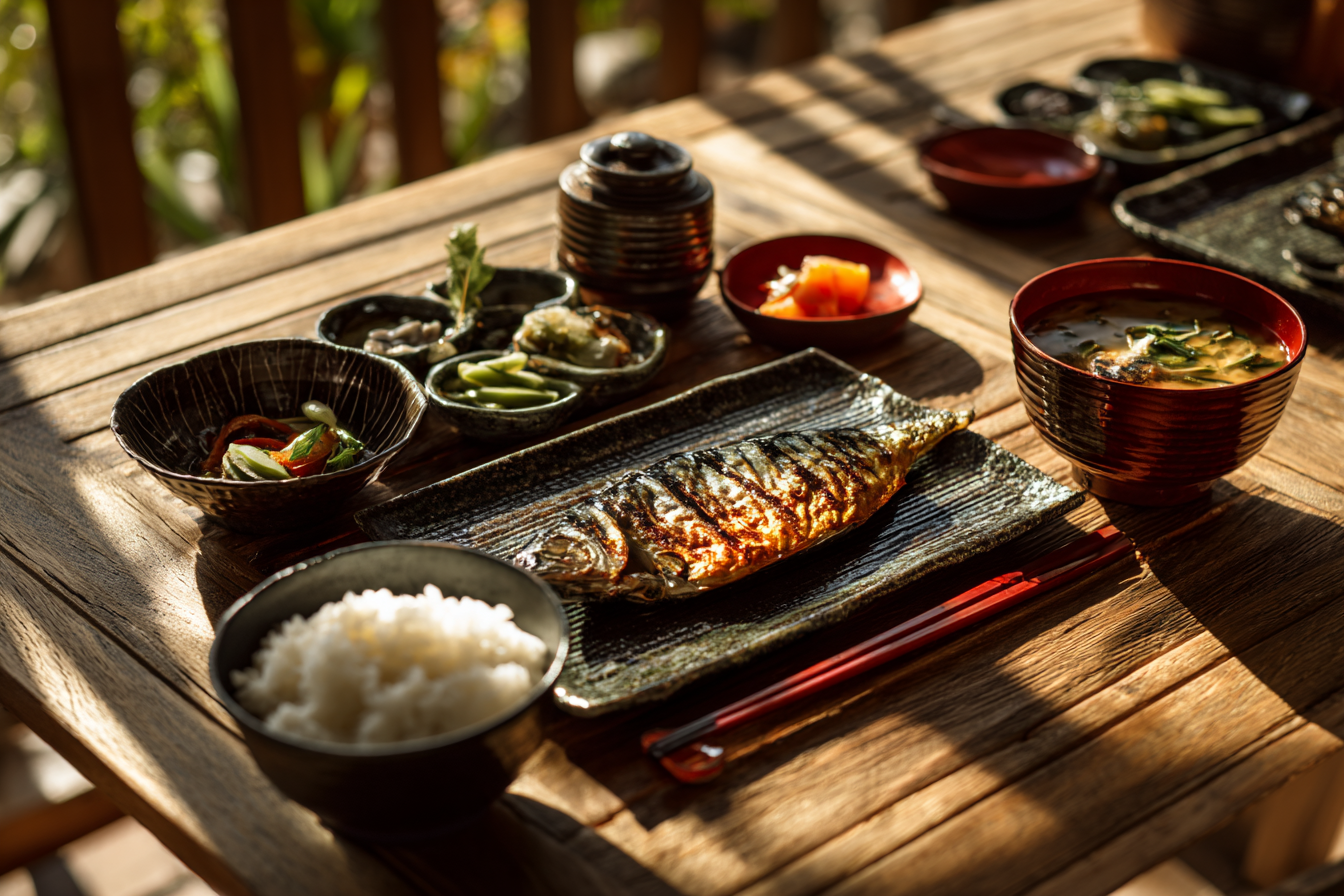
Its structure is simple:
Ichiju Sansai — one soup, three side dishes, plus rice.
Key characteristics (fact-checked and accurate):
- Plant-forward
- Moderate seafood intake
- Fermented foods
- Low saturated fat
- Low added sugar
- Seasonal ingredients
- Small portions
Unlike many Western diets, meals are built around balance rather than excess.
Key Foods Behind Japanese Longevity
Here’s what regularly appears on Japanese tables:
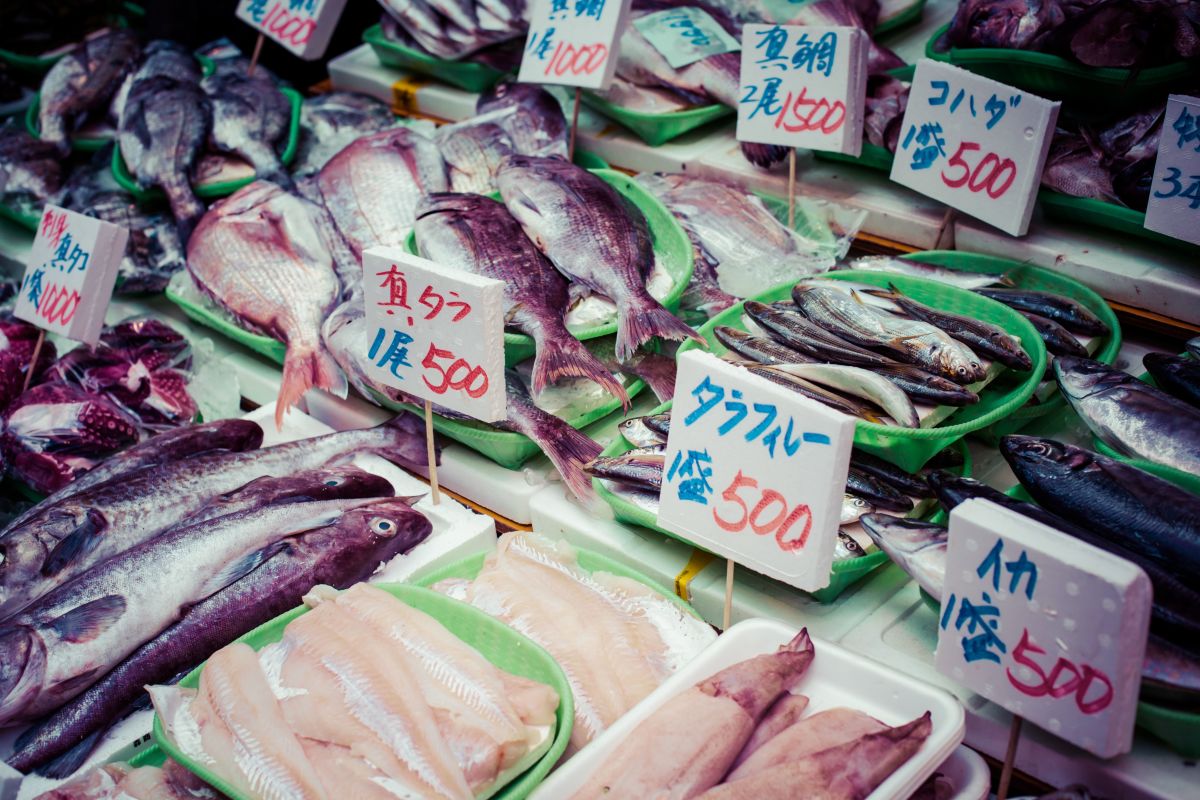
🐟 Fish (2–3 times per week or more)


4
Rich in omega-3 fatty acids.
Verified benefits:
- Reduced inflammation
- Lower cardiovascular disease risk
- Brain health support
Studies consistently show that populations with higher fish intake have lower mortality from heart disease.
🫘 Soy Foods (Tofu, Miso, Natto)
Fermented soy is central to the Japanese diet.
Benefits supported by research:
- Probiotics for gut health
- Isoflavones linked to hormone balance
- Natto contains nattokinase, studied for cardiovascular support
- Vitamin K2 (especially in natto) supports bone health
Several Japanese cohort studies associate regular soy intake with reduced heart disease risk.
🌿 Seaweed (Nori, Kombu, Wakame)
Daily in soups and salads.
Nutritional strengths:
- Iodine (thyroid function)
- Fiber
- Minerals
- Antioxidants
Japan’s regular seaweed consumption is unique globally and contributes to micronutrient diversity.
🍵 Green Tea & Matcha


4
3–5 cups daily is common.
Green tea contains catechins and polyphenols shown to:
- Reduce inflammation
- Lower stroke risk
- Support metabolic health
Multiple epidemiological studies link regular green tea consumption with reduced mortality risk.
🥬 Vegetables (High Volume, Low Calories)
Especially in Okinawa:
- Sweet potatoes (historically dominant)
- Bitter melon (goya)
- Leafy greens
- Root vegetables
The Okinawan diet historically was:
- ~85–90% plant-based
- Low calorie density
- High fiber
This claim is supported by the Okinawa Centenarian Study.
The Okinawan Blueprint (Blue Zone)


4
Okinawa is one of the world’s recognized “Blue Zones.”
Historically:
- High carbohydrate (from sweet potatoes)
- Low protein
- Minimal dairy
- Small portions
- Limited meat (pork used, but not daily in large amounts)
Important clarification:
Modern Okinawan diets have shifted and no longer match the traditional pattern — longevity advantages have narrowed in younger generations.
The longevity data mainly reflects older generations raised on traditional diets.
It’s Not Just What — It’s How
🥢 Hara Hachi Bu (Verified Cultural Practice)
Eat until you are 80% full.
This calorie moderation practice is widely documented in Okinawan culture.
Lower caloric intake is associated in research with:
- Reduced metabolic stress
- Lower inflammation
- Potential lifespan extension
🎯 Ikigai (Purpose)
Studies in Japan show that having a sense of purpose is associated with lower mortality risk.
Diet supports health — purpose sustains it.
🚶 Daily Movement
Japanese elders often:
- Walk daily
- Garden
- Stay socially engaged
Longevity is multi-factorial.
Diet is foundational — lifestyle amplifies it.
Is the “10x Lower Obesity” Claim Accurate?
Not exactly.
Japan’s obesity rate (~4–5%) is significantly lower than the U.S. (~40%), but “10x lower” is an exaggeration depending on definitions.
Heart disease rates are also lower, but not exactly “4x lower” universally.
So:
✔ Japan has very low obesity
✔ Japan has lower cardiovascular mortality
✖ Exact multiples vary by dataset
Accuracy matters.
Why This Diet Works
- Anti-inflammatory
- High fiber
- Diverse micronutrients
- Moderate protein
- Low processed food
- Portion control
- Fermented foods for gut health
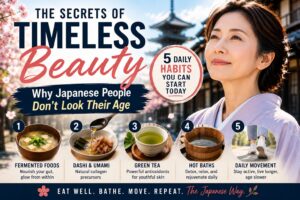
It’s sustainable because it’s habitual — not restrictive.
How to Apply Japanese Longevity Secrets
Start simple:
- Replace red meat with fish twice a week
- Add miso soup daily
- Drink green tea instead of soda
- Increase vegetable volume
- Practice 80% fullness
- Eat slowly
You don’t need exotic imports.
You need consistency.
Final Thoughts
Japan’s longevity isn’t magic.
It’s structure.
Balanced meals.
Moderation.
Fermentation.
Seasonality.
Purpose.
The secret isn’t one superfood.
It’s a system.
Adopt pieces of it, and over time, your body will thank you.
Longevity isn’t about living forever.
It’s about living well for longer. 🇯🇵✨