One Tokyo restaurant has held a Michelin star for seven consecutive years serving nothing but an omakase built entirely around beef.
Another has been simmering the exact same sukiyaki broth recipe, passed down through generations, since 1895 — and the family that founded it is still involved.
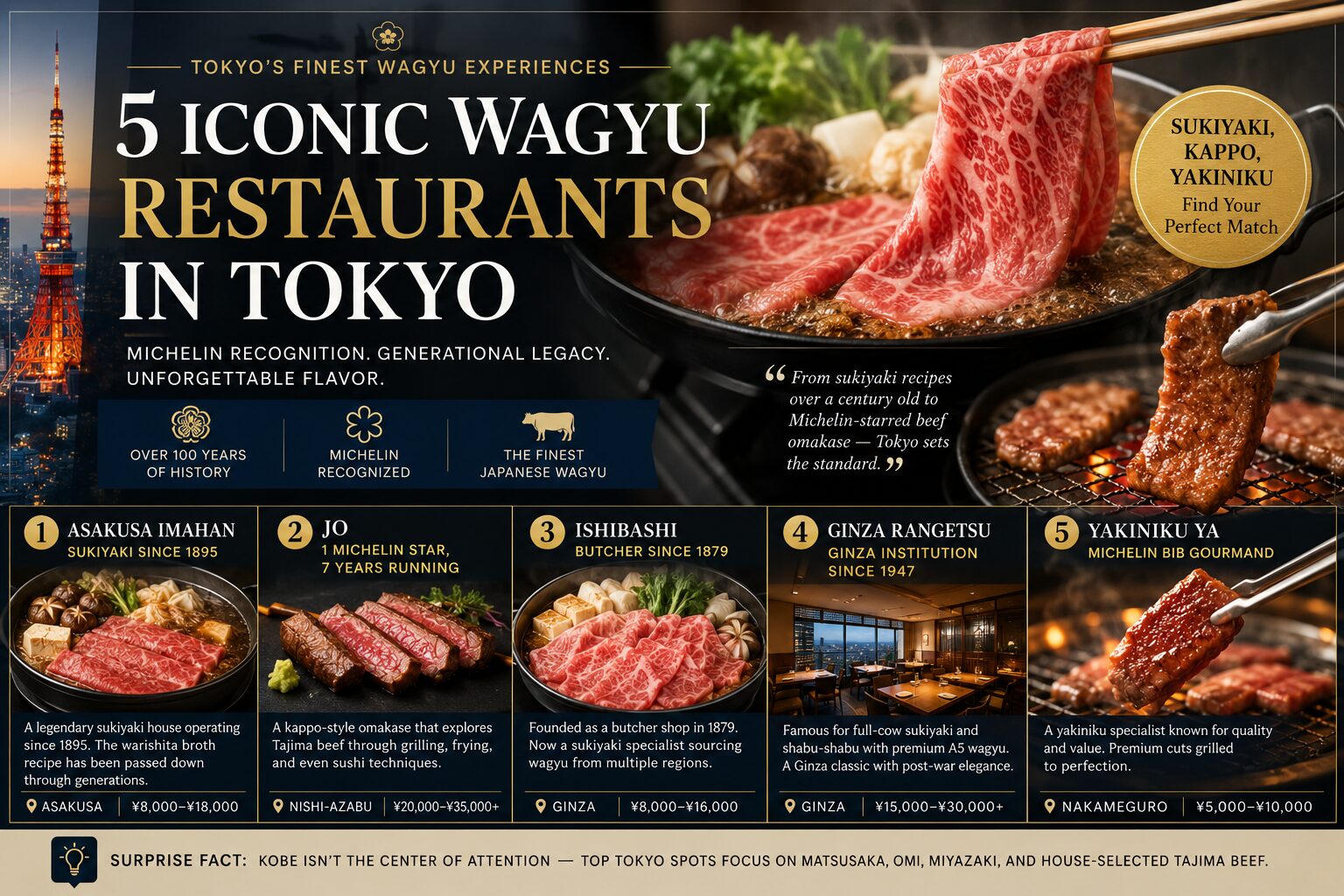
Here’s the surprise that changes how most visitors plan a wagyu splurge: the single most famous name — Kobe — isn’t actually where Japan’s food establishment sends its own attention. Michelin’s own Tokyo guide highlights sukiyaki houses, kappo-style beef counters, and yakiniku specialists that have nothing to do with Kobe city at all, built around Matsusaka, Omi, Miyazaki, and house-selected Tajima beef. This guide covers five specific restaurants — chosen for genuine longevity, Michelin recognition, or both — organized by the style of cooking that defines each one.
Asakusa Imahan: Sukiyaki Since 1895
Few restaurants anywhere in Tokyo carry the specific weight of history that Asakusa Imahan does. Operating continuously since 1895, it serves marbled wagyu sukiyaki cooked tableside in a sweet soy-based broth (warishita) by kimono-clad staff, seated in private tatami rooms.
Style: Sukiyaki and shabu-shabu. Price: Mid-range to expensive, generally ¥8,000–¥18,000 ($54–$122) per person depending on course. Location: Asakusa — search “Asakusa Imahan” on Google Maps. Reservations: Recommended several days ahead, especially for private tatami rooms.

JO: One Michelin Star, Seven Years Running, Built Entirely Around Beef
JO is a kappo-style restaurant in Nishi-Azabu that has held a Michelin star for seven consecutive years — an unusually specific and verifiable form of consistency in a city where restaurants open and close constantly. It serves only an omakase menu, and beef is the entire point: grilling, frying, and even sushi techniques are all deployed to showcase Tajima beef from different angles within a single seating.
Price: Expect a genuine splurge — Michelin-starred meat-focused omakase in Tokyo commonly runs ¥20,000–¥35,000+ ($135–$235+) per person. Location: Nishi-Azabu — search “JO Nishi-Azabu” on Google Maps. Reservations: Book well ahead; a one-star restaurant with this specific a reputation fills quickly.
Ishibashi: A Butcher’s Shop Since 1879, Now a Sukiyaki Specialist
Ishibashi’s story starts even earlier than Imahan’s — as a butcher’s shop founded in 1879. Generations of direct experience sourcing wagyu across multiple Japanese regions now inform a sukiyaki-focused menu built on its own long-refined stock.
Style: Sukiyaki, sourced from multiple wagyu-producing regions rather than one single brand. Reservations: Recommended given the restaurant’s Michelin Guide profile and long-standing reputation among Tokyo diners.
Ginza Rangetsu: A Ginza Institution Since 1947
Ginza Rangetsu has operated since 1947 and remains celebrated specifically for full-cow sukiyaki and shabu-shabu built around premium A5-grade wagyu, served in dining rooms that still carry the polished, post-war Ginza aesthetic the restaurant was built on.
Location: Ginza — search “Ginza Rangetsu” on Google Maps. Reservations: Recommended, particularly for window seating or private rooms, given the restaurant’s long-standing popularity with both business diners and tourists.
Yoshizawa: The Restaurant That Helped Create the Matsusaka Beef Brand
Not every legendary wagyu name is about Kobe. Roughly a century ago, Yoshizawa’s founder played a direct role in establishing Matsusaka beef as a recognized brand in its own right — Matsusaka beef, from Mie Prefecture, is often described by Japanese connoisseurs as equal to or better than Kobe for specific cuts, using only virgin female cattle for a notably softer, more aromatic fat.
Style: Kappo-style dining with sukiyaki, centered specifically on Matsusaka beef. Reservations: Recommended given the restaurant’s historical significance and niche following among serious wagyu diners.
Comparing the Five
| Restaurant | Founded / recognition | Style | Beef focus | Price range |
|---|---|---|---|---|
| Asakusa Imahan | 1895 | Sukiyaki, shabu-shabu | Marbled wagyu, tableside broth | ¥8,000–¥18,000 ($54–$122) |
| JO | 1 Michelin star, 7 years running | Kappo omakase | Tajima beef, multi-technique | ¥20,000–¥35,000+ ($135–$235+) |
| Ishibashi | 1879 (butcher’s shop origin) | Sukiyaki | Multi-region sourced wagyu | Mid-range to expensive |
| Ginza Rangetsu | 1947 | Full-cow sukiyaki, shabu-shabu | A5-grade wagyu, varied cuts | Expensive |
| Yoshizawa | Helped found the Matsusaka beef brand | Kappo, sukiyaki | Matsusaka beef specifically | Moderate to expensive |
Sukiyaki, Kappo, or Yakiniku — Which Style Actually Suits You
The style matters as much as the restaurant. Sukiyaki (Imahan, Ishibashi, Ginza Rangetsu) is simmered tableside in broth, dipped in raw egg, and pairs naturally with a slower, conversational meal. Kappo-style beef counters (JO, Yoshizawa) put a single chef’s technique and judgment front and center, typically as a fixed omakase with no à la carte choice. Yakiniku — grilled tableside over charcoal — exists at all price points across Tokyo but wasn’t the focus of this list precisely because its historic and Michelin pedigree is thinner than the sukiyaki and kappo traditions above; it’s a genuinely different, more casual experience worth choosing on its own terms rather than as a substitute.
A thin, marbled slice lowered into simmering warishita broth by kimono-clad hands, lifted seconds later and dipped into a small bowl of beaten raw egg before it ever reaches your mouth — the same ritual, in the same room, that’s been repeated here for well over a century.
Honest expectation: it’s a slower, quieter meal than a Western steakhouse, built around ceremony as much as the beef itself — go in expecting theater, not speed.
Who Should Choose Which
Frequently Asked Questions
- Is Matsusaka beef actually comparable to Kobe beef?
- Yes — Japanese beef connoisseurs frequently rate it as equal or superior for specific cuts, thanks to its exclusive use of virgin female cattle and notably softer fat, though it carries less international brand recognition.
- Do these restaurants require reservations far in advance?
- JO, given its Michelin recognition, typically needs the most advance planning. Asakusa Imahan, Ginza Rangetsu, and Yoshizawa generally need several days to a week or two; walk-ins are unreliable at all five.
- What’s the real difference between sukiyaki and kappo-style beef dining?
- Sukiyaki is a shared, simmered hot pot experience with a set ritual (broth, then raw egg dip); kappo is a chef-led, counter-style omakase where you receive a curated sequence of dishes with far less hands-on participation.
- Is yakiniku a lesser way to eat wagyu?
- Not lesser — different. It’s grilled tableside over charcoal, generally more casual and social, and available at a much wider range of price points across Tokyo than the historic sukiyaki and kappo houses on this list.
- Can I get an English menu at these restaurants?
- It varies by restaurant and isn’t guaranteed at every location; booking through a concierge service or hotel concierge is the most reliable way to confirm English support in advance.