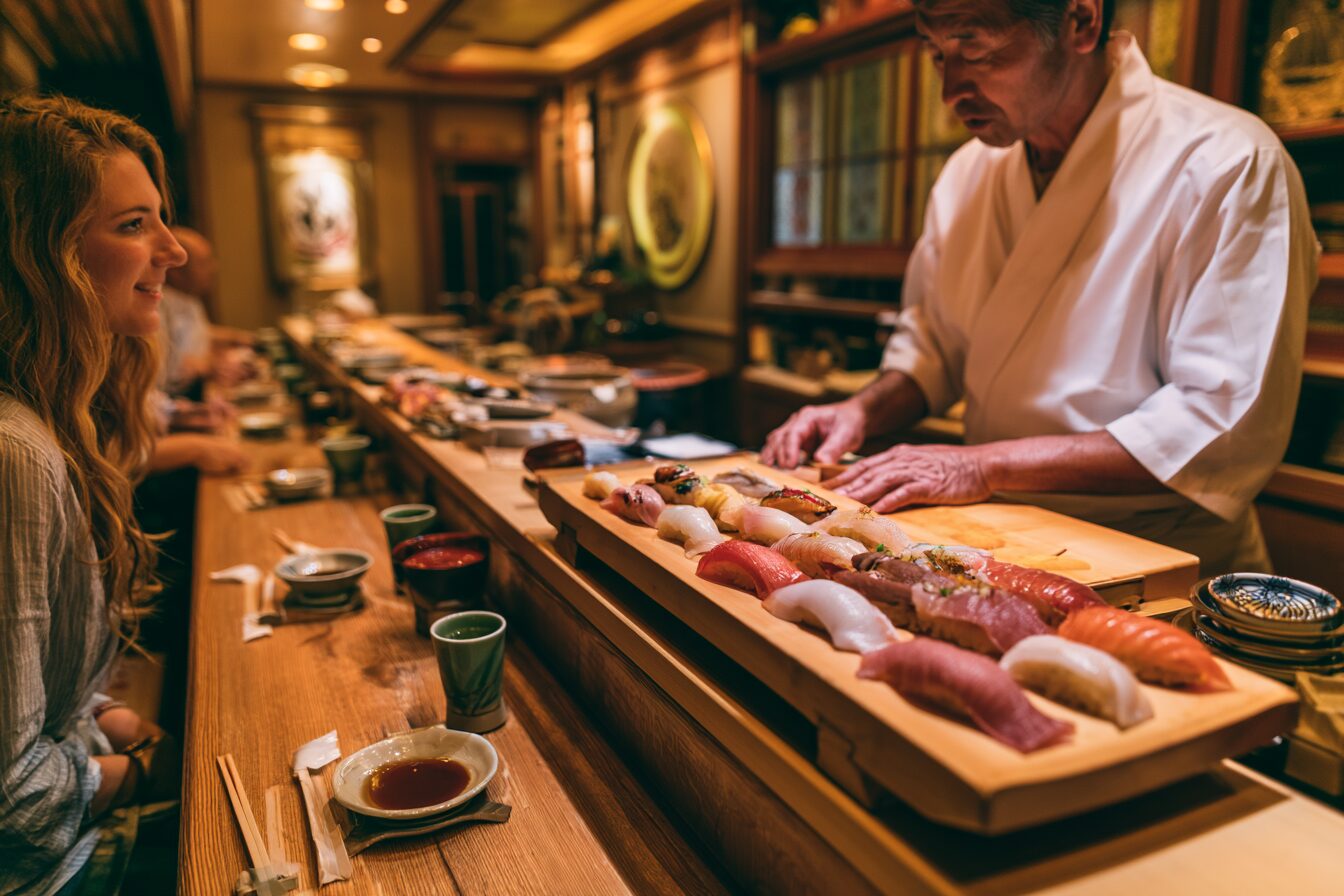
The most sought-after omakase counter in Tokyo has a three-year waiting list — and a $500-per-person price tag. The counter two blocks away serves 20 pieces of the same-tier sushi for $65, with same-week availability.
Most first-timers book the wrong tier, for the wrong reasons, and leave either disappointed or shocked by the bill.
The word omakase (お任せ) means “I leave it to you.” It is what you say when you sit down at a sushi counter and surrender the menu entirely to the chef. No ordering. No choosing. The chef selects the fish, the preparation, the sequence, and the pace — based on what arrived from Toyosu Market that morning, what’s at seasonal peak, and what they think will show their craft to best effect.
For a first-timer, this sounds either liberating or terrifying. It is almost always liberating. The chef knows the answer to every question before you know to ask it. You don’t need to know what kohada is, or why the rice is slightly warm, or why the gari (pickled ginger) arrives at specific moments. You just sit, watch, eat, and occasionally say “oishii” (delicious), which is the only Japanese phrase you actually need.
What most first-timers don’t know: the price range is enormous, the booking experience is now genuinely foreigner-friendly at most tiers, and the choice of when to visit versus which price point changes the experience more than any single restaurant recommendation. This guide explains all of it.
The Four Price Tiers: What You’re Actually Paying For

The price difference between a ¥5,000 omakase and a ¥50,000 omakase is not simply about fish quality. It’s about the combination of fish rarity, chef pedigree, counter intimacy, and the ratio of prepared dishes (appetizers, soups, tamago) to pure nigiri. Understanding what shifts at each tier is the key to choosing the right experience — not the wrong one.
| Tier | Price Per Person | USD ~ | What You Get | Best For |
|---|---|---|---|---|
| Entry | ¥3,500–¥8,000 | $23–$52 | 10–15 pieces nigiri, quality seasonal fish, casual atmosphere. Some standing counters (tachigui). Toyosu fish, less aging/curation. | First omakase, budget travelers, lunch experiment |
| Casual | ¥8,800–¥15,000 | $58–$99 | 15–25 pieces + small appetizers, seated counter, better fish sourcing, chef conversation possible. The sweet spot for most visitors. | First serious omakase, food-curious travelers, couples |
| Premium | ¥20,000–¥35,000 | $130–$230 | Full Edomae course: aged fish, rare seasonal catches, house-made soy and aged vinegar rice, significant sake program, 8–12 seat maximum counter. | Serious sushi fans, special occasions, second or third visit |
| Legendary | ¥50,000–¥100,000+ | $330–$660+ | Michelin 2–3 star counters. Tuna from the January Toyosu auction. Introductions or membership sometimes required. Months-long waitlists. | Dedicated sushi enthusiasts only — the experience gap vs Premium is real but narrow for beginners |
One more pricing fact almost no article mentions: lunch changes everything. Many excellent Tokyo omakase counters that charge ¥20,000–¥30,000 for dinner offer the same kitchen, the same fish sourcing, and a condensed (12–15 piece) course at lunch for ¥4,800–¥9,800. The same chef. The same counter. At less than half the price. Lunch omakase is the single biggest value unlock for first-timers in Tokyo.
How to Book: The Four Platforms That Actually Work for Foreigners
The biggest anxiety most first-timers have about omakase is not the food or the etiquette. It’s the booking. The legendary counters don’t have English websites. The review sites are in Japanese. The reservation systems want a Japanese phone number. This section is specifically about solving that problem.
① Pocket Concierge (pocket-concierge.jp) — the default first choice for most foreigners. Backed by American Express, full English interface, accepts international credit cards, and covers 800+ restaurants including top-tier Michelin counters. Unique feature: a waitlist function for fully-booked restaurants — you can join the queue and get notified when a cancellation opens. No booking fee at most restaurants, though prices on the platform may include a small service margin. Start here.
② Tableall (tableall.com) — a Singapore-based service that pre-purchases seats at partner restaurants and resells them as guaranteed bookings. The fee is higher than Pocket Concierge, but the inventory sometimes includes seats at restaurants that are otherwise completely inaccessible without a Japanese contact. If your target restaurant appears sold out everywhere else, check Tableall. Free to join; you only pay when a reservation is confirmed.
③ Eatinerary / Omakase Japan (omakaseje.com) — the English offshoot of GMO’s domestic Omakase booking system, and an official Michelin Guide partner. Exclusive contracts mean some counters appear here that aren’t listed elsewhere. Good secondary check after Pocket Concierge.
④ Your hotel concierge — consistently underestimated. Tokyo’s major hotels (particularly in Ginza, Marunouchi, and Roppongi) have standing relationships with nearby restaurants and can access reservations that don’t appear on any public platform. The concierge at a mid-to-upscale hotel making a phone call in Japanese to a restaurant they know personally is often the most effective booking mechanism for Legendary-tier counters. Ask specifically, give 4–6 weeks’ notice, and provide two or three target restaurants rather than one.
What Actually Happens: The Experience, Piece by Piece

Most first-timers arrive with a vague image of someone handing them sushi pieces one at a time. That image is accurate. But the structure of what happens before, between, and around those pieces is what makes the experience different from ordering sushi at a regular restaurant.
Arrival and seating: You arrive at the counter — typically 8 to 12 seats, all facing the chef’s workspace. The chef greets you. A staff member may offer tea or confirm your drink preference. If you have dietary restrictions or allergies, this is the moment to mention them. Once you’re seated, the course has effectively begun.
The sequence: An Edomae omakase typically opens with tsumami — small non-sushi dishes designed to prepare the palate. These might include a sliver of salt-cured fish on tofu, a single clam, or a small bowl of seasoned octopus. Tsumami is not filler — it is deliberate pacing. Then the nigiri begin.
The serving order: Lighter white fish (flounder, sea bream) come first, progressing toward fattier fish (salmon, amberjack, fatty tuna) and seasonal peaks, ending with tamago (sweet egg custard) as the traditional close. The order is not arbitrary — it is designed around flavor progression. Each piece is meant to make the next piece taste better. This is why the gari (pickled ginger) is placed between pieces, not eaten as a condiment.
The pace: The chef controls the pace. Do not hurry. Do not wait too long. Each piece should be eaten within 30–60 seconds of being placed in front of you — the rice is shaped at a specific temperature and begins to change texture quickly. This is one of the genuine reasons omakase doesn’t work as takeout.
The chef sets a single piece of aged tuna in front of you — dark, almost maroon, with a warmth from the rice that you can feel before you lift it. One bite, and the fish dissolves rather than chews, leaving only clean ocean and the faint acid of red vinegar rice.
You could spend $300 on a sushi dinner in New York and not experience this — not because of cost, but because this fish was aged specifically for this counter, on this morning, for this piece.
The Etiquette Rules That Actually Matter
Omakase has a reputation for terrifying etiquette rules. Most of those rules are either obvious good manners or only apply at Legendary-tier counters. At the Casual and Premium tiers where most first-timers belong, the expectations are straightforward enough to fit in a list you can read once.
Before you arrive:
No strong perfume or cologne. This is the rule most guides bury, and the one chefs care most about. Omakase sushi is an aromatic experience — aged fish, house soy sauce, vinegared rice — and a heavily scented guest sitting at a 10-seat counter affects everyone’s experience, including the chef’s. If you wear fragrance, skip it for this meal, or limit it to 1–2 sprays on fabric only, not skin near the face.
Arrive 5–10 minutes early. Omakase counters run on a synchronized schedule — everyone sits, everyone begins, everyone finishes together. Being late disrupts the chef’s ingredient timing and inconveniences guests who arrived on time. If you’re running late, call the restaurant. Most platforms provide a contact number at booking.
Dress smart casual. No formal requirement at most counters. Avoid beach sandals, tank tops, or visibly dirty clothing. Clean pants, a shirt, and closed shoes are always appropriate. Some Legendary counters have tighter dress codes — check when booking.
At the counter:
Don’t place anything hard on the counter surface. The counter — often expensive hinoki cypress — is the chef’s workspace and a prized element of the room. Keys, phones, and watches placed directly on the counter can scratch it. Keep belongings in your lap or on the bag hook provided. Don’t place your phone on the counter face-down between photos.
Eat with your hands at nigiri-focused counters. This is not a rule that needs enforcing — the chef often tells you — but it helps to know in advance. Chopsticks can break the lightly pressed shari. Your fingers are the better tool for nigiri. Sashimi (raw fish without rice) is always eaten with chopsticks.
Dip the fish side, not the rice side. Apply soy sauce by lightly touching only the neta (fish topping) to the soy. The rice side absorbs soy instantly, overwhelms the flavor balance, and breaks the shari apart. In many omakase settings, the chef pre-seasons each piece and soy sauce is entirely optional — follow the chef’s lead.
Photography: ask first. Many counters allow photography; some prohibit it; a few allow it for the first piece only. The Japanese phrase is “Shashin, ii desu ka?” (写真、いいですか? — “Is a photo okay?”). No flash. No 30-second video of the chef. One photo per piece, then phone down.
No phone calls at the counter. If you must take a call, excuse yourself with a gesture to the staff and step outside. A phone conversation at a 10-seat omakase counter is the most reliably unwelcome behavior possible.
Specific Counters for First-Timers: By Tier
Restaurant-specific recommendations become outdated quickly — chef changes, closures, and price revisions happen without notice. What follows is a framework for each tier, with real examples as of 2026, verified against current booking platforms. Always cross-check availability before relying on any specific recommendation.
Entry Tier (~$23–$52): Sushi Tokyo Ten (Shinjuku, Shibuya, Roppongi, Takanawa) offers 25–26 course pieces for ¥8,800–¥9,000, widely cited as one of Tokyo’s best value-for-money omakase experiences. Multiple locations make booking accessible. Kitaoji Club in Ginza runs a 21-piece course supervised by a guest chef for ¥9,350, with an optional 90-minute all-you-can-drink upgrade for ¥12,000 total. Tachigui Sushi Sushikawa in Sasazuka is a standing counter with a Michelin listing and an intentionally fast-paced experience — different in feel from a seated counter, but excellent for a first omakase on a tight budget.
Casual Tier (~$58–$99): Sushi Azabu at Azabudai Hills offers a weekday lunch karuku course (about 15 dishes) for ¥4,800 — a former Michelin star restaurant at lunch prices. Sushi Matsumoto near Shibuya Crossing runs dinner omakase at ¥9,800. Kin No Dining in Ginza is unusually child-friendly for omakase (rare) with sets from ¥7,500. Sushi Kano in Edogawa offers Edo-style omakase at ¥22,000 for dinner — the upper edge of Casual, but with organic sourcing and sommelier sake pairing.
Premium Tier (~$130–$230): Sushi Ryo in Ginza (8-seat counter, English-speaking chef) runs ¥25,000–¥46,200 depending on course and beverage selection. Hashida Tokyo in Kachidoki is specifically cited as the 2026 premium pick for visitors who want excellence without the Michelin tourist premium. Gentle Sushi Bar in Omotesando (¥13,800–¥22,000) offers private room options alongside the counter — useful for groups where one person has dietary restrictions that might otherwise be awkward at a shared counter.
The Language Question: Do You Need Japanese?
No. The short answer is no, and at any counter bookable through Pocket Concierge or Tableall, English support is built into the booking process. Many counters list whether English-speaking staff are available — filter for this on Pocket Concierge if it matters to you.
At the counter itself, the chef’s explanations — “This is kinmedai, alfonsino from Sagami Bay” — are often minimal even in Japanese. The experience is not language-dependent. You watch what’s being prepared, you eat it, and if something is unfamiliar you can gesture or simply say “Kore wa nan desu ka?” (“What is this?”). Most chefs at serious counters are accustomed to international guests and have their own system for communicating the key pieces without a shared language.
What Japanese does help with: the reservation system. The domestic Tabelog platform (Japan’s equivalent of Yelp, taken far more seriously) lists many counters that don’t appear on English platforms — but booking through Tabelog requires a Japanese account and sometimes a Japanese phone number. This is why Pocket Concierge exists. For most first-timers, English-platform booking is the right approach, and the restaurant selection available through those platforms covers every tier comprehensively.