The building used to make playing cards. That’s where the Nintendo Museum begins — in a repurposed former Uji factory where Nintendo produced hanafuda and western-style playing cards before Donkey Kong existed, before Game Boy, before any of it. Standing at the entrance in 2026, that context makes the whole experience feel stranger and more interesting than a typical brand museum has any right to be.


Nintendo Museum (任天堂ミュージアム) opened in October 2024 in the city of Uji (宇治市), Kyoto Prefecture. It immediately became one of the most in-demand attractions in Japan for foreign visitors — and one of the most confusing to book. This guide covers exactly what’s inside, how to get tickets, how to reach it, and what to do if the lottery doesn’t go your way.

What’s Inside the Nintendo Museum
The museum is organized around the history of Nintendo’s hardware and software, beginning with the company’s 1889 founding as a playing card manufacturer and moving through every major gaming era. The collection spans over 40 years of video game hardware: from Color TV-Game and Game & Watch through NES, Super Famicom, Nintendo 64, GameCube, DS, Wii, and Switch. Original prototypes, design sketches, and behind-the-scenes production artifacts fill the cases alongside the finished products most visitors grew up with.
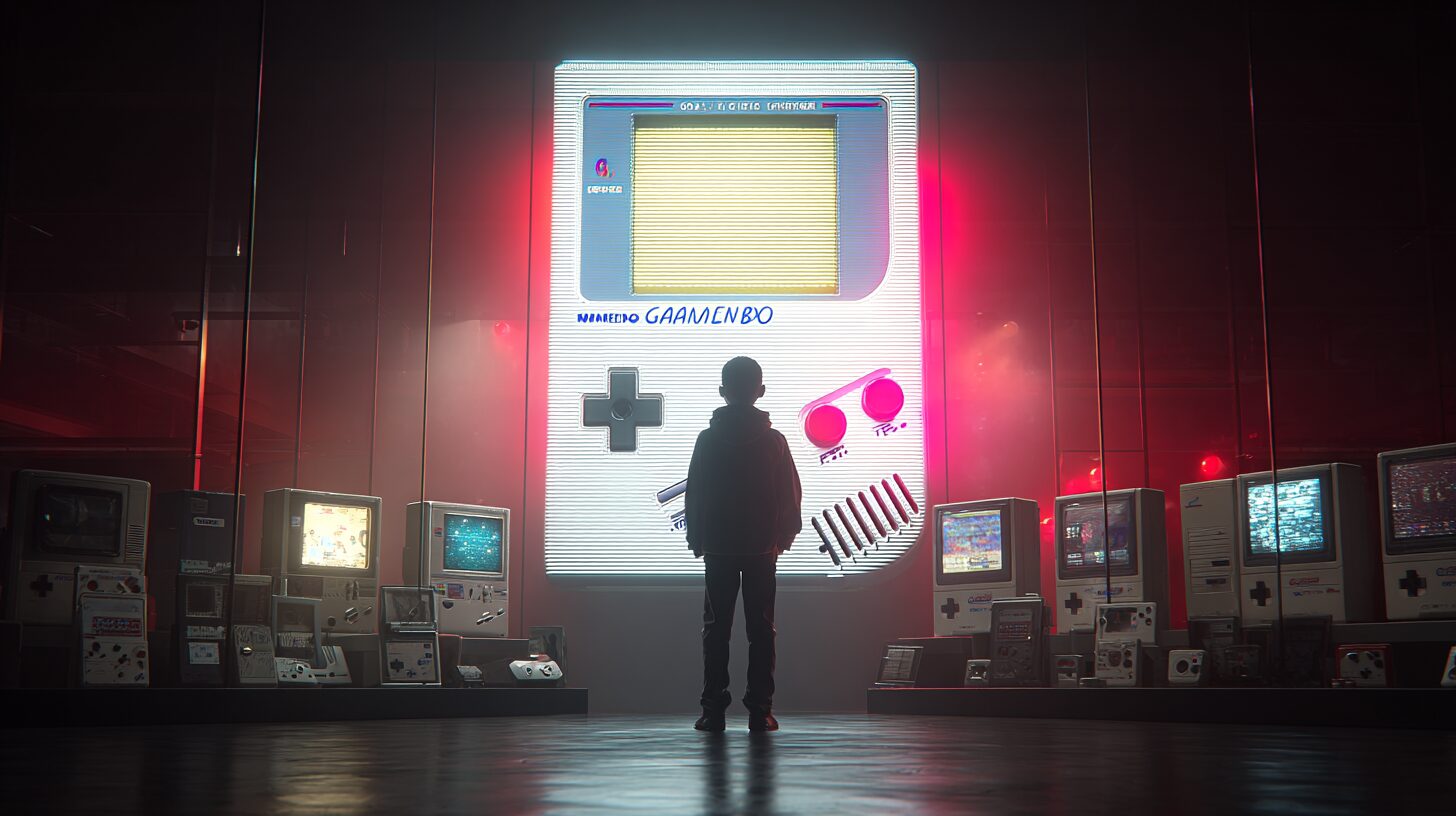
The centerpiece of the experience is the interactive floor, where oversized playable recreations of classic games are embedded into the exhibition. A giant Game Boy lets two people play simultaneously on a screen the size of a wall. A life-size multi-player version of early NES games runs on custom controllers. These aren’t gimmicks — they were designed in collaboration with Nintendo’s hardware teams and are unlike anything you’ll find at a gaming museum elsewhere in the world.
The museum also houses a restaurant (Hatena?) serving Nintendo-themed food and drinks, and a shop offering exclusive merchandise — controller-shaped chocolates, original-print tote bags, replica game cartridge keychains — that are not sold anywhere else, including Nintendo’s own official stores.

How to Get Tickets in 2026
Tickets are sold via a lottery system on the Nintendo Museum official website. Lotteries open periodically — typically on the first of each month for the following month, though this has changed several times since opening. Each lottery application requires a Nintendo Account, which must be set to Japanese region for lottery eligibility. Foreign visitors can and do create Japanese-region Nintendo Accounts for this purpose — this is the most reliable method for overseas applicants.
Ticket price is ¥3,300 per adult (including the ¥1,000 coin credit usable at interactive stations). Entry is time-slotted. Multiple applications per lottery period using different accounts are not permitted and can result in cancellation of all bookings. Secondary market resale prices regularly reach ¥10,000–¥20,000 per ticket; Nintendo has implemented ID verification at entry to combat this.
As of 2026, some travel agencies including JTB and HIS offer package tours that bundle Nintendo Museum tickets with accommodation — these are legitimate alternatives worth checking if the lottery is consistently unsuccessful.
Getting There from Kyoto Station
The museum is located at 任天堂ミュージアム in Uji, a short journey from Kyoto Station. Take the JR Nara Line (JR奈良線) from Kyoto Station (京都駅) to Ogura Station (小倉駅) — approximately 15 minutes, ¥240. From Ogura Station it’s a 5-minute walk. The museum is clearly signposted in English from the station. Alternatively, take the Kintetsu Kyoto Line (近鉄京都線) from Kintetsu-Kyoto Station (近鉄京都駅) to Kintetsu-Ogura Station (近鉄小倉駅) — 10 minutes.
Note: Uji is best known as the home of Japan’s premium matcha and the Uji River UNESCO heritage site. Combining Nintendo Museum with a walk along the Uji River and a matcha experience at one of the city’s tea houses makes for one of the most distinctive day trips possible from Kyoto. Allow 5–6 hours total.
What to Buy at the Museum Shop

The shop operates separately from the museum entry and has its own queue. On weekday mornings, the shop queue is typically 20–30 minutes. On weekends and school holidays, expect 60–90 minutes. Many visitors report the shop alone justifying the trip — the merchandise design quality is noticeably higher than standard Nintendo licensed goods.
Best-sellers as of early 2026 include: the Famicom-print canvas pouch (¥2,200), the replica Game & Watch keychain (¥1,800), the museum-exclusive Nintendo history book (¥3,500), and the playing card sets printed with vintage Nintendo card designs from the 1960s (¥1,100). The shop ships internationally, though shipping costs and customs duties apply.
Tips for Your Visit
Arrive 10 minutes before your slot time — late entry is not accommodated and your ticket becomes void. Bags larger than A4 size must be checked at the entrance (lockers are free). Photography is permitted throughout the museum except in a few designated areas marked with signage. The museum is smaller than most visitors expect — the building is compact and the experience is curated rather than expansive. Allow 2–3 hours if you plan to use the interactive stations, visit the restaurant, and browse the shop properly.
The Nintendo Museum is not designed for young children who are unfamiliar with gaming history — most of the exhibits assume familiarity with the games. For families with children under 8, the interactive floor is engaging but the historical exhibits will hold limited interest. For adults who grew up with any Nintendo platform, the experience is unexpectedly emotional in a way that’s difficult to describe until you’re standing in front of a prototype controller from 1983.
Combining Nintendo Museum with Kyoto’s Other Attractions
Uji sits between Kyoto and Nara on the JR Nara Line. A well-designed day can run: morning slot at Nintendo Museum, lunch with matcha soba in Uji, afternoon visit to Byodoin Temple (平等院, the one on the ¥10 coin) which is a 15-minute walk from Ogura Station, then back to Kyoto for dinner. This combination covers gaming history, tea culture, and 11th-century Buddhist architecture — a range that is very specifically Japanese and impossible to replicate elsewhere.
If you cannot secure a Nintendo Museum ticket, the Kyoto International Manga Museum (京都国際マンガミュージアム) near Karasuma-Oike Station offers a different angle on Japan’s visual culture and is walk-in accessible. It’s not the same experience, but it is excellent in its own right.