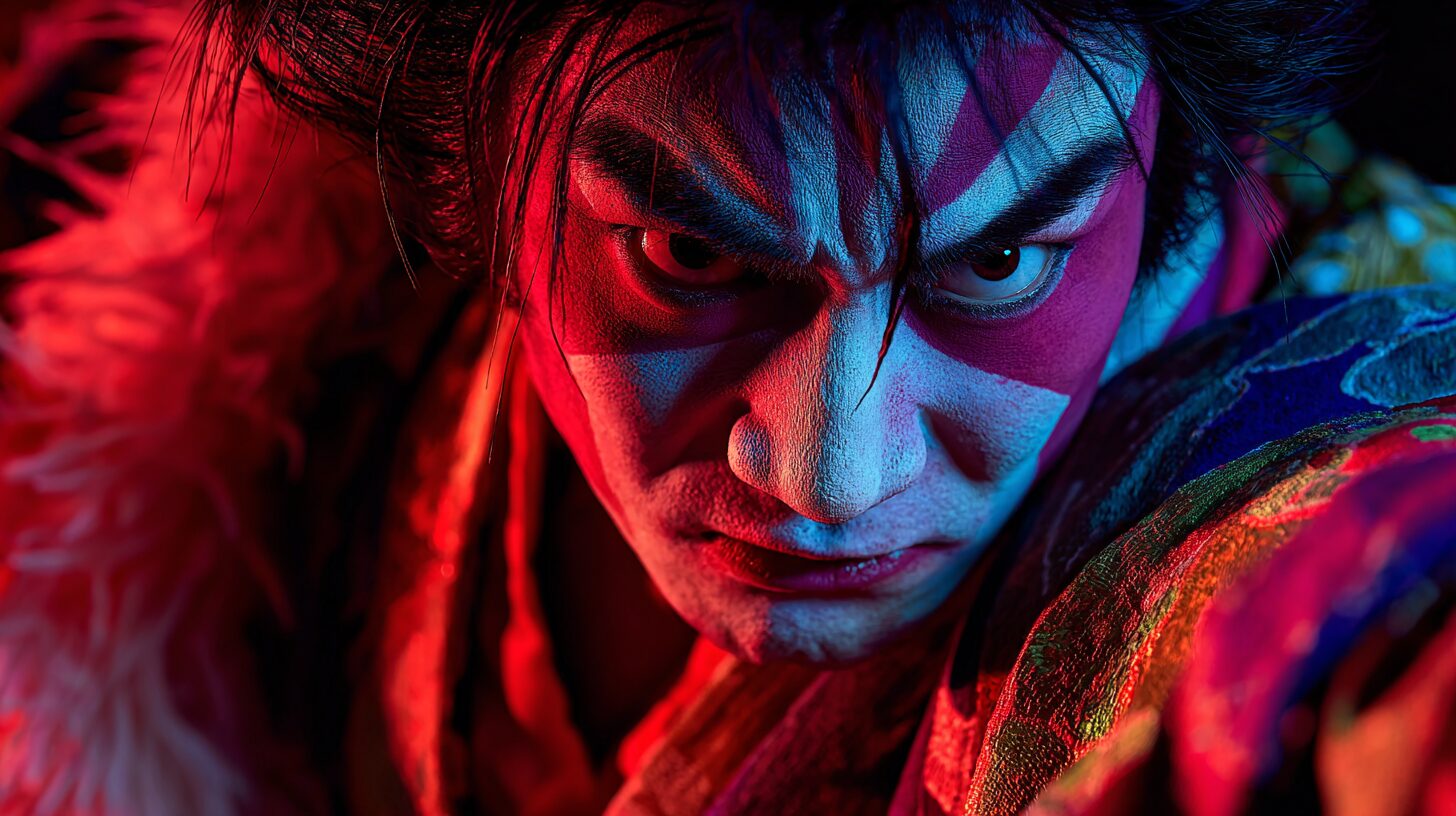
The Noh actor moves one meter in three minutes. He wears a mask carved from cypress wood. He does not speak so much as resonate — the sound comes from somewhere deeper than the throat. The audience is almost completely silent. Several people around me are crying, and I don’t entirely understand why.
That’s the thing about Japan’s three great theatrical traditions: they all require something from the audience. Not fluency in Japanese — though subtitles and headphone guides exist for all three. They require patience with slowness, or tolerance for noise, or willingness to accept that something is happening that you don’t fully understand but can still feel.
In 2026, all three forms remain accessible to visitors. The question isn’t whether to go — it’s which one matches your temperament.

Noh (能): The Oldest Surviving Theatre in the World
Noh is approximately 650 years old, developed by Zeami Motokiyo in the 14th century under the patronage of the Ashikaga Shogunate. It is performed on a specific hinoki (Japanese cypress) stage with four pillars and a covered roof — the design has not changed since the Muromachi period. The plays (there are 240 in the active repertoire) deal almost exclusively with ghosts, gods, demons, and the suffering of souls unable to leave the world.
What makes Noh immediately striking to first-time viewers: the slowness is not artistic choice — it is the form. A single step can take thirty seconds. A gesture of one raised hand can carry the emotional weight of a speech. The masks (there are over 200 types in the classical canon) are carved to appear differently — joyful or sorrowful — depending on the angle at which they catch the light. The player tilts the mask fractionally and the expression transforms.
Where to see it: The National Noh Theatre (国立能楽堂) in Sendagaya, Tokyo, is the primary venue, with performances most weekends. Tickets run ¥2,900–¥6,000 depending on seat and program. The theatre offers English program notes and headphone audio guides at the box office (ask when you arrive — guides cost ¥600 extra). Yasukuni Shrine and several major temples also host outdoor Noh performances (薪能, Takigi-Noh) in spring and autumn — free or low-cost, and an entirely different atmospheric experience.
Kabuki (歌舞伎): Japan’s Most Theatrical Art Form
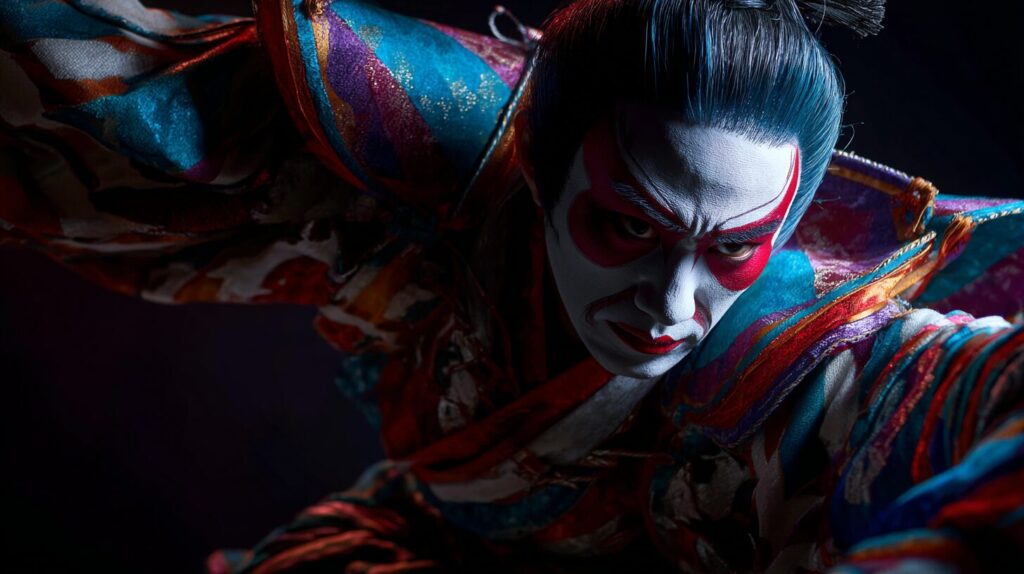
Where Noh strips performance down, Kabuki adds. Kabuki began in the early Edo period (1603) as scandalous street theater — improvised, loud, performed by women (later banned by the government) and then by men, which remains the practice today. Over four centuries it has developed into a precisely codified art with its own vocabulary: the mie (a frozen dramatic pose held to audience applause), the hanamichi (the raised walkway through the audience), the keren (sudden special effects including trapdoors, flying rigs, and instant costume changes).
A full Kabuki program runs five to six hours. You can purchase individual act tickets (一幕見席, hitomakumi-seki) for ¥500–¥2,000 that allow you to see a single act without committing to the full day. For first-time visitors, this is the recommended approach: pick the most famous play on the program, watch one act, and decide whether you want to return for more.
Where to see it: Kabuki-za Theatre (歌舞伎座) in Ginza, Tokyo, is the main venue with performances most months. The theatre has an English audio guide system (¥700 rental) providing real-time translation and context. Tickets for full programs run ¥4,000–¥22,000; the single-act standing gallery is cash only, purchased on the day. The Minamiza Theatre (南座) in Kyoto’s Gion district holds performances throughout the year and feels closer to the historical origins of the form — the Gion area itself was Kabuki’s development zone in the 17th century.
Bunraku (文楽): The Puppet Theatre That Makes People Cry
Bunraku is Japan’s classical puppet theater, developed in Osaka in the 17th century. Each puppet — typically three-quarter human size — is operated by three puppeteers: the main operator (omozukai) who controls the head and right arm, visible to the audience in formal black kimono; the left-arm operator; and the leg operator. The three work in complete silence and coordination. A master omozukai trains for 30 years before taking principal roles.
The plays — many written by the playwright Chikamatsu Monzaemon, sometimes called Japan’s Shakespeare — are tragedies. Merchant-class love stories, duty versus desire, death pacts between lovers who cannot be together in life. The puppets convey emotion through precisely codified movements: a puppet crying tilts forward slightly, one hand raised to the face, the other hanging. It should not work. It does, completely. Audiences watch these wooden figures and feel genuine grief.
Where to see it: The National Bunraku Theatre (国立文楽劇場) in Nippombashi, Osaka, is the only permanent Bunraku venue in Japan. Performances run in January, April, August, and November. Tickets cost ¥2,000–¥6,000. English audio guides are available (¥600). From Osaka Namba, the theatre is a 10-minute walk. Tokyo’s National Theatre in Hayabusacho holds occasional Bunraku programs — check the schedule when planning.
Side-by-Side Comparison
Choose Noh if you value meditative stillness over stimulation, are interested in the spiritual or philosophical dimensions of Japanese culture, and don’t need the performance to be easy to follow. The most profound Noh performances are often the ones where you stop trying to understand and simply watch.
Choose Kabuki if you respond to spectacle, enjoy drama, and want an experience that’s visually immediate without requiring cultural context to appreciate. The special effects alone — particularly the quick-change costumes (hikinuki) and flying sequences — justify a single-act ticket. It is the most accessible of the three for first-time visitors to Japanese performing arts.
Choose Bunraku if you’re interested in craft at the level of precision, want to understand how Japan’s most sophisticated narrative tradition works before seeing it on stage, or are visiting Osaka and want the most distinctly Osaka cultural experience available. Osaka created Bunraku. Watching it there rather than in Tokyo carries an additional resonance.
Practical Notes for All Three
Photography policies vary by venue and performance. Generally, photography is prohibited during the performance itself but permitted in the lobby and before curtain. Check signage at each venue — staff enforce this consistently at the National Theatre venues.
Programs are printed in Japanese. The National Theatre venues have English program booklets available at the box office for a small fee — request them when buying tickets. Audio guide devices are available at all three main venues listed above; these are worth the extra cost for first-time viewers.
Dress code is informal at all three venues. Some audience members dress formally (particularly for first-run Kabuki openings at Kabuki-za), but jeans and clean casual wear are completely acceptable everywhere. The National Noh Theatre sometimes sees traditional kimono from practitioners attending for study purposes; it’s not a requirement or expectation for general visitors.