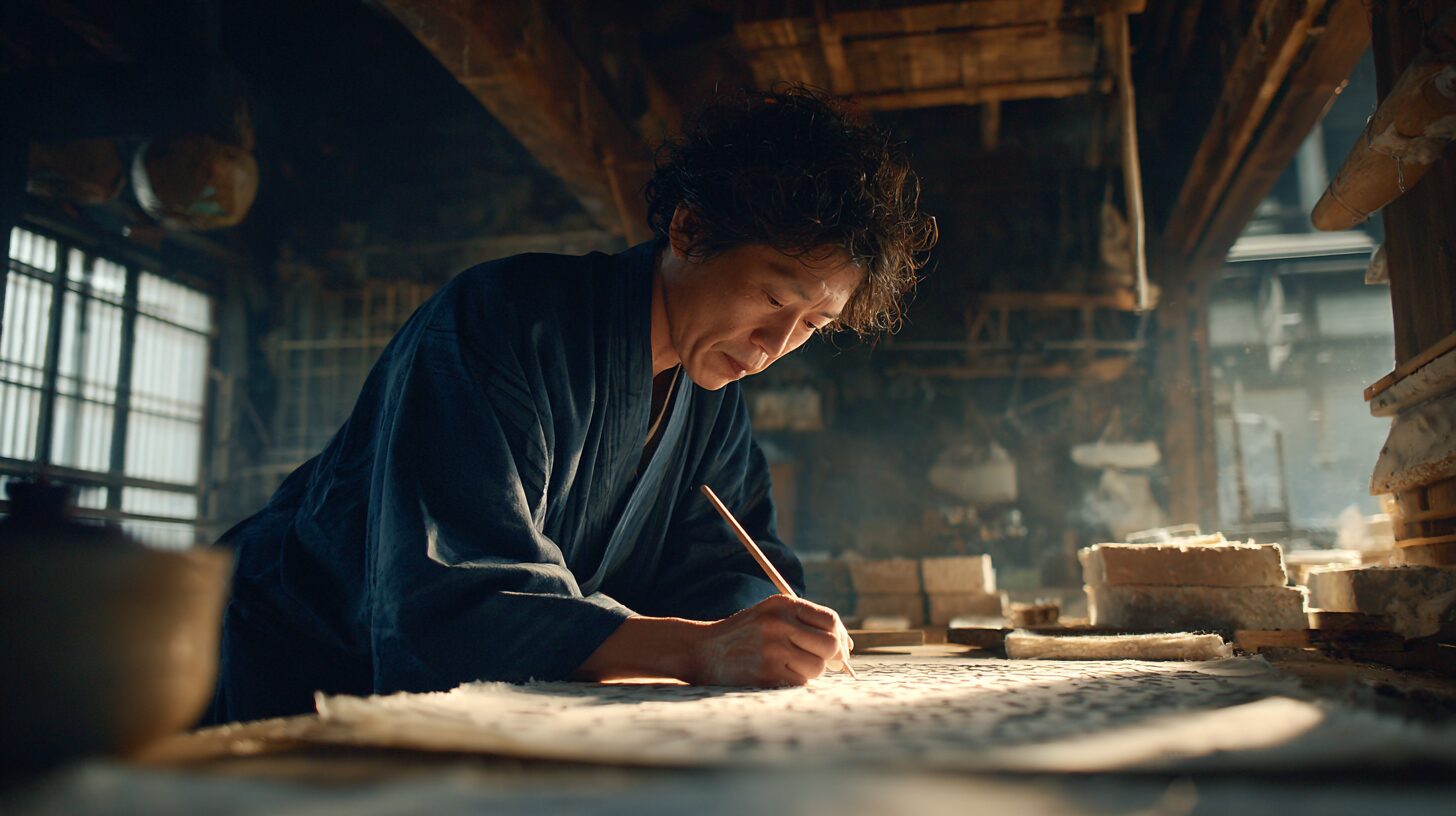
He is 78 years old and the only person left in Wajima who still polishes lacquerware the old way — by hand, with deer antler powder, in a process that takes three weeks for a single bowl.
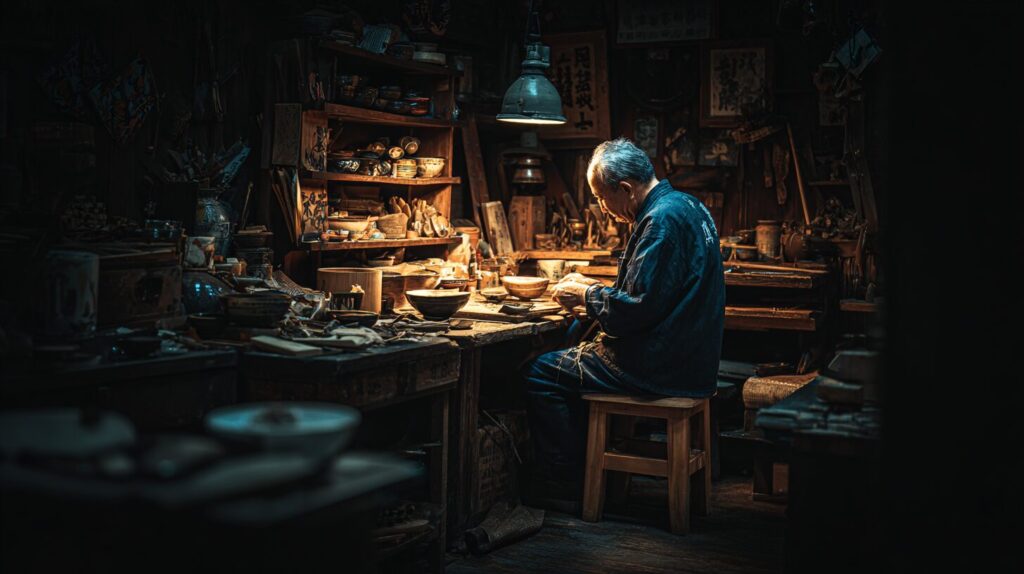
His apprentice left for Osaka four years ago. His son became an engineer. The workshop is his, and when it closes, that specific technique — the antler powder finish that gives Wajima-nuri its particular depth — disappears with it.
Japan is living through a quiet crisis in traditional craft. Of the 236 craft techniques formally designated as Traditional Craft Products by the Ministry of Economy, Trade and Industry, more than 60 have fewer than 10 active practitioners. Seventeen have just one. In 2026, several of those remaining craftsmen are still working and — crucially — still accepting visitors.
Wajima-Nuri Lacquerware — Ishikawa Prefecture
Wajima (輪島市) on the Noto Peninsula in Ishikawa Prefecture is the center of Japan’s most technically complex lacquerware tradition. Wajima-nuri involves over 124 documented production steps across multiple craftspeople — the lacquer is applied in more than 75 layers, each dried and polished before the next is added. The final object takes months to complete.
The 2024 Noto earthquake severely damaged Wajima’s workshop district, and recovery is ongoing. Some craftsmen have relocated temporarily; others are working in restored workshops. Visiting in 2026 carries an additional weight: these workshops need visitors, and tourism directly supports recovery. The Wajima Kiriko Art Museum and the Wajima Morning Market (one of Japan’s three great morning markets) have both partially resumed operations. Call the Wajima Tourism Association (0768-22-1503) before your visit to confirm current access to workshop tours. The journey from Kanazawa takes approximately 2 hours by express bus.
Nishijin Textile Weaving — Kyoto
Nishijin (西陣) is a district in northwest Kyoto that has produced Japan’s most prestigious silk textiles for over 1,000 years. Nishijin-ori — woven on Jacquard looms using threads so fine they’re measured in units of 1/12,000th of a meter — supplies fabric for the most formal kimono, obi, and court garments in Japan. At its postwar peak, the district employed over 80,000 workers. Today that number is below 3,000 and falling.
The Nishijin Textile Center (西陣織会館) on Horikawa-Imadegawa holds daily weaving demonstrations and a small museum showing the industrial history of the district. More valuable are the independent studio visits available through Kyoto’s craft tourism coordinators: small workshops where single weavers operate machines that have been in their families for four generations. These visits require advance arrangement — contact Kyoto Traditional Crafts Center (075-762-2670) to request access. Expect to pay ¥1,500–¥3,000 for a guided workshop visit. The machines are extraordinarily loud. The cloth that comes out is extraordinary.
Echizen Washi Paper — Fukui Prefecture
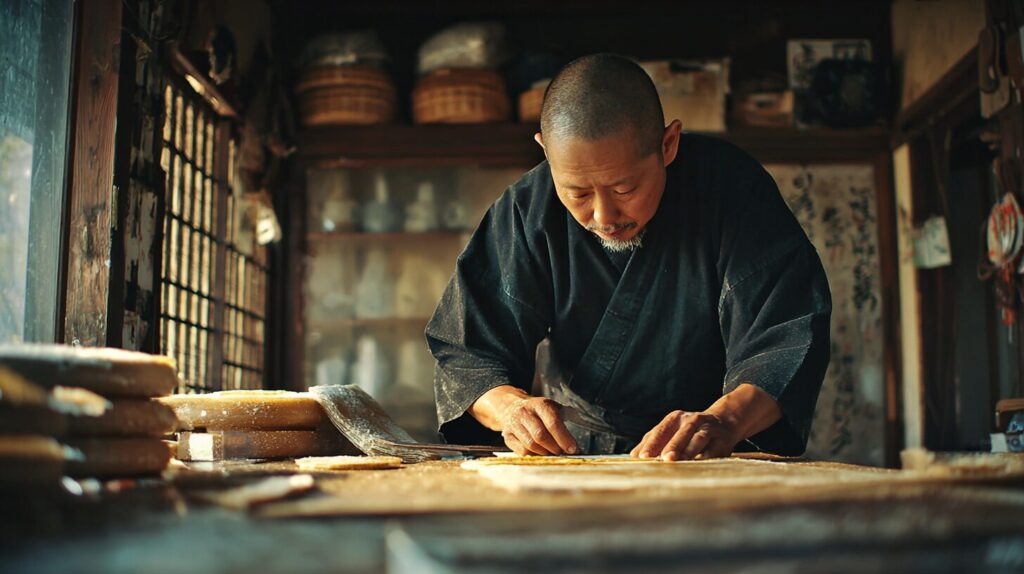
Echizen (越前) in Fukui Prefecture has produced Japanese washi paper (和紙) for 1,500 years. The local tradition traces its origin to a shrine festival honoring the goddess Kawakami Gozen, who taught local villagers the papermaking technique. Today the Imadate area of Echizen holds the highest concentration of traditional washi makers in Japan, but the number of master craftspeople continues to decline.
The Echizen Washi Village (越前和紙の里) includes the Papyrus Museum and several working studios open to visitors. Hand-papermaking workshops run daily at ¥1,000–¥3,000 depending on the level — basic sheet forming to a full day learning multiple techniques. For serious students of the craft, multi-day residencies can be arranged through the Fukui Prefectural Government’s traditional craft program. From Fukui Station, take the bus to Imadate-cho; journey time approximately 35 minutes. The paper made here supplies the Imperial Household Agency and Japan’s top-tier printmakers.

Bizen Pottery — Okayama Prefecture
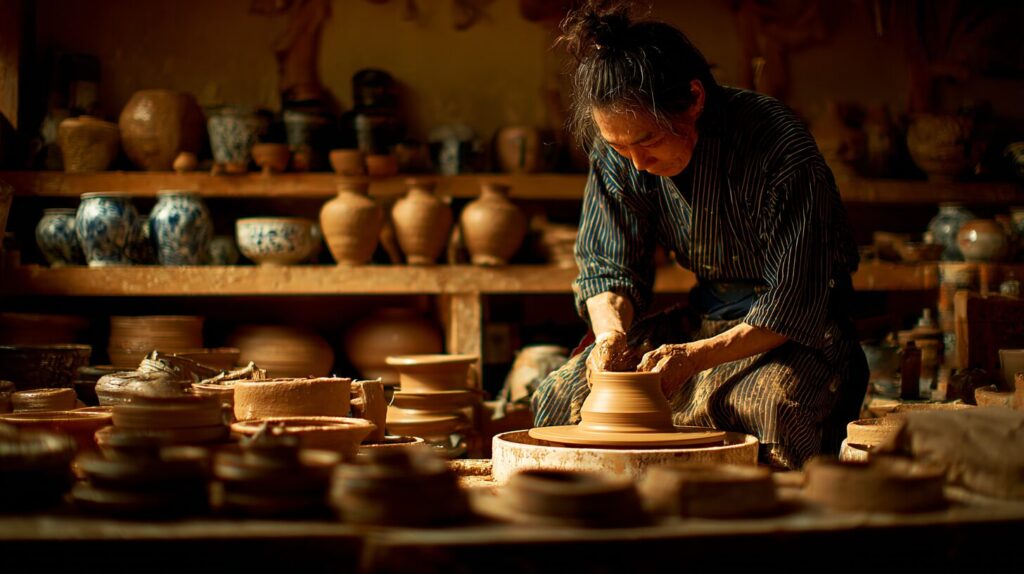
Bizen-yaki (備前焼) is one of Japan’s six ancient kilns, producing unglazed pottery fired for two weeks in wood-fueled anagama kilns at 1,300 degrees. No glaze is applied — the color and surface texture come entirely from the fire, the ash, and the placement of the piece in the kiln. Each object is unrepeatable. The same clay, the same kiln, the same craftsman produce a different result every firing.
The town of Bizen (備前市) in Okayama Prefecture has a street — Tozan-machi — lined with working pottery studios, many of which accept visitors. The Bizen Osafune Token Museum hosts an annual exhibition, but for craft visitors, the studios themselves are the destination. National Living Treasure potter Isezaki Jun maintains a studio that accepts occasional visitors by appointment; contact through Bizen City Tourism (0869-64-1400). The Bizen Pottery Traditional Industry Hall runs introductory throwing workshops at ¥2,000. From Okayama Station, take the JR Ako Line to Imbe Station (30 minutes, ¥320); the studio district is a 10-minute walk.
Edo Kiriko Glasswork — Tokyo (Sumida)
Edo Kiriko (江戸切子) is a cut glass tradition developed in Tokyo in the 1830s, characterized by precise geometric patterns cut into thin crystal. Unlike most dying craft traditions, Edo Kiriko is not disappearing due to lack of interest — it’s disappearing because the cutting tools require decades of hand-skill to master, and the workshops that train new craftspeople are few.
The Sumida area of eastern Tokyo has the highest concentration of active Edo Kiriko studios, several of which run public visitor programs. The Sumida Traditional Crafts Center (墨田区伝統工芸館) has demonstrations on weekends. More immersive: studios such as Hanashyo and Moser Tokyo offer 90-minute cutting workshops at ¥4,000–¥6,000 where visitors cut their own glass under instruction. The results are genuinely beautiful and the technique is genuinely difficult — most participants leave with profound respect for the craftspeople who do this at full precision. Reserve online at least two weeks in advance.
How to Visit Responsibly
These workshops are working production environments, not museums. A few principles apply across all of them: call ahead to confirm access, especially outside major cities. Purchasing something — even small — directly supports the craftsperson far more than an admission fee. Photography often requires permission, particularly in weaving studios where pattern designs are proprietary. Silence in the studio is the default; conversation during work breaks is the right time for questions.
The Japan Traditional Crafts Aoyama Square (日本の伝統・工芸品展示館) in Akasaka, Tokyo, provides an excellent overview of all officially designated crafts and can often arrange introductions to specific workshops across the country. It’s a useful first stop for anyone building a craft-focused Japan itinerary. Entry is free. Open Tuesday through Sunday, 11am to 7pm.